Robinson Restoration is an IICRC-certified water damage restoration company serving Battle Ground, WA. Crews dispatch 24 hours a day, arrive on-site in 90 minutes or less, document the readings and photos your carrier needs, and bill your insurance directly on covered claims.
Battle Ground grew from a farm town into a commuter town without replacing much of what was already here. That mix, older houses on acreage sitting next to subdivisions barely a decade old, means water damage shows up in very different ways on the same street. Robinson Restoration handles both, day or night.
The city sits on rolling ground between the East Fork Lewis River and the Salmon Creek drainage, and the soil holds water once the winter rains settle in for good. Older farmhouses have shallow crawlspaces, cast iron drains, and additions that were never flashed properly. Newer subdivisions bring second-floor laundry rooms, long PEX runs, and manifold plumbing that fails at the fitting. Both fill fast once something lets go.
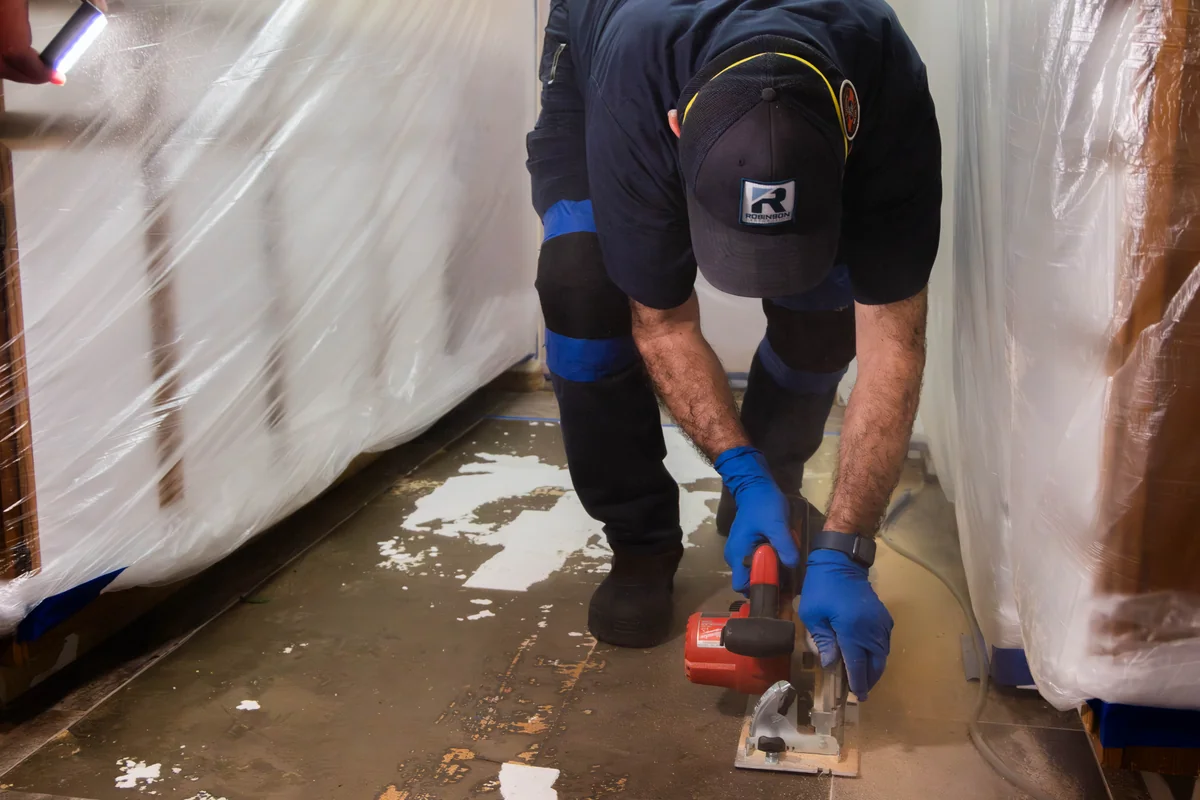
Robinson Restoration dispatches 24 hours a day from our Vancouver headquarters, and local calls get a crew with truck-mounted extraction, commercial air movers, and dehumidification matched to the loss. We meter every affected material, photograph the scope before anything is cut, and log drying progress daily against IICRC S500. Your adjuster receives that file directly, and we bill insurance so you deal with a deductible instead of an invoice.

Battle Ground sits inside our core Clark County coverage, so a crew, a truck, and drying equipment stay staged and ready overnight.
24 hours a day, 7 days a week, our crews dispatch the moment you call and start mitigation the same visit. Call dispatch or message us for immediate help.
We stop further damage with commercial extraction, structural drying, and antimicrobial treatment, and we walk you through the entire insurance claim as we work.
We manage your rebuild to pre-damaged condition through our trusted network of licensed contractors and sister companies. One manager, one timeline.
A lot of addresses here come with a shop, a barn, or a well house sitting behind the main home. Those buildings have exposed plumbing, hard-to-reach shutoffs, and nobody walking through them daily. A broken line in an unheated shop can run for a week, and the water usually finds its way toward the house before anyone catches it.
The newer neighborhoods went up fast, with PEX manifolds, push-fit fittings, and builder-grade braided supply hoses. Those parts fail at connections rather than mid-run. Put a laundry room on the second floor and one failed hose drains through two ceilings, insulation, and a stairwell before it reaches a floor anyone is standing on.
Long stretches of rain and the occasional atmospheric river leave the ground here with nowhere to put more water. Downspouts that empty next to a foundation, grading that slopes back toward the house, and clogged footing drains all push it inside. We see the same properties every wet season until the exterior drainage gets corrected.
The original housing stock still carries cast iron waste lines and galvanized supply branches. Cast iron corrodes from the inside and starts weeping at joints inside wall cavities. Galvanized closes off with scale, then splits under pressure. Neither failure announces itself, and both tend to be found by a soft spot in the floor rather than a puddle.
Most of the losses we run in Battle Ground start one of three ways: burst and leaking pipes, appliance failures, and roof and storm leaks. Here is why each one happens here, and what it takes to dry it properly.
Cold snaps drop into the valley for a few days at a time, and the lines running through unheated garages, crawlspaces, and shop walls are the ones that split when the thaw hits.
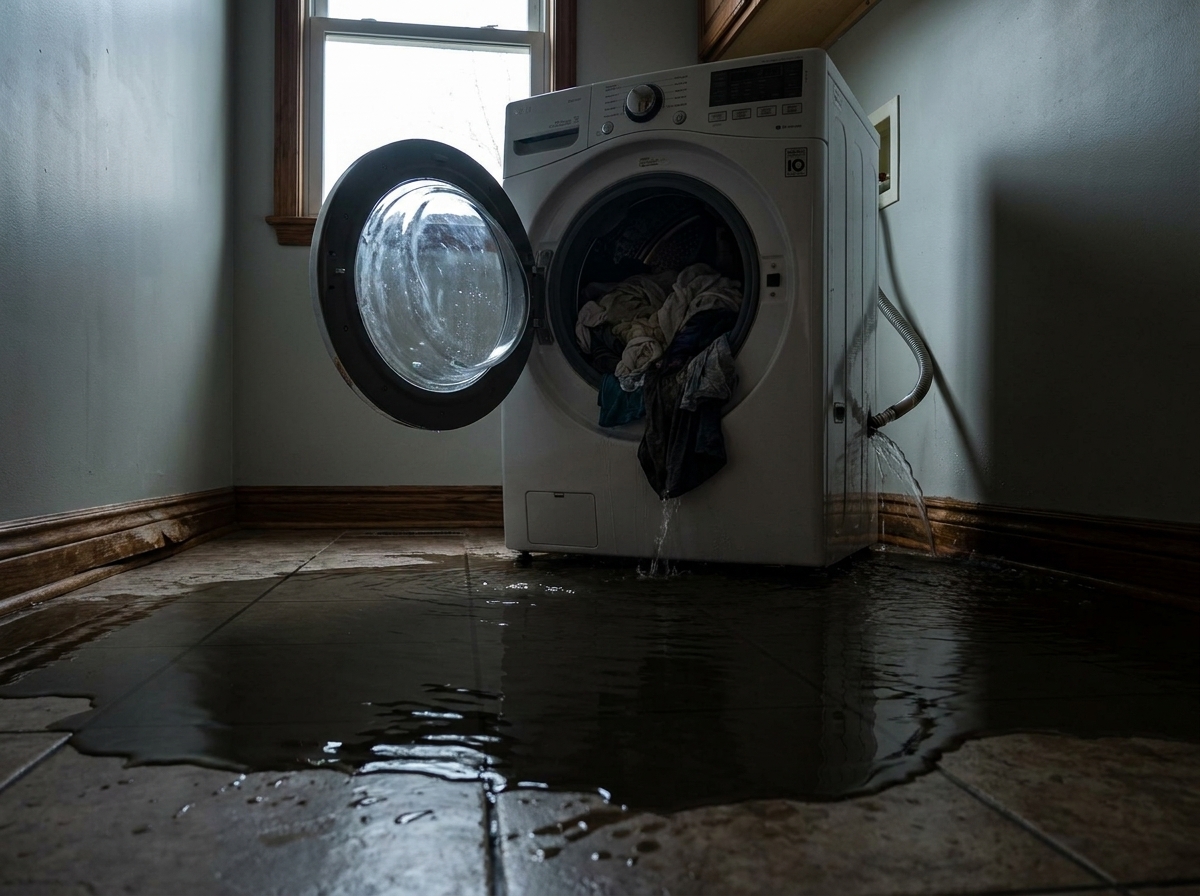
Newer subdivision homes put washers, refrigerator ice lines, and dishwashers on upper floors and interior walls. A failed supply hose there sends water down through two levels of finished space.
Months of steady rain find every unflashed addition, skylight, and worn valley on the older housing stock, and the attic soaks quietly before a ceiling ever shows a stain.
Water is how most losses start. It’s rarely where they end. The same local crew handles all of it.
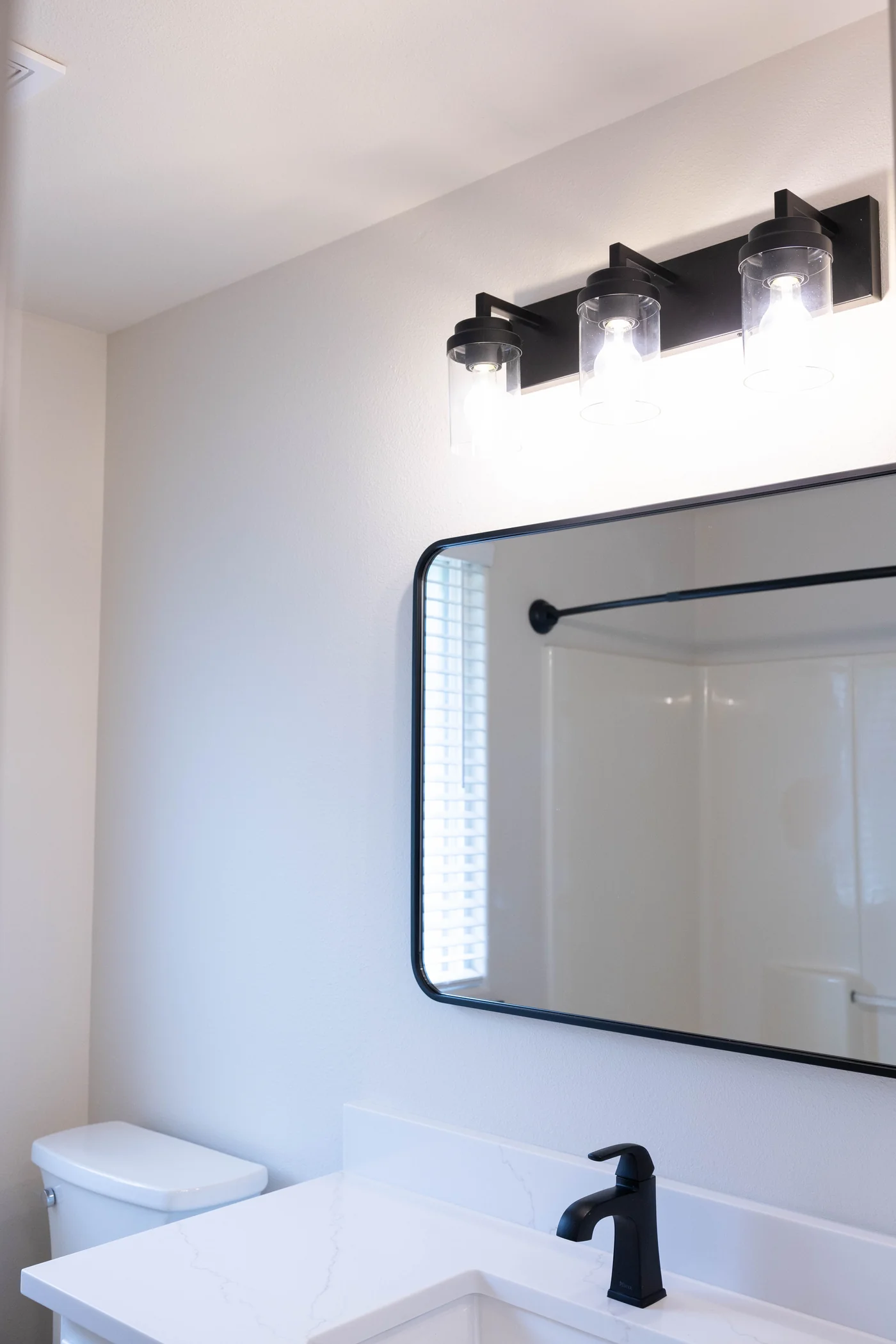
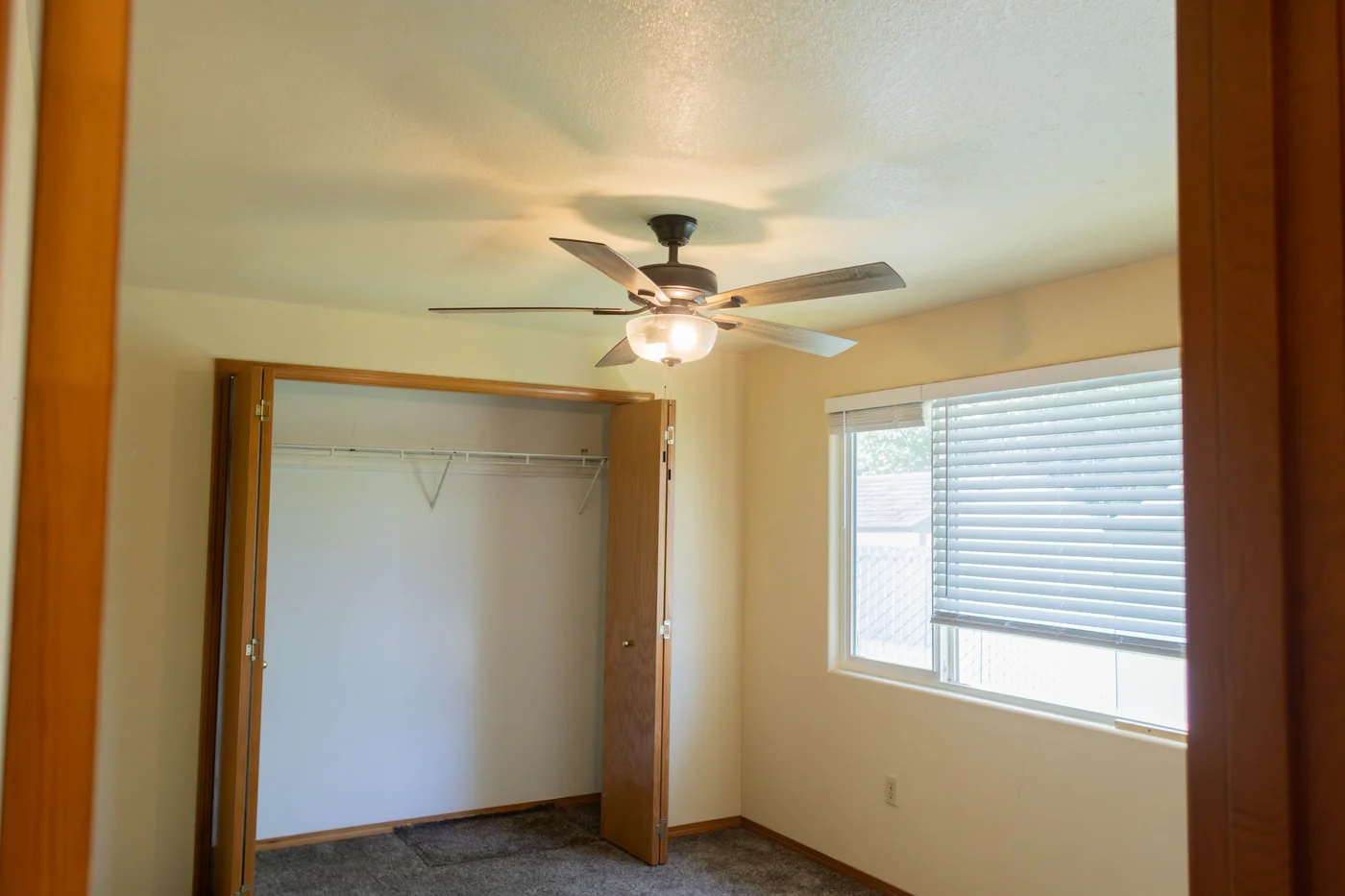
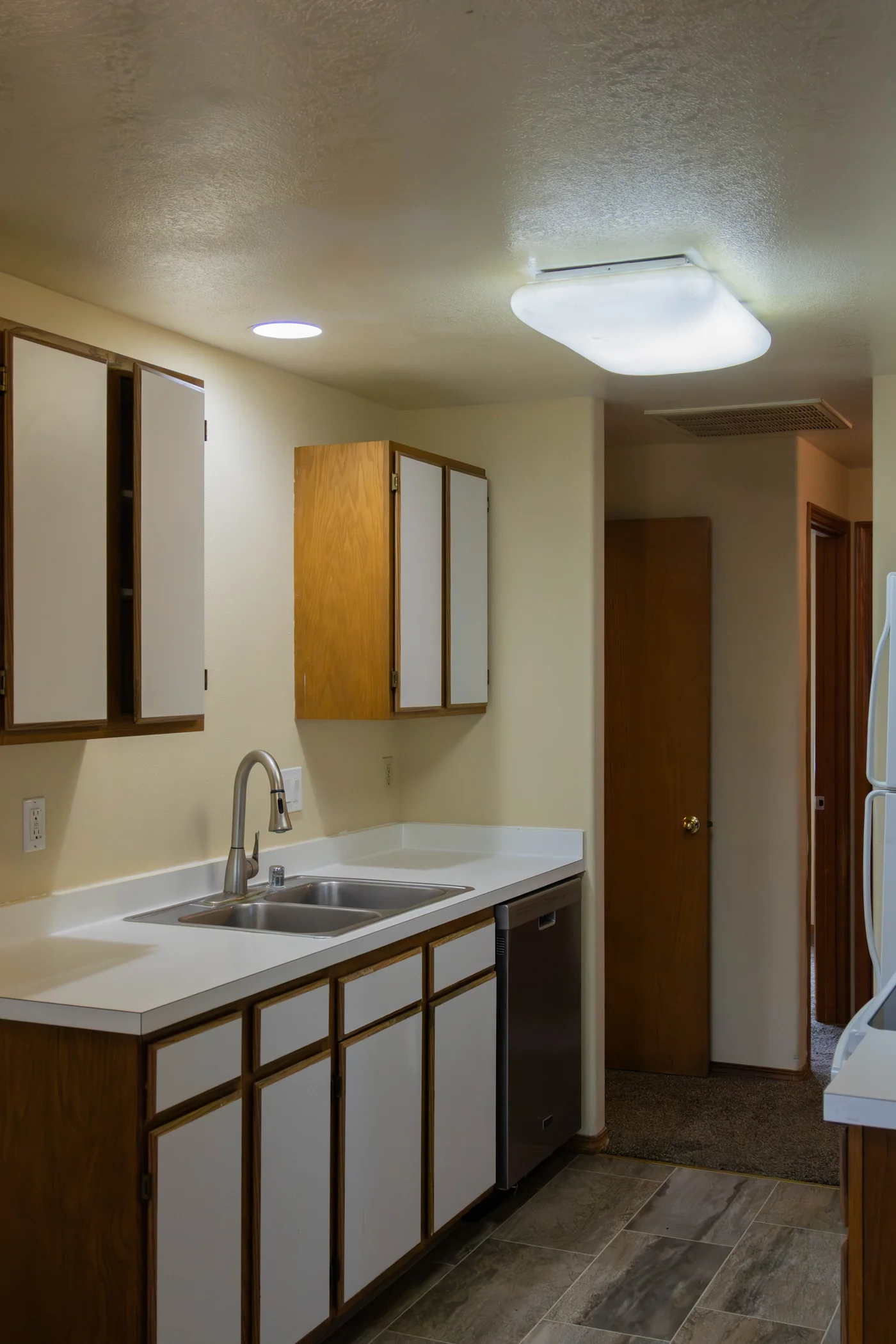
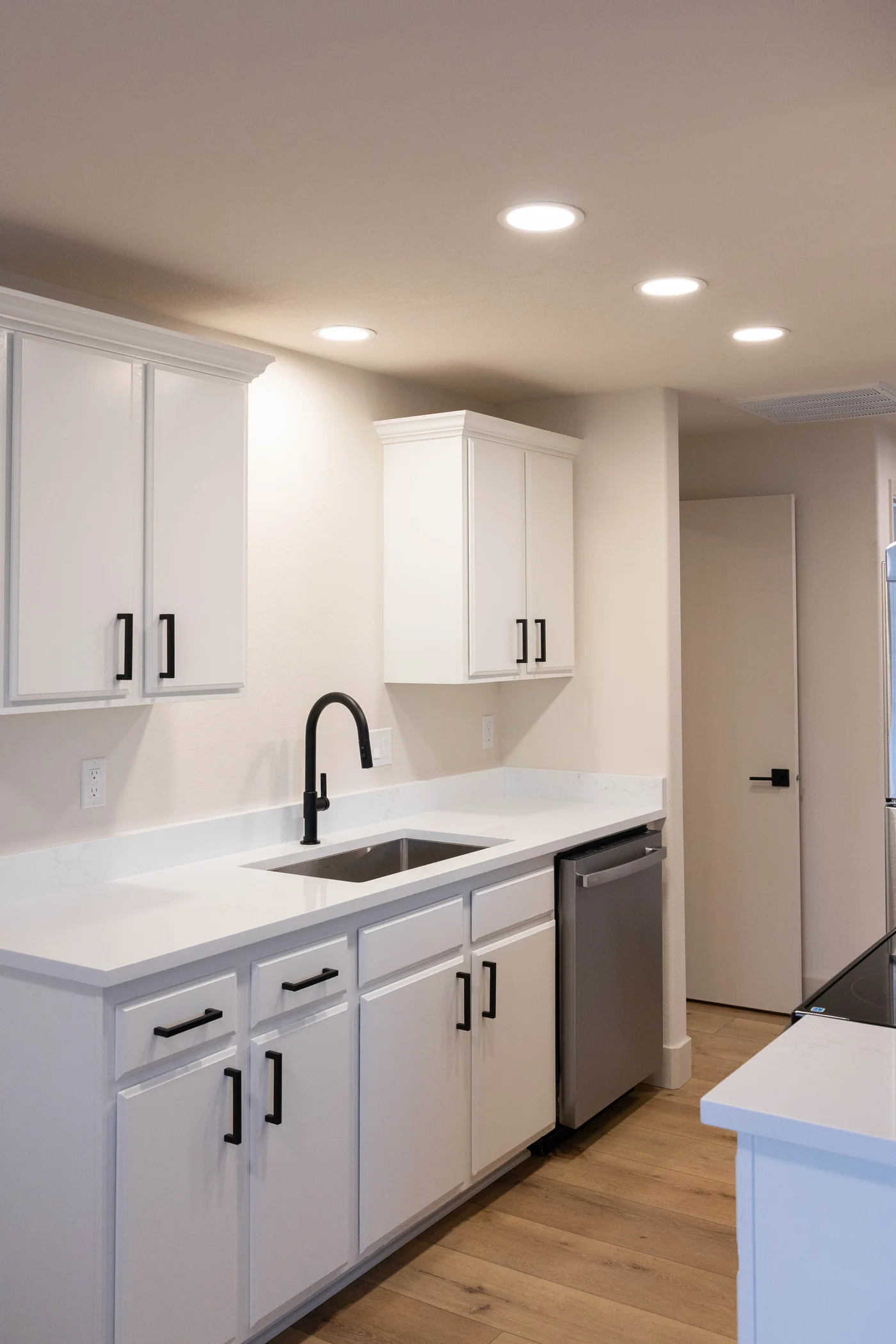
Three real projects, photo-documented for the insurance carrier and backed by our 5-year workmanship warranty. Drag each handle to compare.
“Just started a project with Cole and Chuck at Robinson Restoration and had to write a review straight away. These guys have been fantastic. We were away on a week long trip when we had a kitchen leak that destroyed our flooring and subfloor.”
Justin O'Neill · Google Review
“I want to express our sincere gratitude to the Robinson team that quickly moved to identify, rectify, repair, and then clean up the mess left by an itty-bitty hot water leak that went unnoticed because of its location.”
Michael Quinn · Google Review
“Kyla and Jake were super friendly and knowledgeable. Jake was at my house 90 minutes after I called and did a free inspection. I won't need their services this time, but I will definitely call them if I ever have to deal with water damage.”
Carmen Otten · Google Review
In Washington, you choose your restoration contractor, and your carrier can’t penalize you for it. We document every Battle Ground loss with moisture maps, photos, and daily readings, then bill your insurer directly. You pay your deductible. That’s it.
Subject to policy coverage and deductible. We handle the paperwork, photos, and adjuster calls.
Ask and the answer is yes: Robinson keeps a north Clark County team assigned to Battle Ground, with dispatch answered 24/7 and crews typically on-site in 90 minutes or less. Techs pull up with extraction equipment, air movers, and commercial dehumidifiers, then map the wet materials before anything gets torn out. Your claim gets documented and billed straight to the insurer.
A live dispatcher answers our line 24 hours a day, and this is inside the core coverage area our Clark County crews work every day. In most cases we are on-site in 90 minutes or less. The truck arrives loaded with extraction and drying equipment, so work starts on the first visit rather than after a return trip for gear.
Yes. Plenty of Battle Ground addresses sit past the city line on well and septic with a shop or barn on the property. We load for that: extra hose runs, generators, submersible pumps, and enough dehumidification to cover outbuildings along with the house. Rural properties also get a source check on the well and septic system before we call the job dry.
Newer neighborhoods here are full of PEX manifolds, push-fit fittings, and braided supply hoses, and those fail at connections rather than in the middle of a run. Second-floor laundry rooms make it worse, since a failed washer hose drains through two ceilings before anyone sees water. The age of a house is a poor predictor of water loss.
Shut the water off at the main if you can reach it safely, and kill power to the affected area at the breaker rather than the wall switch. Lift photos, documents, and electronics off the floor. Pull area rugs off hardwood so dye does not transfer. Leave the shop vac alone if anything smells like sewage and wait for containment.
It causes plenty of it. Battle Ground gets long saturating storms and the ground stops accepting water by midwinter. Once that happens, roof runoff and surface water head for the lowest opening they can find, which is usually a crawlspace vent or a foundation seam. Interior damage from exterior water is one of the most common calls we take here.
We bill your carrier directly in almost every case, so you are responsible for the deductible instead of the full invoice. We open communication with your adjuster early, send photo documentation and daily moisture logs while the job runs, and write the estimate in the software adjusters already use. That keeps approvals moving instead of stalling on paperwork.
One call gets a Battle Ground crew moving with extraction gear, so the damage stops spreading tonight.
Licensed · Insured · IICRC Certified · Serving Washington & Oregon