CERTIFIED • LICENSED • INSURED
WA #ROBINRL752MZ · OR CCB# 256698
24/7 Emergency Dispatch | 90-Minute Response
Storm Season Response

24/7 Storm & Flood Damage Restoration

24/7 board-up, tarping, and extraction
Structural drying with logged readings
We bill your insurance directly
1,000+ 5-Star Reviews
Storm Damage Inspection
90 MIN
On-Site Response
24/7
Emergency Dispatch
1,000+
5-Star Reviews
IICRC
Certified Crews

Robinson Restoration is an IICRC-certified storm and flood damage restoration company serving Washington and Oregon. We board up and tarp to stop the intrusion, extract standing water, dry the structure with logged readings, and bill your insurance directly on covered claims.

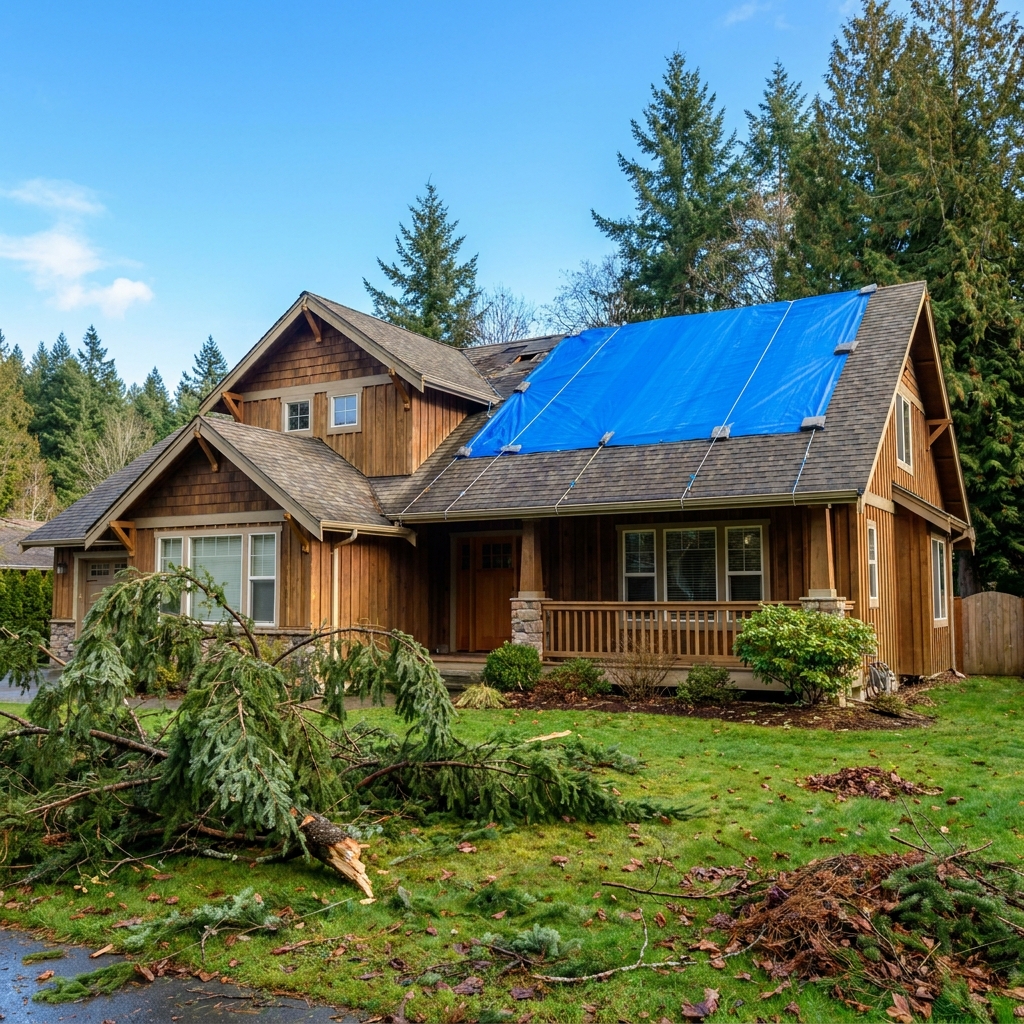
Storm-damaged home with an emergency roof tarp
What Hit You

Northwest Storms Damage Homes Four Ways

Each one needs a different first move. We handle all four, starting the same day you call.

Wind-Driven Rain & Roof Damage

Gusts lift shingles and flashing, then rain pours straight into the attic. Ceiling stains show up days later, after insulation is already soaked.

Same-day roof tarping, attic moisture mapping, insulation removal and drying.

Groundwater Flooding

Saturated soil pushes water through foundations, window wells, and basement slabs. Sump pumps fail exactly when they're needed most.

High-volume extraction, sump assessment, basement drying, antimicrobial treatment.

Fallen Trees & Impact Damage

A downed fir opens your roof and structure to the weather in seconds. The hole is obvious. The water path through the framing isn't.

Emergency board-up, structural assessment, water tracing, managed rebuild through our contractor network.

Power-Outage Failures

Outages kill sump pumps and heat during the exact storms that need them. Pipes freeze and burst; basements quietly fill.

Extraction, freeze-damage assessment, and full drying, plus documentation of the cause for your claim.

The Coverage Question

"Flood" and "Water Damage" Are Different Words to Your Insurer

It sounds like semantics. It's actually the single biggest factor in whether your claim gets paid, and it's decided by where the water came from.

Water from above or inside: usually your homeowners policy

Rain through storm-damaged roofs, wind-driven rain through broken windows, burst pipes during a freeze. Sudden and accidental, typically covered.

Rising water from outside: flood insurance territory

Rivers over their banks, storm surge, sheet flow across saturated ground. Standard policies exclude it; a separate NFIP or private flood policy covers it.

Where we come in

Mixed-cause losses are common in real storms, and the documentation of what-came-from-where decides the claim. We trace and photograph every water path, classify the loss correctly, and present carriers with evidence they can't argue with. Prepping ahead of storm season? Read our guide to atmospheric rivers and your home.

Storm Response

Stabilize First, Then Restore

During major storm events we pre-position crews and equipment ahead of NOAA alerts, so response times hold even when the whole county is calling.

01

Stop the Bleeding

Tarping, board-up, and water shutoff. The property gets weather-tight before anything else, which your policy also requires of you.

02

Trace Every Path

Thermal imaging follows the water through framing, insulation, and flooring. What looks like one leak is usually three.

03

Extract & Dry

High-volume extraction, then commercial air movers and dehumidifiers until moisture readings hit IICRC S500 targets. Verified daily.

04

Document & Rebuild

A complete photo-documented claim file for your carrier, then a managed rebuild through our licensed contractor network.

Insurance, Straight

How Storm and Flood Claims Get Paid

Coverage comes down to the policy and the cause of loss. Sudden, accidental storm damage is usually covered. Gradual seepage, deferred roof maintenance, and rot that predates the storm usually are not. Two details catch owners off guard: wind and hail often carry a separate percentage deductible, and a flood policy applies one deductible to the building and a second one to contents. Ordinance and law coverage decides whether code upgrades during the repair get reimbursed.

Carriers pay on evidence. We photograph conditions before anything moves, log moisture readings by room and material every day, and keep equipment and labor records in the estimating format adjusters already work in. On covered losses we bill the carrier directly, so your deductible is usually the only piece you pay. If a portion gets denied or trimmed, you get the full file and an honest read on whether an appeal is worth filing.

Usually Covered

Wind-torn roofing, rain that enters through a storm-created opening, tree impact, and pipe breaks caused by a freeze during an outage. Sudden events with a clear date of loss.

Usually Not Covered

Rising groundwater without a flood policy, long-running leaks, worn flashing, and mold that grew from a problem you knew about. Carriers read those as maintenance, not a storm loss.

What the Adjuster Needs

Date and cause of loss, photos of the damage before mitigation, daily moisture logs, a scope tied to line items, and receipts for anything you paid to protect the property.

How We Bill

Direct to your carrier on covered work, at the pricing adjusters already use. You approve the scope, we invoice the claim, and the deductible stays your only expected cost.

Flooded basement with standing water
Worth Knowing

What We Can Save, and What Comes Out

Demolition calls come down to physics and timing. What matters is how fast a material releases water, whether the water was clean, and how long it sat. Some assemblies dry in place with the right equipment. Others hold moisture behind a finished surface long after that surface feels dry.

Floors and What’s Underneath

Solid hardwood can often be saved with floor drying mats that pull moisture through the boards, if we start early and the water was clean. Engineered planks usually delaminate. Laminate swells at the seams and is done. Carpet can survive clean water; the pad underneath almost never does, because it holds water against the subfloor and slows everything down.

Drywall, Insulation, and Flood Cuts

Drywall wicks water upward well past the visible line, so we cut above where the moisture meter reads wet, usually at a consistent height that makes the rebuild clean. Fiberglass batts lose their loft and their R-value once soaked, and they trap water against framing. Closed-cell spray foam often stays, though it can hide wet sheathing behind it.

Framing, Subfloor, and Sheathing

Framing lumber is usually salvageable. Wood tolerates a soaking far better than the finishes attached to it, so the goal is drying studs and joists down to a documented target instead of tearing them out. Particleboard subfloor swells and crumbles. Plywood and OSB depend on how long they stayed saturated and whether the layers have started to separate.

Roof leak staining a ceiling
Worth Knowing

Storm Losses in Commercial and Multifamily Buildings

A flooded apartment building has problems a single-family house never has. Tenants who need somewhere to sleep, a board or an owner who needs numbers by morning, and a building that has to keep operating while half of it dries. Coordination ends up being half the job.

Drying Around an Open Building

Retail floors, clinics, and occupied units rarely get to shut down for a week. We stage the work so containment walls and negative air keep dust and noise inside the affected area, run quieter equipment during business hours, and phase drying by zone so the rest of the building keeps working.

Who Owns Which Loss

In condos and apartments, one storm can trigger three claims: the association’s master policy on the structure, an owner’s HO-6 on interior finishes, and a renter’s policy on contents. We scope each area separately and keep the documentation split the same way, so nobody spends a month arguing about which invoice belongs to which carrier.

Reporting Property Managers Can Use

Owners, boards, lenders, and tenants all want different answers about the same job. Daily readings by unit, photo sets labeled by unit and room, and a running scope give a manager something to forward instead of retyping. Business interruption carriers ask for the same records, so one file serves both claims.

Straight Answer

How Much Does Storm and Flood Damage Restoration Cost?

Storm and flood restoration cost depends on how much water got in, how contaminated it was, which materials soaked it up, how many days the drying equipment runs, and how much rebuild the loss needs. That’s not something anyone can quote over the phone. Robinson Restoration inspects the property, maps moisture with meters and thermal imaging, then puts a documented scope and a written estimate in front of you.

Where the Water Came From

Clean rain through a roof opening and groundwater from the yard aren’t the same job. Water from outside the building is contaminated under IICRC standards, so absorbent materials get removed and replaced rather than dried in place. Removal, disposal, and replacement all add cost.

Affected Area and Access

Square footage is only half of it. A wide-open basement dries faster than the same footage broken into finished rooms, closets, and cabinet runs. Every enclosed cavity has to be opened, dried, and verified separately, and that access work is where the labor hours go.

Days on Drying Equipment

Drying is scoped in equipment days, so both the count of air movers and dehumidifiers and the number of days they run move the total. Water that sat over a weekend releases it slowly, so the drying window stretches and the equipment stays longer.

Rebuild Scope and Code

Mitigation is the first half. The rebuild is scoped separately, and it grows when current code requires upgrades to what came out, or when the work needs permits and inspections. Robinson manages that rebuild through licensed contractors, so one scope covers both halves.

What Insurance Changes

On a covered loss, Robinson bills your carrier directly and your deductible is normally what you pay out of pocket. Coverage isn’t guaranteed. Wind and rain through a storm opening usually qualify; rising floodwater needs a separate flood policy, and excluded causes stay yours.

Getting a Real Number

Call Robinson Restoration and ask for a storm damage inspection. Your policy number, the date of loss, and photos taken before anything got moved help us scope it faster.

Real Customer Reviews

1,000+ Five-Star Reviews

5.0 on Google

"Came home to a flooded basement at 11pm during that November storm. Robinson had a team here by 12:30am. Professional, careful, and the restoration was seamless. Our insurance agent praised their documentation."

Mark D. · Kent, WA

Storm Damage Inspection
Local Crews

Where Our Crews Work

Storms don’t hit every town the same way. Pick your city for the flooding patterns, drainage headaches, and housing stock our crews actually see there, along with a direct line to dispatch when you need someone on-site in 90 minutes.

Frequently Asked

Storm & Flood FAQs

My roof is leaking during a storm right now. What do I do?

Put a bucket under it, move what you can, and call us. Don't get on the roof, especially in wind and rain. Our crew will tarp it safely, and if water reached the attic we'll map how far it traveled before it becomes a mold problem. Poke a small hole to drain a sagging ceiling bubble only if you can do it from a stable floor, not a ladder.

Wind damage, falling trees, and rain entering through storm-created openings are usually covered. Rising floodwater from outside is not; that takes separate flood insurance. Real losses are often a mix, and the cause documentation decides who pays what. We photograph and classify every water path so your claim starts on solid ground.

If it's on the structure, restoration crews coordinate the removal as part of securing the property, and the cost typically rolls into the claim. We handle board-up and weatherproofing the same visit, then assess what the impact and the water that followed actually damaged.

Depends on the cause. A one-time sump failure during a covered event reads differently than chronic seepage, which insurers treat as maintenance. Either way we can dry it properly and tell you honestly whether a claim makes sense. Sometimes the right answer is drainage correction, not paperwork.

We pre-position crews and equipment ahead of NOAA alerts across our four-office footprint, so our 90-minute response holds in all but the most extreme events. When call volume spikes, active flooding takes priority over inspections. Either way, you'll get an honest arrival window when you call.

A little prevention buys a lot. Clean gutters, test your sump pump, trim branches over the roof, and know where your water shutoff is. We put together a full storm preparation guide on our blog, including what an atmospheric river actually does to a house.

No. Adjusters often name a preferred vendor, and carriers run those programs for their own reasons, but you choose who works on your property. Preferred vendors operate under pricing agreements with the insurer, which is worth knowing when a scope comes back trimmed. We work with every major carrier, estimate in the same software they do, and will tell you plainly when their number covers the job and when it falls short.

Most storm losses dry in three to five days, with readings taken every day until materials hit target. Cold weather stretches it, since air holds less moisture and evaporation slows, and dense materials like hardwood or plaster can take a week or more. Staying is usually fine when the water was clean and the affected area is contained. Sewage backups, gutted bathrooms, and no heat are the common reasons people move out.

Water from outside the building is classified as Category 3 under IICRC S500, whatever it looks like. It picks up soil bacteria, fuel and oil off pavement, pesticides, and anything a nearby sewer overflowed. That changes the work: porous materials that absorbed it come out rather than getting dried, surfaces get cleaned and treated with an antimicrobial, and crews work inside containment with HEPA filtration.

The Storm Passed.
The Water Didn't.

What soaks in tonight becomes mold by the weekend. Get a crew out now.

Licensed · Insured · IICRC Certified · Serving Washington & Oregon