Robinson Restoration is an IICRC-certified water damage restoration company serving Eugene, OR. Crews dispatch 24 hours a day, arrive on-site in 90 minutes or less, document the readings and photos your carrier needs, and bill your insurance directly on covered claims.
Eugene runs on rain. Roughly eight months of it, working on roofs, foundations, and the flat ground along the Willamette and Amazon Creek. When water finds its way inside, our local crews are on-site in 90 minutes or less with extraction, drying, and a documented scope from hour one.
Housing here splits three ways. The older neighborhoods hold 1920s bungalows on post-and-pier foundations with dirt crawl spaces. Post-war ranches fill the middle of town on slabs or shallow crawls. Up in the South Hills, daylight basements and hillside foundations take the runoff coming off the slope. North of downtown, the flats along River Road and Santa Clara sit on a high water table that comes up hard in a wet February.
This is the home region for our newest office, so Eugene and Springfield calls get answered by people who know the streets and the housing stock. Dispatch runs 24/7. Crews arrive with extraction, air movers, and dehumidification on the truck, map moisture before demolition, log readings daily to IICRC S500 dry standards, and photograph everything. We bill your carrier directly, and if the job needs rebuild work, we manage it through licensed contractors and sister companies.

Eugene is our home base in the southern valley, so trucks stay loaded and dispatch can put a crew on-site in 90 minutes or less.
24 hours a day, 7 days a week, our crews dispatch the moment you call and start mitigation the same visit. Call dispatch or message us for immediate help.
We stop further damage with commercial extraction, structural drying, and antimicrobial treatment, and we walk you through the entire insurance claim as we work.
We manage your rebuild to pre-damaged condition through our trusted network of licensed contractors and sister companies. One manager, one timeline.
Eugene collects more annual rainfall than most of the country, and it arrives as weeks of steady soaking rather than dramatic storms. That pattern is harder on buildings than a downpour. Sheathing never fully dries, moss holds moisture against shingles, and a slow roof leak can run all winter behind a ceiling before it finally stains through.
Amazon Creek drains a good share of south and west Eugene through a channel that fills fast in a heavy stretch. Out on the north flats the issue is groundwater, not overflow: the table rises until crawl spaces stand in water. Both look the same from inside the house and get handled very differently by an insurance policy.
Homes built into the slopes below Spencer Butte deal with water moving downhill through soil rather than across it. Hydrostatic pressure loads the uphill foundation wall, footing drains clog with fines, and the finished lower level gets damp long before anything visibly leaks. We meter the slab and the base of the walls, because that's where the reading tells the story.
A 1920s Eugene bungalow usually sits on short piers over bare dirt with a vapor barrier that's been torn, rolled back by a cable installer, or never installed at all. Add a slow drain leak and the crawl space becomes a humidity source feeding the whole house. Cupped floors and sticking doors upstairs are often the first symptom.
Most of the losses we run in Eugene start one of three ways: roof and storm leaks, flooding and groundwater, and burst and leaking pipes. Here is why each one happens here, and what it takes to dry it properly.
Persistent winter rain and heavy moss growth shorten roof life across Eugene. Water gets under lifted shingles or past tired flashing and travels along rafters, so the ceiling stain is rarely under the actual hole.
Amazon Creek fills quickly during sustained rain, and the north Eugene flats sit over a water table that rises with it. Crawl spaces and lower levels take water from below as often as from outside.
Eugene's cold snaps are short but sharp, and older homes here rarely have insulated crawl spaces. A line under the floor or in an exterior wall splits during the freeze and floods when temperatures climb back.
Eugene's oldest core, small lots and early-century houses near the river, many still running on aging supply lines.
Pre-war homes west of downtown, many with basements where a supply line failure runs downhill before anyone notices.
Tree-lined blocks of early-century houses. Big canopies drop debris into gutters, and clogged downspouts push water toward foundations.
Older homes near campus, plenty of them rentals, where a slow leak can go unreported for weeks.
Steep driveways and older large homes near campus. Roof valleys and gutters take heavy needle load from mature firs.
Sixties and seventies ranches on the north side, where original angle-stop valves and washer hoses are well past their service life.
Postwar and sixties subdivisions on Eugene's northeast side, where aging galvanized supply lines still sit behind finished walls.
West Eugene ground sits low and flat, so yard drainage backs up fast when the wetlands stay saturated.
Ranch-era homes where the water heater sits in an attached garage, so a tank failure runs straight into the house.
These photos come from Robinson jobs across the southern valley. They show the work as it actually runs: assessment, containment, drying, and the repair phase that follows. Same process on every loss.
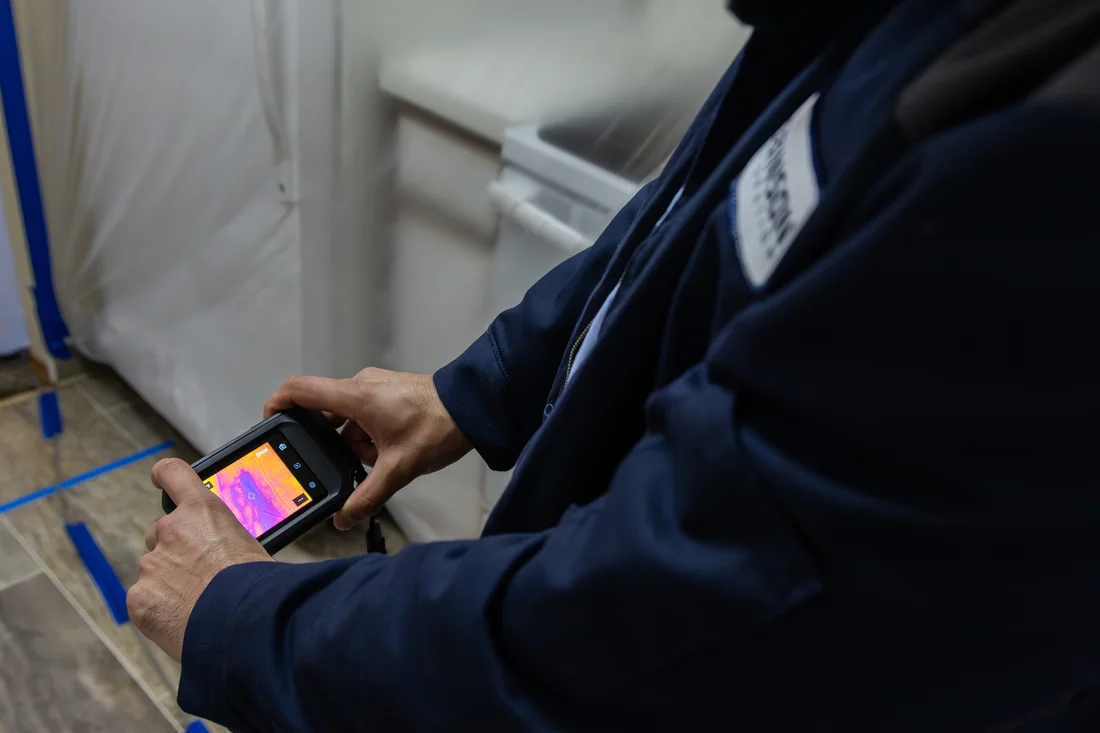
A technician reads moisture through flooring and wall base to map how far water traveled. That map decides what comes out and what stays. Guessing at this stage is how good material gets demolished for nothing.
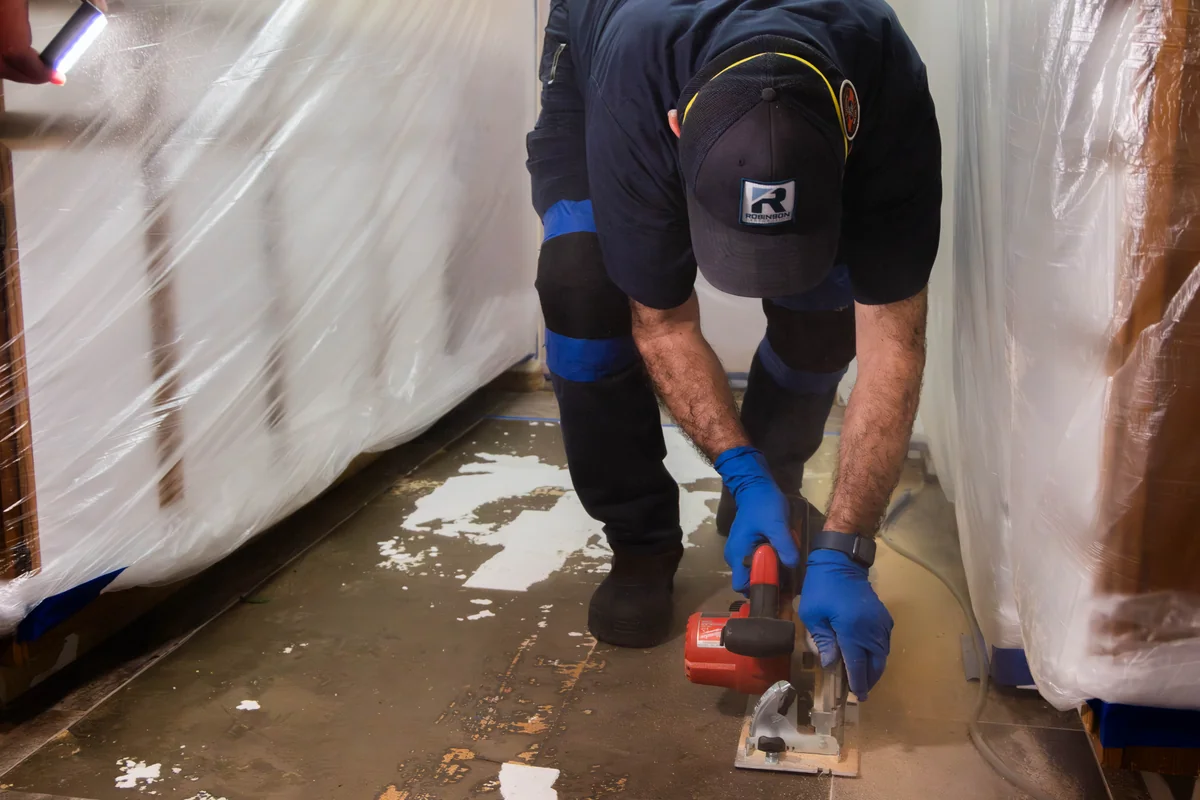
Poly barriers and negative air keep dust and spores inside the affected rooms while demolition runs. The rest of the house stays livable, which matters when a family is still sleeping there through the job.
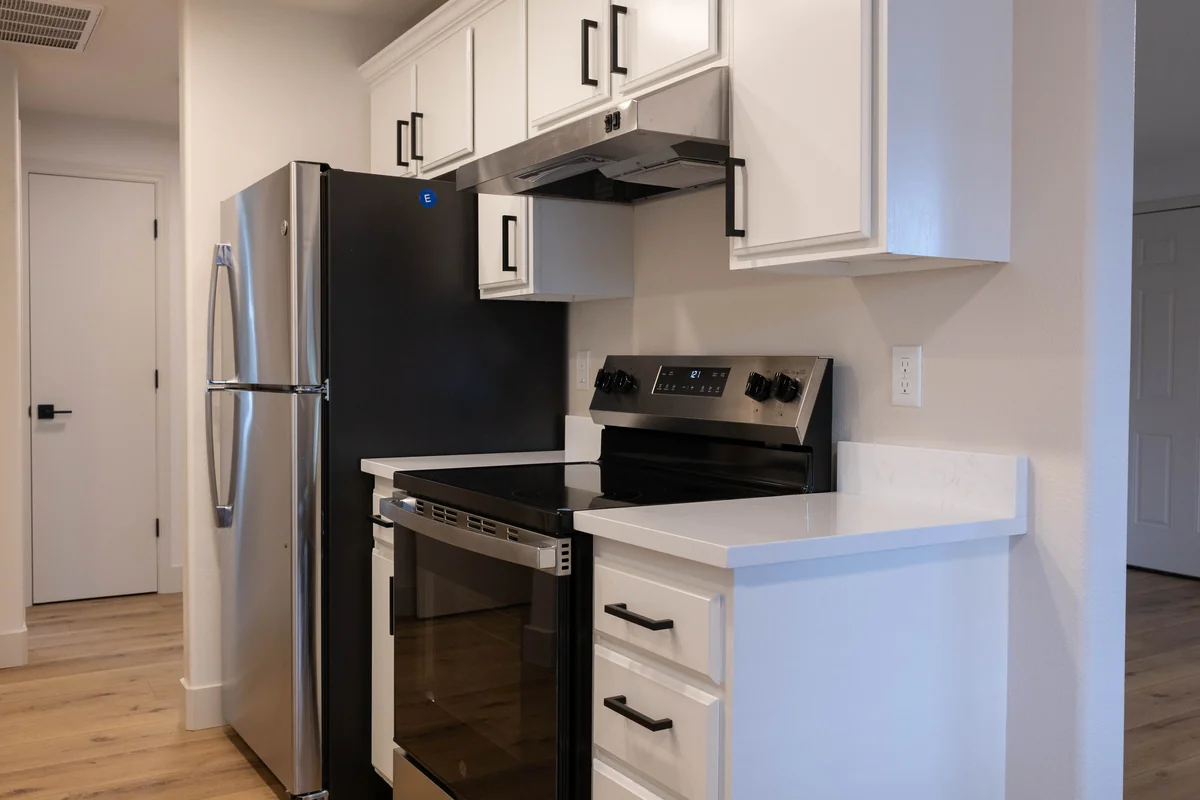
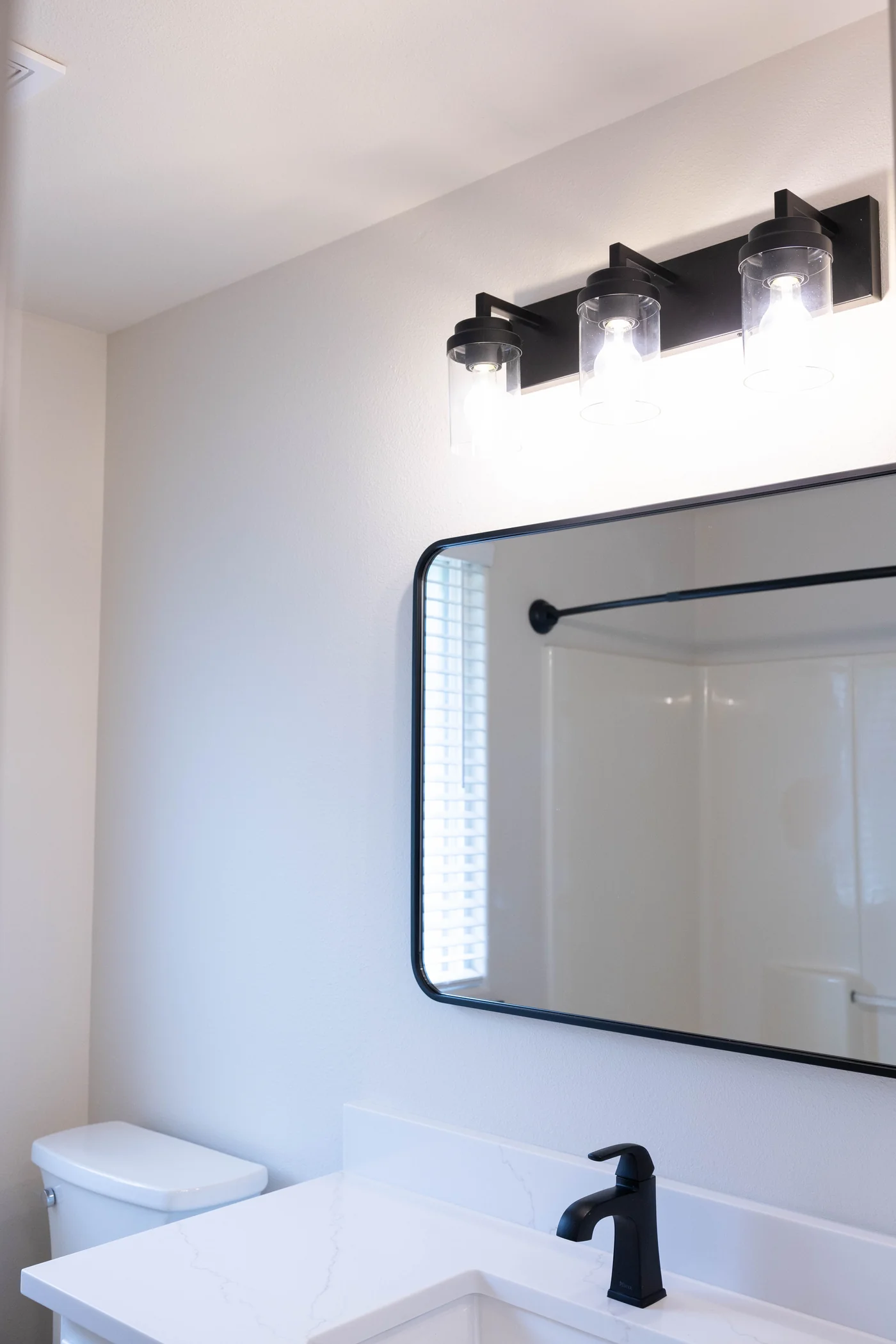
Repairs start only after readings hold at dry standard. Robinson manages this phase through licensed contractors and sister companies, so tile, trim, and paint get scheduled in order instead of three separate trades calling you.
Most people hire a restoration company on the worst day of their year, with water still on the floor. A few questions asked up front will tell you plenty about who is standing in your entryway.
Oregon requires contractors to hold an active CCB registration, and the state's lookup is public and free. Ask for the number and check it yourself. Then ask which technicians carry IICRC water damage certification, because that credential belongs to the individual technician. Find out who will actually be running equipment in your house.
Some restoration brands route every call through a national center, then hand the job to whichever contractor is free that night. Ask where the crew is dispatched from and who answers the phone at two in the morning. Local trucks staged in the Eugene and Springfield area are what makes on-site in 90 minutes or less realistic.
Ask to see a sample moisture log and a photo set from a finished job. A carrier pays on evidence: daily readings taken at the same points, labeled photos tied to each room, and an itemized scope the adjuster can price line by line. Companies that skip the paperwork tend to leave you arguing about coverage after the equipment is gone.
Mitigation and reconstruction are two different trades, and the handoff between them is where jobs stall. Ask who manages the repair phase. On older Eugene houses that matters, since matching fir flooring, plaster texture, and original trim takes a crew that has done it before. Robinson manages reconstruction through vetted licensed contractors and sister companies, backed by a five-year workmanship warranty.
Ask those questions of us too. If the answers hold up and you want a crew that already works Eugene housing every week, dispatch is staffed around the clock.
Water is how most losses start. It’s rarely where they end. The same local crew handles all of it.
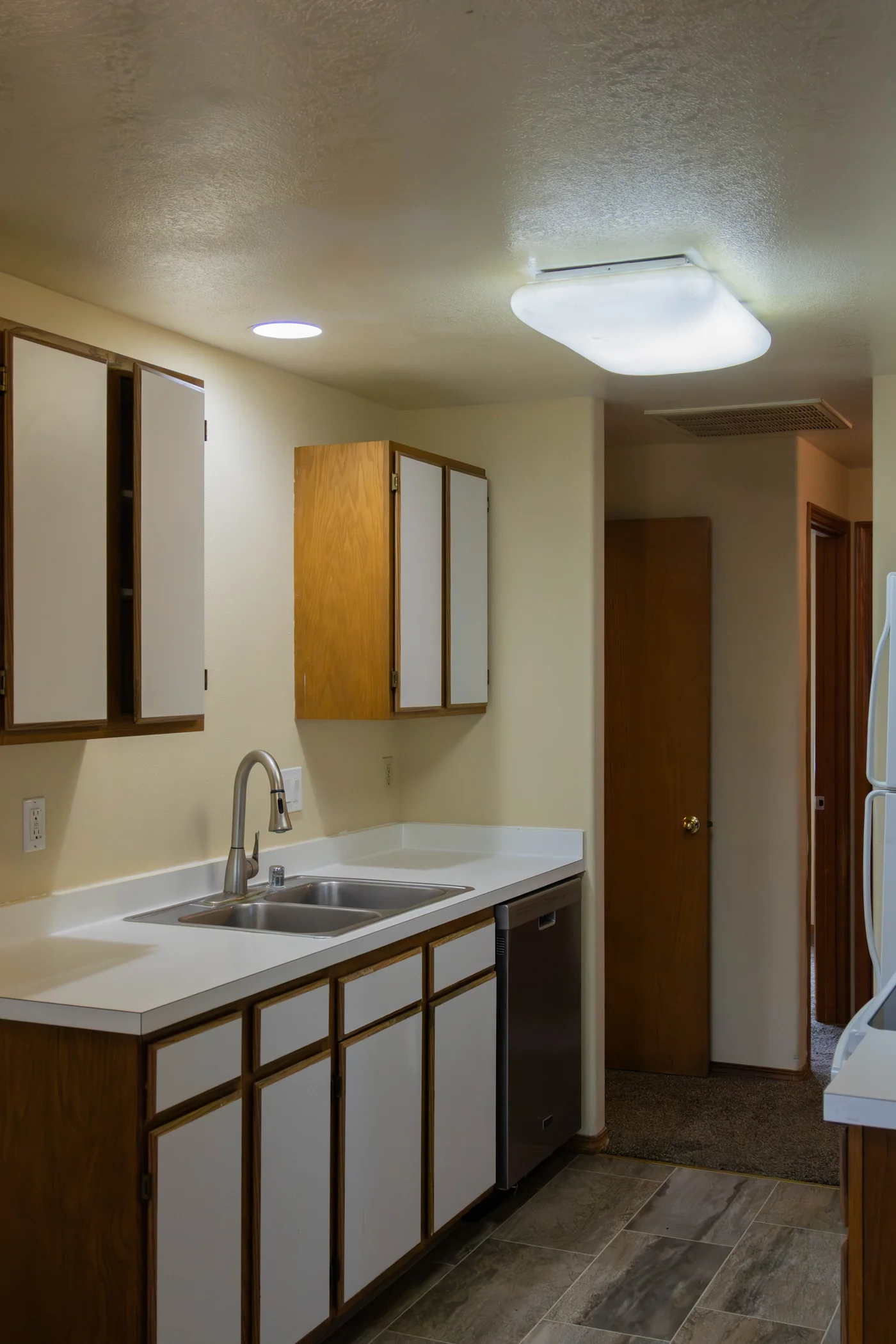
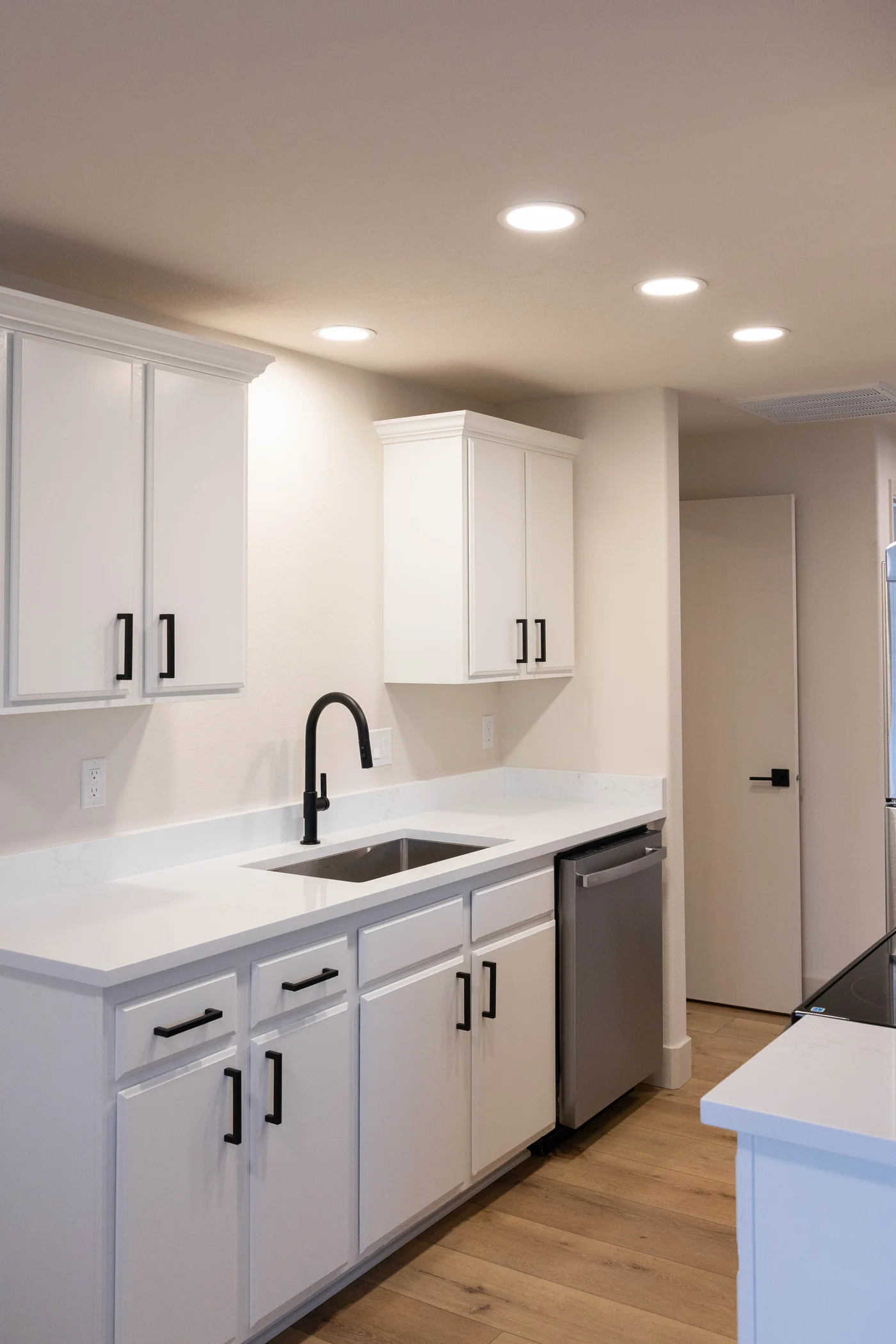
Three real projects, photo-documented for the insurance carrier and backed by our 5-year workmanship warranty. Drag each handle to compare.
“We've had the bittersweet opportunity to have Robinson in our lives twice now. First, for a major 3,000 sq ft mold remediation of our crawl space. Then last week, we had an unfortunate flood. I don't know what we would have done without them.”
T Marie C · Google Review
“Chuck and Cole were very professional, courteous and knowledgeable about their restoration skills including close out processes. I'm really happy they were the two employees assigned to our home.”
Joanna Gamble · Google Review
“We hired Robinson Restoration after a boiler joint failed and leaked what we thought was a small amount of water in our laundry room, but turned out to be more serious than it appeared. They did a fantastic job from first contact to insurance claim approval.”
Randi Covin · Google Review
In Oregon, you choose your restoration contractor, and your carrier can’t penalize you for it. We document every Eugene loss with moisture maps, photos, and daily readings, then bill your insurer directly. You pay your deductible. That’s it.
Subject to policy coverage and deductible. We handle the paperwork, photos, and adjuster calls.
Local crews handle Lane County, so a soaked floor in Eugene gets a Robinson truck rather than a referral. Our emergency line never goes to voicemail, even at 4 a.m. The crew brings extractors, air movers, and dehumidifiers, and checks behind baseboards and under flooring where valley homes hide moisture. Direct insurance billing keeps the claim moving without you chasing paperwork.
Eugene and Springfield are the core of our newest service region, and dispatch is staffed 24/7 with a target of on-site in 90 minutes or less. Speed matters because Category 1 clean water degrades toward Category 2 within about 48 hours as it picks up contaminants from flooring and drywall. Getting extraction started early is what keeps materials salvageable and the claim smaller.
Groundwater and surface water intrusion are excluded on standard homeowners policies, and that's most of what we find in the north Eugene flats. A failed supply line or drain inside the crawl space is a different story and usually is covered. We identify which one you have before writing anything, because guessing wrong wastes a claim and leaves the real problem in place.
Treat it as one. In Eugene the roof leak that finally stains a ceiling has usually been running for weeks along a rafter or truss chord, wetting insulation the entire way. Blown-in insulation holds water like a sponge and stays wet long after the rain stops. We find the entry point, open a controlled access, dry the cavity, and tarp until a roofer can get up there.
We handle it. Robinson bills most carriers directly, writes the scope in the estimating platform adjusters already use, and sends moisture logs and photos as the job progresses so nothing gets questioned at the end. You approve the work and pay your deductible. If your adjuster wants a site meeting before demolition on a Eugene property, we schedule around it and keep equipment running meanwhile.
Same company, same job. Mold in Eugene is a symptom of moisture that sat too long, so we treat the water first and the growth second. Containment goes up before anything gets disturbed, negative air runs during removal, and affected materials leave the house bagged. Then we dry to standard so it doesn't come back. Skipping the drying step is why remediation sometimes fails twice.
Robinson manages reconstruction rather than self-performing it, coordinating licensed contractors and sister companies through the repair phase. You get one point of contact from the emergency call to the final walkthrough, and the repair scope is built from the same photos and measurements taken on day one. For a South Hills home with custom finishes, that continuity is what keeps the rebuild matching what was there.
Every hour of standing water costs you materials. Call now and Eugene crews start extraction tonight.
Licensed · Insured · IICRC Certified · Serving Washington & Oregon