
Inspect & Find the Moisture
Thermal imaging and moisture meters trace the water feeding the colony. We map the full extent of growth, including what's inside walls, and identify the source that has to be fixed for remediation to stick.
Robinson Restoration is an IICRC-certified mold remediation company serving Washington and Oregon. We locate and correct the moisture source, contain the work area with negative air and HEPA filtration, remove affected material, and verify the space is clean before containment comes down.
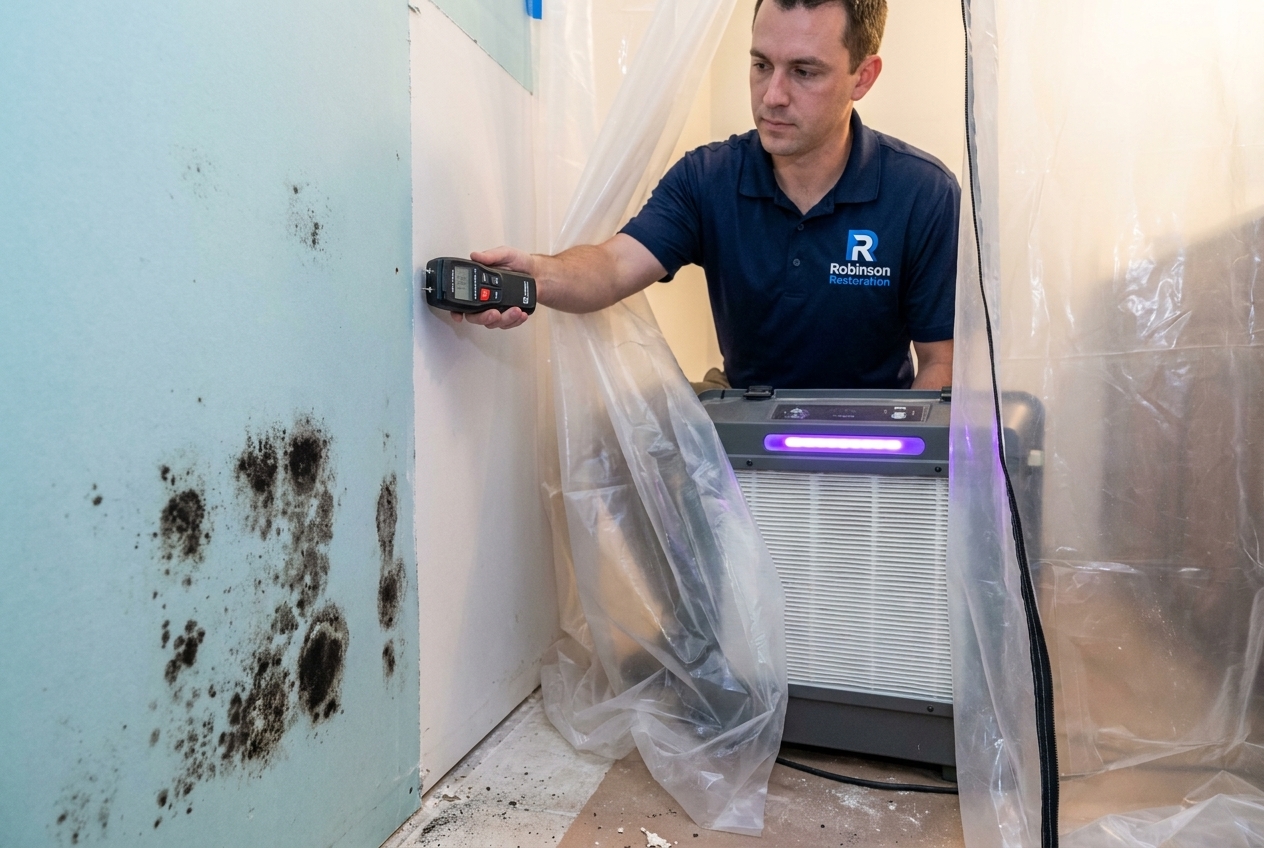
Washington and Oregon are great places to live if you're a person. They're even better if you're mold. Long wet winters, mild temperatures, and older housing stock give spores everything they need, and most colonies grow where you can't see them: inside wall cavities, under flooring, in crawl spaces and attics.
Here's the thing most companies won't tell you. Mold is a symptom. The disease is moisture. Spraying visible mold without finding the leak, the condensation point, or the drainage problem behind it means the colony comes right back. Our remediation always starts with the moisture source, which is why our fixes last.
If you've had a water damage event in the past year, even a small one that "dried on its own," it's worth a look. Mold can establish within 48 hours of a leak and stay hidden for months.
Remediation that skips containment just relocates the problem. Here's how we do it instead.
Thermal imaging and moisture meters trace the water feeding the colony. We map the full extent of growth, including what's inside walls, and identify the source that has to be fixed for remediation to stick.
Plastic containment barriers and negative air pressure seal the affected zone, so spores disturbed during removal can't spread to the rest of your home. This step is where cheap mold jobs cut corners. We never skip it.
HEPA air scrubbers run through the entire project, capturing airborne spores down to a fraction of a micron. Surfaces get HEPA-vacuumed as well, before and after treatment.
Porous materials with active growth, like drywall and insulation, are bagged and removed under containment. Structural wood is cleaned and treated with EPA-registered antimicrobials. Salvageable surfaces are restored, not just painted over.
Independent air sampling confirms spore counts are back to normal before containment comes down. You get the lab results, not just our word. If a sample fails, we treat again at no charge until it passes.
You'll find plenty of scare marketing around Stachybotrys, the species people call black mold. Here's the honest version: color alone can't identify a mold species, plenty of dark molds are ordinary, and any significant indoor colony deserves removal regardless of what it's called.
So we don't quote by fear. We test when identification actually matters, remediate under containment either way, and prove the result with clearance sampling. If a company leads with "toxic black mold" before they've tested anything, get a second opinion. Ours is free.
Carriers don’t decide mold claims by looking at the mold. They look at the water that caused it. A sudden, accidental loss like a supply line letting go or an appliance hose failing is usually a covered event, and the mold that follows rides along with the water claim. Slow seepage under a shower pan, a roof that has leaked for two winters, deferred maintenance: those get denied as gradual damage.
Even on a covered loss, most policies cap fungi remediation with a separate sublimit written into a mold, wet rot, or bacteria endorsement. That cap applies no matter how big the water claim is, so a large mold scope can exceed it. Flood is its own animal and needs separate flood coverage. Reporting fast helps, because carriers reduce or deny claims when a homeowner knew about water and let it sit.
Mold that follows a sudden covered water loss, such as a burst supply line, a failed water heater, or storm damage that opened the building envelope.
Long-term seepage, condensation, humidity problems, grading and drainage defects, and any growth a carrier ties to deferred maintenance. Groundwater and flooding need a separate flood policy.
Dated photos before anything comes out, moisture readings and a moisture map, the repair invoice for the source, lab reports, and a line-item scope in carrier pricing software.
We estimate in the same software adjusters use and can bill the carrier directly once a claim is approved. You cover the deductible and anything above the sublimit.
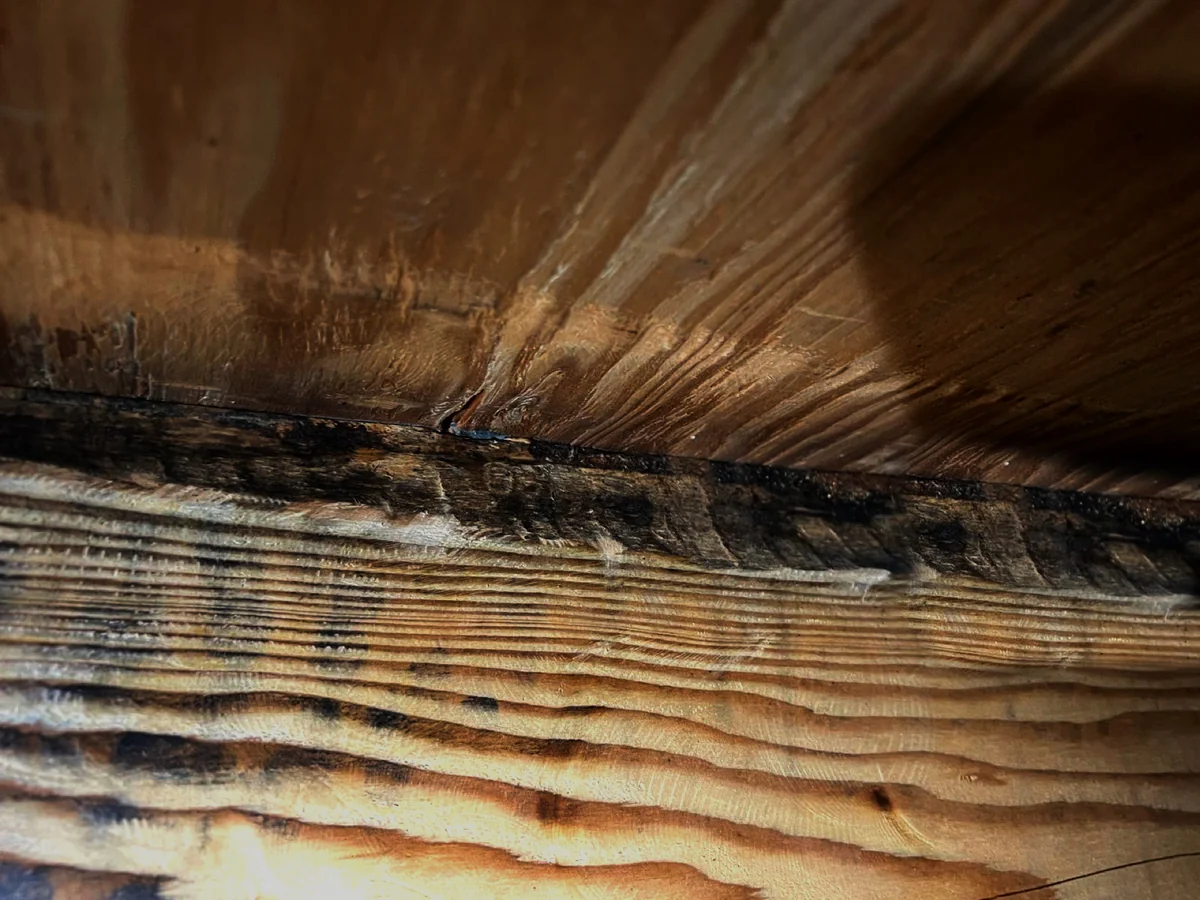
Nobody quotes mold by the square foot alone. The price comes from how much space has to be sealed off, how hard the growth is to reach, and how much building material has to come out and go back. Here is what moves the number.
A colony on one bathroom wall gets a small barrier and one air scrubber. Growth that crosses framing bays into two rooms means a bigger sealed zone, more negative air equipment, more days of runtime, and more labor in protective gear. The footprint of the containment drives more of the estimate than the mold itself.
Open drywall in a spare bedroom is straightforward. A crawl space you have to belly-crawl through, an attic buried in blown-in insulation, or growth behind built-in cabinetry all take longer per square foot, because crews move slowly in tight, hot, awkward spaces. Access also decides whether cabinets, flooring, or tile get cut to reach the substrate.
Remediation is done when the air passes clearance, which is a while before your bathroom looks like a bathroom again. Drywall, insulation, trim, paint, and flooring are a separate scope, and on many jobs that rebuild costs more than the removal did. Robinson manages that work through vetted licensed contractors and sister companies, so you get one project manager instead of chasing trades.
Property managers deal with mold under different pressure than homeowners do. There’s a tenant who wants an answer today, an owner who wants a number, and a paper trail that may get read by an attorney later. We build the job around all three.
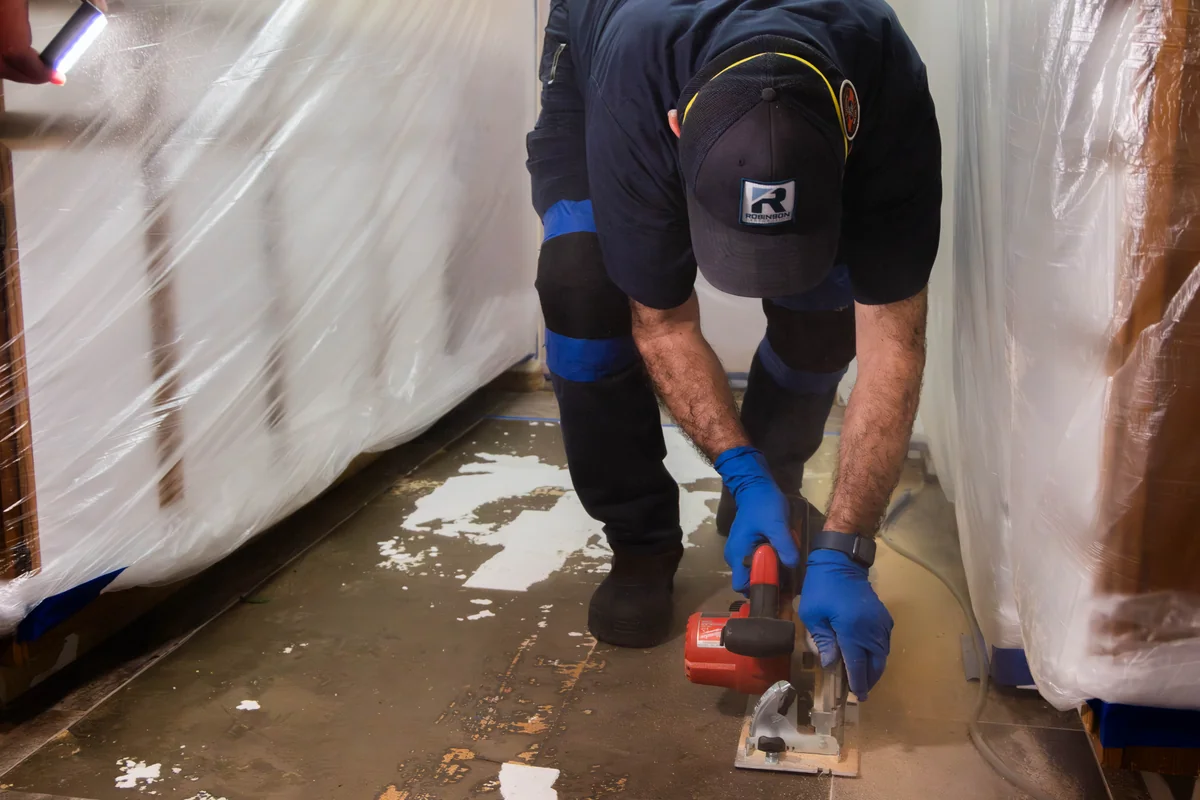
Containment can be built so the rest of a building stays open. We seal the affected unit or suite, run negative air so nothing migrates into shared corridors or HVAC returns, and stage noisy demolition outside business hours where a lease requires it. Tenants get a plain-language scope so nobody has to guess what the plastic is for.
Washington and Oregon both put the duty to keep a rental habitable on the owner, and moisture complaints have a way of turning into disputes. Every job gets dated photos, moisture logs, a written scope, and third-party clearance results. That file answers the tenant, satisfies the carrier, and holds up if the conversation gets formal.
One moldy unit in a multiplex is often a building problem wearing a unit-sized disguise. Bath fans ducted into an attic, a shared wall on a plumbing chase, a crawl space with a torn vapor barrier: those repeat. We look for the pattern across the property and tell the owner what it takes to stop the calls for good.
Mold remediation cost depends on what the mold grew on, whether the moisture feeding it is still active, how many areas have to be contained and cleared by a lab, and whether the HVAC system moved spores through the building. Robinson Restoration maps all of that during a free inspection. You get a documented scope and a written estimate that matches what the inspection actually found.
Non-porous surfaces like tile, metal, and sealed wood clean in place. Porous materials with growth inside them, drywall, insulation, carpet pad, pressed board, get cut out, bagged, and hauled as contaminated waste. Which category your materials fall into sets the demolition and disposal labor.
Remediation can’t be closed out while water is still arriving. A shutoff-valve repair is quick. Re-ducting a bath fan, replacing a vapor barrier, or correcting foundation drainage brings in another trade and more days, and the wet material has to dry before treatment starts.
Each contained zone needs its own clearance test. Lab work scales with how many areas are in play. Growth in a crawl space, a bedroom wall, and an attic clears separately, and species identification is added when a health or insurance question rides on it.
If the furnace or air handler ran while the colony was active, spores moved through the ducts. Cleaning the ducts, sealing supplies and returns, and clearing the airstream on its own adds equipment, labor, and testing that a single-room job never touches.
What you pay out of pocket depends on your carrier’s decision, and that turns on the water that caused the mold. If the claim is approved, we bill the carrier directly and you cover your deductible plus anything past the policy’s mold limit.
Call for the free inspection. Knowing where you see or smell it, how long it’s been there, and whether the room ever flooded helps us scope the job accurately.
"Mold remediation done right. They explained every step, tested the air afterward, and the price matched the estimate exactly. Five-year warranty gave us peace of mind."
Angela R. · Richland, WA
City-specific mold pages for our biggest service areas, with the local conditions we actually see there.
Mold behaves differently in a Seattle basement than it does in a Tri-Cities crawl space, and our crews know which one they’re walking into. Pick your city below for local conditions and local scheduling. Call and we’ll be on-site in 90 minutes or less.
On hard, non-porous surfaces like tile, bleach can remove small surface spots. On drywall and wood it mostly fails: the water in the solution soaks into the material and feeds the roots while the surface looks clean for a few weeks. And if the colony is bigger than about a bathroom-mirror-sized patch, disturbing it without containment spreads spores through the house. That's when it's worth a professional look.
It affects people differently. Some notice nothing while others get congestion, coughing, headaches, or worsening asthma, and children, the elderly, and anyone immunocompromised are more sensitive. Rather than guessing, we test the air. Lab data tells you exactly what you're breathing and whether it's elevated.
It depends on the cause. Mold resulting from a sudden covered water loss, like a burst pipe, is often covered. Mold from long-term neglect or slow seepage usually isn't. We review your policy with you before you file and document the moisture source carefully, because that documentation frequently determines the coverage decision.
Most residential projects run 2–5 days including containment setup, removal, treatment, and clearance testing. Larger losses or attic and crawl space jobs can take longer. You get a written timeline after the inspection.
Not if the moisture is fixed. That's why our process starts with finding the source, not just the visible growth. Remediation is verified with clearance testing, and when we also correct the underlying leak or drainage issue, regrowth is rare. If it does return in a treated area, we make it right.
Both, and independently. Pre-testing identifies species and spore levels when that matters for health or insurance. Post-remediation clearance testing by a third-party lab proves the air is back to normal before containment comes down. You receive every lab report.
Usually no. Containment and negative air are designed to keep the work zone separate from the rest of the house, so most families stay put and just avoid the sealed area. We do talk about relocating when the affected space is a kitchen or the only bathroom, when HVAC has to be shut down for days, or when someone in the home has asthma or a compromised immune system. That call gets made at the inspection, not mid-job.
Most of it, yes. Hard goods like metal, glass, sealed wood, and plastic clean up with HEPA vacuuming and a wipe-down. Clothing, bedding, and soft furnishings usually come back after specialized laundering or cleaning off-site. What usually doesn’t make it is anything porous that absorbed moisture and grew on it: pressed-board furniture, mattresses, cardboard boxes, and paper stored on a damp floor. Everything gets photographed and inventoried before it leaves so there’s a record for you and the adjuster.
Because the water isn’t arriving as a leak. In our climate, bare or torn vapor barrier lets ground moisture evaporate straight up into the joists, and warm humid air drawn through the vents condenses on cool framing and ductwork. Dryer ducts and bath fans dumping into the crawl space or attic make it worse. Fix the vapor barrier, seal the ducts, correct drainage at the foundation, and the wood stops staying wet. Remediation without that step is a temporary result.
A free inspection answers it in an hour. No pressure, no scare tactics, just lab-verified facts.
Licensed · Insured · IICRC AMRT Certified · Serving Washington & Oregon