CERTIFIED • LICENSED • INSURED
WA #ROBINRL752MZ · OR CCB# 256698
24/7 Emergency Dispatch | 90-Minute Response
24/7 Fire & Smoke Response

24/7 Fire & Smoke Damage Restoration

Same-day board-up and securing
Smoke, soot, and odor fully handled
We bill your insurance directly
1,000+ 5-Star Reviews
Free Fire Damage Inspection
90 MIN
On-Site Response
24/7
Emergency Dispatch
1,000+
5-Star Reviews
IICRC
Certified Crews

Robinson Restoration is an IICRC-certified fire and smoke damage restoration company serving Washington and Oregon. We secure and board up the same day, clean soot and smoke residue by type, remove odor at the source, and manage the rebuild through vetted licensed contractors and our sister companies.

Soot staining and smoke damage above a range after a contained kitchen fire
About This Service

Trustworthy Fire & Smoke Damage Experts

Dispatch 24/7 · Free inspection

We understand what fire and smoke can do to a home and to the people living in it. Our certified restoration specialists help you recover from the damage and get your house back to the way it was. Every plan is built around your specific loss, because no two fires behave the same way.

Smoke is the part most people underestimate. It travels far beyond the burn area, settles into ductwork and closets, and keeps causing damage for days after the flames are out. Soot is acidic. Left alone, it etches metal, stains grout, and permanently discolors walls. That's why we start cleaning within hours, not weeks.

From the first inspection through the final rebuild walkthrough, Robinson manages the whole recovery. We document everything for your insurance carrier, advocate for your home's best interest, and aim for zero out of pocket on covered claims. You focus on your family. We'll handle the rest.

True 24-Hour Service
Direct Insurance Billing
IICRC Certified
Full-Scope Recovery

Every Kind of Fire Damage, Handled

Open a panel to see what's involved. Every service below is coordinated by one Robinson project manager.

Structural Fire Damage

Charred framing, compromised drywall, and heat-warped materials get assessed, documented, and removed safely. We test what can be saved and demo only what can't. Structural and electrical safety checks happen before anyone else sets foot inside.

Different fires leave different residue. A slow smolder leaves wet, smeary soot while a fast-burning fire leaves dry powder, and each needs its own cleaning chemistry. Our IICRC-trained techs match the method to the residue so surfaces come clean instead of smearing permanently.

Smoke odor hides in ducts, insulation, and soft goods. We use HEPA air scrubbing, hydroxyl and ozone treatment where appropriate, and duct cleaning to remove the smell at its source rather than masking it.

An open roof or broken windows invite weather, animals, and liability. Same-day board-up and roof tarping secure the property and satisfy your policy's duty to prevent further damage.

Thousands of gallons go into putting a fire out, and that water soaks everything the flames missed. We extract, dry, and treat it exactly like any other water damage loss, before mold gets a foothold.

Furniture, clothing, electronics, and keepsakes are inventoried, packed out, cleaned, deodorized, and stored until your home is ready. Read more about our contents pack-out process.

When mitigation is done, Robinson manages your rebuild through our vetted network of licensed contractors and sister companies. Drywall to final paint, one timeline, one point of accountability. See how the managed rebuild works.

Know Your Residue

Smoke Behaves Differently Depending on the Fire

Soot looks the same to most people. Under a microscope it isn’t. What burned, how hot it burned, and how long it smoldered all change the residue left behind, and each type responds to a different cleaning method. Guess wrong and you set the stain permanently.

Wet Smoke

Wet smoke comes from a slow, smoldering fire, usually one feeding on plastics, vinyl, or rubber. The residue is thick, sticky, and dark, and it smears the second you touch it with a rag. Cleaning starts with solvents and controlled agitation, never water. The odor is the strongest of the three and takes the longest to pull out.

Dry Smoke

Fast, hot fires burning paper and wood leave dry smoke: a fine powder that brushes off without smearing. Easier, in theory. Heat pressure drives those particles deep into cracks, outlet boxes, and porous surfaces first, so we vacuum and dry sponge before anything wet touches the wall. Wet cleaning first turns that powder into a permanent stain.

Protein Residue

Protein residue is the one nobody sees coming. A forgotten pot or a grease fire cooks organic matter into a thin amber film that coats every surface in the house and barely shows on white paint. The smell is brutal. It takes degreasers and enzyme cleaners, and discolored finishes often need sealing and repainting anyway.

The Recovery Path

From Smoke to Move-Back-In

Four stages, one project manager, and a written timeline you can hold us to.

01

Secure & Assess

On-site fast, any hour. We board up openings, tarp the roof, shut down hazards, and document every inch of damage for your carrier.

02

Clean & Deodorize

Soot removal matched to the residue type, HEPA air scrubbing, and odor treatment at the source. Contents packed out for specialty cleaning.

03

Dry & Stabilize

Firefighting water gets extracted and the structure dried to IICRC S500 targets, so mold never becomes your second disaster.

04

Rebuild & Return

Robinson manages the rebuild through licensed contractor partners. Final walkthrough with you, then you move back in.

The Smell Test

Why Smoke Odor Comes Back, and How We End It

Smoke particles are small enough to ride air pressure into places you can’t reach. Wall cavities. Attic insulation. The return side of your ductwork, under the subfloor, inside the outlet boxes. Those materials absorb the compounds that carry the smell and then release them slowly. Warm afternoons and a running furnace push them back out, which is why a room that smelled fine in March reeks in July.

There’s no spray that fixes this. We pull out the material holding the residue, insulation, carpet pad, charred framing, then clean the surfaces and the cavities behind them, ducts included. HEPA scrubbers with carbon filtration run the whole time. Hydroxyl generators work with people in the house; ozone is stronger but the home has to be empty while it runs. Sealing comes last, after cleaning, never instead of it.

HEPA Air Scrubbing

Commercial scrubbers cycle the air through true HEPA filtration while we work.

Hydroxyl & Ozone

Neutralizes odor molecules at the source, run while the space is unoccupied.

Source Removal

Charred and residue-soaked materials come out. You can’t deodorize what should be removed.

Sealing

Where appropriate, surfaces get sealed before rebuild so residue stays locked away.

Why Robinson

What You Get With Us

01

Free inspection, actually free

A thorough on-site assessment at no charge. We map the damage, flag the hazards, and hand you a detailed restoration plan you can question line by line.

02

Technology that finds hidden damage

Thermal imaging, moisture meters, and air quality testing find what eyes miss. Smoke damage two rooms away from the burn doesn't get overlooked.

03

No games with your insurer

We don't sign discounted-rate programs with carriers and we don't cut corners to protect an adjuster's number. Your home's safety comes first, and we advocate for zero out of pocket on covered claims.

04

IICRC-certified, fire-trained crews

Every technician works to published IICRC standards for fire and smoke restoration. Inspection, cleaning chemistry, and clearance are all done by the book.

05

One manager to the finish line

From board-up to the rebuild through our licensed contractor network, a single Robinson project manager owns your timeline and answers your calls.

What to Expect

Your First Month After the Fire

1

The First 24 Hours

Once the fire department releases the property, we secure it: board-up, roof tarp, utilities checked, standing water pulled out. Everything gets photographed for your claim before we move a thing. Most families spend that night in a hotel.

2

Week One

Your project manager writes the full scope and meets your adjuster. Contents get inventoried and packed out, unsalvageable material comes down to bare framing where it has to, and drying equipment runs around the clock. Loud, dusty, and busy.

3

Weeks Two to Four

The detail work. Surface by surface cleaning, cavity and duct cleaning, odor treatment cycles, and testing to confirm it took. Meanwhile your carrier reviews the rebuild estimate. This is the quiet stretch where progress is hard to see day to day.

4

The Rebuild

Robinson manages this stage through vetted licensed contractors and our sister companies. Framing, drywall, paint, flooring, fixtures, inspections. Your same project manager stays on it, walks the finished house with you, and schedules your contents back in.

Your Belongings, Handled Separately and Carefully

Anything salvageable leaves the house early. We photograph and barcode every item room by room, then sort it: hard goods for ultrasonic cleaning, clothing and textiles for specialty washing, electronics and artwork to specialists. Whatever can’t be saved gets documented for your claim. Cleaned items wait in climate-controlled storage, then come home once the rebuild passes final. Pack-out runs as its own service, with an inventory you can check.

Insurance, Straight

How Fire Insurance Claims Actually Work

Fire is one of the most reliably covered perils in property insurance, and a fire claim usually touches several parts of the policy at once: the dwelling, other structures, contents, and loss of use for the time you’re displaced. Your deductible applies once. What actually gets paid still depends on your specific policy language and the cause of loss, so read the declarations page with your adjuster.

Most policies pay contents and some structural items at actual cash value first, then release the recoverable depreciation after the work is finished and invoiced. That’s why the first check often looks small next to the estimate. Jewelry, firearms, and business property carry sublimits no matter what they were worth. Document early, keep every receipt, and expect at least one supplement once hidden damage shows up.

Usually Covered

Flame and heat damage, smoke and soot in rooms that never burned, firefighting water, board-up, and additional living expenses while the home is unlivable. Sudden and accidental losses are the ones carriers pay.

Commonly Denied or Limited

Intentional acts, a home that was vacant beyond the policy’s limit, and damage traced to neglected maintenance. Pre-existing conditions found during demo also get separated out, since the carrier only owes for this loss.

What Your Adjuster Needs

Photos taken before anything is cleaned, a room-by-room contents inventory with ages and values, a written scope with line-item pricing, daily moisture and equipment logs, and your receipts for lodging and meals.

How We Bill

We invoice your carrier directly for covered work, so you’re not fronting costs out of pocket. Supplements for hidden damage go to the adjuster with photos. Upgrades are quoted separately in writing.

Finished bathroom after a Robinson Restoration managed rebuild
Worth Knowing

What Drives the Cost of Fire Restoration

Nobody can quote a fire loss over the phone, and any company that tries is guessing. The number tracks a handful of variables: how far the smoke traveled, what it settled on, how much of the house comes out, and what goes back in its place.

Affected Area Versus Burn Area

A stovetop fire can char two cabinets and leave residue in every room on that floor, plus the attic and the duct runs. Cleaning labor gets priced against everywhere the residue landed, not the footprint of the flames. That gap between what burned and what got dirty is the biggest reason two kitchen fires can quote thousands apart.

What the Soot Landed On

Sealed, hard surfaces wipe down. Porous ones hold residue in the pores and often can’t be cleaned to any real standard, so they get removed instead: insulation, carpet pad, upholstered furniture, unsealed cedar, textured ceilings. Older Northwest homes with plaster, wood paneling, and open attic runs push more line items into the replace column, and replacing costs more than cleaning.

Rebuild Depth and Code Upgrades

Mitigation is usually the smaller half of the invoice. Once demo goes to studs, permits and inspections come into play, and current code governs what goes back: wiring, egress, insulation values, smoke and CO detection. Those upgrades are not automatically covered, which is why ordinance or law coverage matters. Robinson manages the rebuild through licensed contractor partners and sister companies.

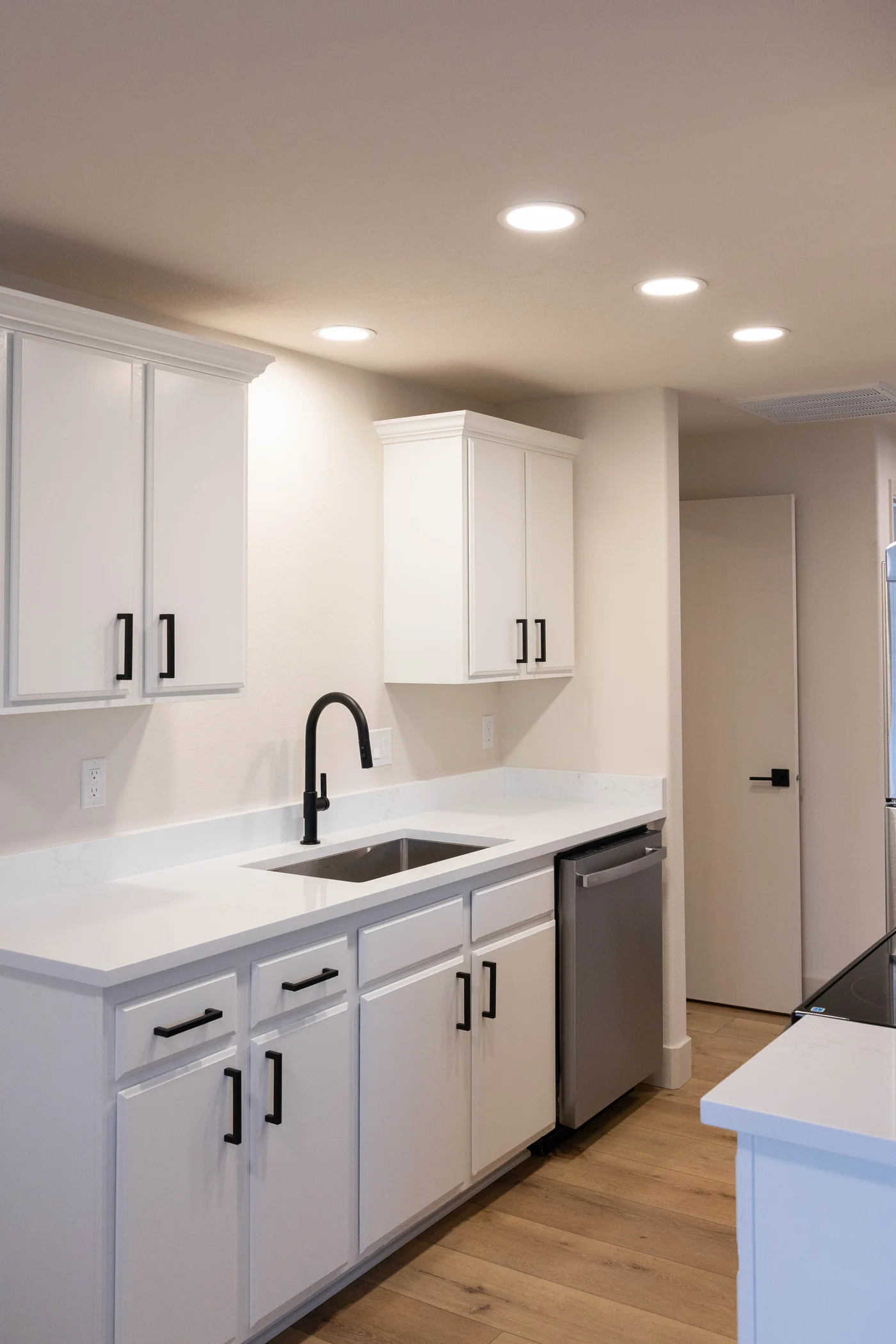
Kitchen after reconstruction
Worth Knowing

Fire Losses in Commercial and Multi-Family Buildings

A fire in a fourplex, a strip center, or an office suite is a different problem than a house fire. More parties, more systems, and a building that has to reopen. Property managers and owners deal with three things a single-family loss never raises.

Smoke Crosses Tenant Lines

Residue follows air, and air moves through shared plenums, chases, and stairwells. Units two doors down with no fire damage still smell it, and their contents still need cleaning. We set containment and negative air at the affected units first, then test and document the neighboring spaces so nobody is guessing about which units belong in the claim.

Life Safety Before Reoccupancy

Sprinkler heads that operated or cooked in the heat have to be replaced rather than reset. Smoke detectors and duct detectors coated in residue get swapped. Exit signage, emergency lighting, and elevator recall all need to work before the fire marshal or building official signs off. We sequence that testing with the cleaning so reopening doesn’t stall on a failed inspection.

Phasing Work Around Operations

Most businesses can’t close for a month. Where the fire is contained, we build hard containment, run negative air, and work nights or in zones so the rest of the building keeps operating. Documentation matters more here too, since business interruption and extra expense coverage pays against dates and losses you can prove.

Straight Answer

How Much Does Fire and Smoke Damage Restoration Cost?

Fire and smoke damage restoration cost depends on how much material has to be dried, cleaned, or removed, how long equipment has to run, how much of your contents needs handling, and whether older materials require asbestos testing before demo. Robinson Restoration inspects the property, tests surfaces, writes a documented line-item scope, and gives you the estimate in writing before work starts.

Wet Material and Cavity Access

Drying is priced against how much material holds water and how hard it is to reach. Open drywall dries fast. Water trapped under hardwood, behind plaster, or inside a closed soffit won’t move without drilling, mats, and injection drying, which takes longer and more equipment.

Equipment Days and Containment

Air scrubbers, negative air machines, dehumidifiers, and odor equipment bill by the day, so a structure that’s slow to hit dry and clear standards adds days to the invoice. Containment walls and negative pressure add labor too, especially when part of the building stays occupied.

Contents Volume and Routing

Contents are estimated item by item and by cleaning method, so a garage full of tools and a closet of wool coats don’t land in the same column. Volume drives the inventory hours, truck and storage time, and how many pieces go to outside specialists.

Asbestos Testing Before Demo

Fire demo in an older home triggers testing first. Washington and Oregon both require asbestos surveys before demolition work, and popcorn ceilings, sheet flooring, and old joint compound often come back positive. Positive results mean a licensed abatement crew works under containment before restoration continues.

What Insurance Changes

On a covered loss, your carrier pays the approved scope and you pay your deductible, so what you owe is different from the estimate total. Coverage depends on your policy language and the cause of loss. We’ll bill the carrier directly for approved work.

Getting a Real Number

Call dispatch for a free on-site inspection. Have your carrier and claim number ready if you’ve filed, plus any photos you took before cleanup started.

Real Customer Reviews

1,000+ Five-Star Reviews

5.0 on Google

"After our kitchen fire I thought the whole house was ruined. The smell was everywhere. Robinson's crew cleaned rooms I didn't even know were affected, and their manager handled every call with our insurance. We were back home faster than the adjuster predicted."

Rachel M. · Vancouver, WA

Free Fire Damage Inspection
Local Crews

Where Our Crews Work

Fire and smoke crews cover cities across Washington and Oregon, and every city page gets into the housing stock, weather, and claim quirks specific to that area. Find your city below, or call dispatch now and we’ll be on-site in 90 minutes.

Frequently Asked

Fire Damage Restoration FAQs

Is it safe to go back inside after a fire?

Not until the structure has been checked. Fire weakens framing, and soot and smoke residue are health hazards even in rooms that look untouched. Wait for the fire department to release the property, then call us. We inspect structural and electrical safety before any cleanup starts, and we'll tell you honestly what's safe and what isn't.

Call your insurance carrier to open a claim, then call us for board-up and tarping. Don't wipe soot off walls or run the HVAC system, both make contamination worse. Keep receipts for hotel and meals since most policies reimburse additional living expenses. We handle the property side while you handle your family.

It can be removed, but only by treating the source. Odor molecules lodge in ducts, insulation, and porous materials. We clean or remove those materials, then use HEPA scrubbing and hydroxyl or ozone treatment to neutralize what remains. Sprays and foggers alone just mask it for a few weeks.

Fire is one of the most consistently covered perils in standard homeowners policies, including smoke damage, firefighting water damage, and additional living expenses while you're displaced. We document the full scope, bill your carrier directly, and advocate for zero out of pocket on covered claims.

Securing and cleanup usually run 1–3 weeks depending on severity. If reconstruction is needed, the rebuild adds more time and we give you a written timeline after inspection. Small smoke-only losses can be much faster.

Yes. Robinson manages the entire rebuild through our vetted network of licensed contractors and sister companies, from framing and drywall to final paint. You keep one point of contact the whole way, and the work is backed by our workmanship warranty.

Sometimes, if the fire was contained and the damage is limited to one area. We can build containment barriers, run negative air, and keep a clean path for your family. Larger losses are different. Demo, drying equipment, and ozone treatment all require an empty house, and ozone in particular means people, pets, and plants stay out until the space is cleared and aired. Your policy’s additional living expense coverage usually pays for the hotel while that happens.

We’d rather you didn’t. Soot is acidic and abrasive, and wiping it with a wet rag grinds the particles into the paint and drywall paper, which turns a cleanable surface into one that needs replacing. There’s a health side too. Fine soot carries combustion byproducts you don’t want in your lungs, so crews wear respirators for a reason. If you want to do something useful, photograph everything and leave the surfaces alone until we’ve inspected.

It becomes a second loss if nobody deals with it. Suppression water runs into wall cavities, under flooring, and down into the crawlspace, and it carries soot and whatever else it passed through, so it’s treated as contaminated rather than clean. Our crew extracts it, sets drying equipment, and monitors moisture readings against IICRC standards until the structure hits target. In a wet Northwest winter that matters more, since nothing dries on its own.

Usually not the equipment, but the ductwork almost always needs attention. Smoke gets pulled into the return, coats the coil and blower, and settles along the duct interior where it keeps re-releasing odor every time the system runs. We clean the duct runs, replace filters, and have the coil and blower cleaned. Flex duct with heavy residue gets replaced, since the liner holds smell that cleaning won’t reach. Furnaces near the fire itself get evaluated separately.

Those go. Heat and smoke degrade packaging and push residue into anything porous or partly sealed, and combustion byproducts are not something to gamble with. Anything in cardboard, plastic film, or a screw-top jar comes out, and that includes pantry goods, refrigerated and frozen food, prescriptions, and open toiletries. Before it leaves, we photograph and list it with estimated replacement values, because contents coverage typically reimburses non-salvageable items on a covered loss.

No. Carriers keep preferred vendor lists and an adjuster may hand you a name, sometimes before you’ve had a chance to ask around. The choice of who works on your property is yours, and using an outside company doesn’t reduce what a covered claim pays. We work with every major carrier, document to the standards they audit against, and we don’t sign program agreements that put an adjuster’s number ahead of your house.

24/7 Emergency Dispatch · Live Now

The Fire Is Out.
Soot Keeps Working.

Acidic residue starts etching and staining within days. Call now and we'll secure the property today.

Licensed · Insured · IICRC Certified · Serving Washington & Oregon