Robinson Restoration is an IICRC-certified water damage restoration company serving Plymouth, WA. Crews dispatch 24 hours a day, arrive on-site in 90 minutes or less, document the readings and photos your carrier needs, and bill your insurance directly on covered claims.
Plymouth sits right on the Columbia where I-82 crosses into Oregon, a small river community surrounded by irrigated ground, grain terminals, and open shrub-steppe. Homes and shops out here often sit empty for stretches, which is exactly when a water loss does the most damage. Robinson Restoration answers 24/7.
This is one of the driest corners of Washington, so nothing about the buildings here is designed for standing water. Slab-on-grade construction is common, manufactured and modular homes are everywhere, and river frontage brings seasonal properties, RV sites, and shop buildings. Wind runs hard down the Columbia gorge year round. Winter cold parks over the basin for days at a time, and that is when supply lines fail.
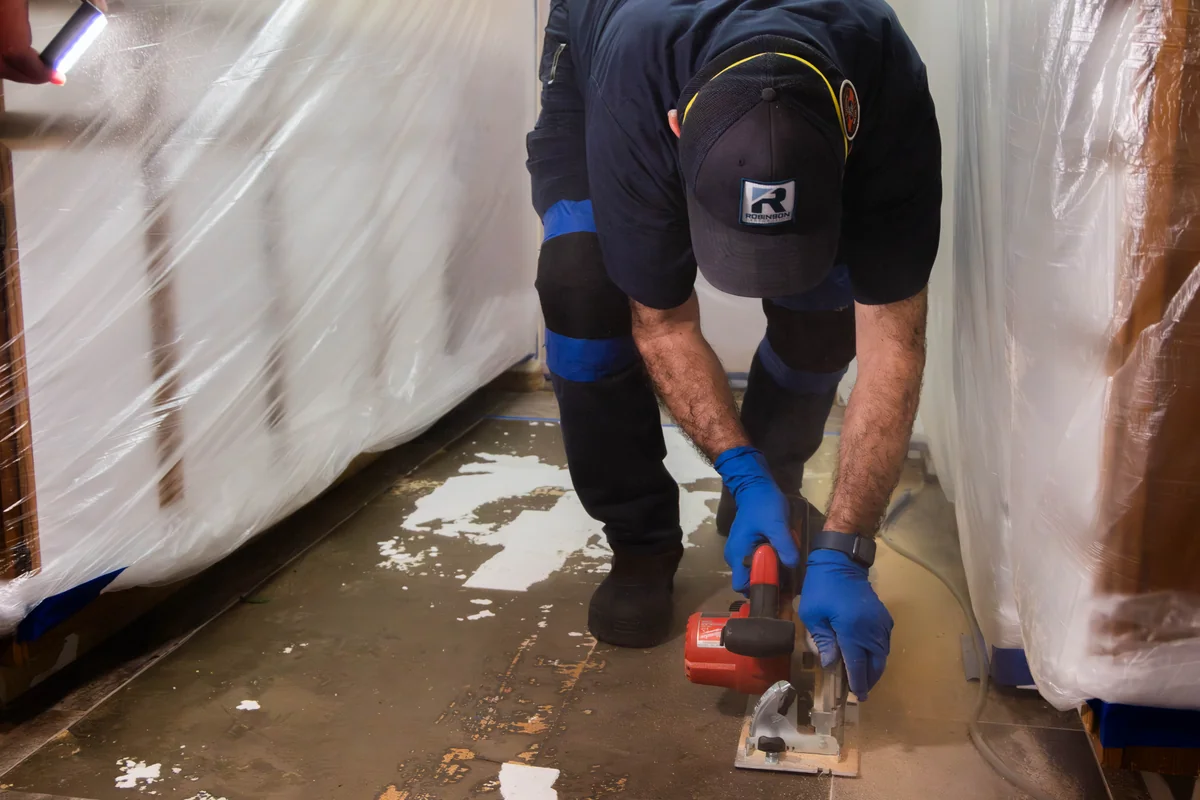
Our Tri-Cities crews cover Plymouth and the river communities on both sides of the Columbia. Dispatch is live 24/7, and the first crew brings extraction, air movers, and dehumidification along with cameras and meters. We follow IICRC S500 for drying, log readings daily, and bill your insurance carrier directly. If the property is a second home or a rental, we can coordinate access and send updates to whoever is not on site.

Plymouth calls reach a live dispatcher any hour, and crews arrive equipped for slab floors, shop buildings, and unoccupied river properties.
24 hours a day, 7 days a week, our crews dispatch the moment you call and start mitigation the same visit. Call dispatch or message us for immediate help.
We stop further damage with commercial extraction, structural drying, and antimicrobial treatment, and we walk you through the entire insurance claim as we work.
We manage your rebuild to pre-damaged condition through our trusted network of licensed contractors and sister companies. One manager, one timeline.
Plymouth is a Columbia River community, and a lot of the structures here exist because of the water: docks, boat storage, riverfront cabins, and RV sites with seasonal plumbing. Seasonal systems are the risk. A line left charged over winter, or a pedestal supply that was never blown out, will find the weak point and run unattended.
The river corridor at Plymouth carries barge traffic, grain handling, and pipeline and utility infrastructure, so a lot of the built space is metal buildings, offices attached to warehouses, and equipment shops. Those buildings have long runs of exposed plumbing and concrete floors that hold water at the low corner. Drying them takes commercial dehumidification, not a couple of rental fans.
Hard freezes settle into the basin and stay. The properties that suffer worst around Plymouth are the ones nobody is standing in: a shop with the heat turned down, a rental between tenants, a cabin closed for the season. A split line runs for days at full pressure, and by the time someone opens the door the subfloor is gone.
Slab-on-grade is the norm out here, and it changes where water goes. With no crawlspace to drain into, water travels sideways under vinyl plank and laminate, wicks up the bottom plate, and sits in the gap between slab and flooring. Surface mopping looks like a fix and is not one. We meter the slab and dry it before anything goes back down.
Most of the losses we run in Plymouth start one of three ways: frozen and split pipes, water heater failures, and appliance failures. Here is why each one happens here, and what it takes to dry it properly.
Basin cold snaps run for days without a thaw, and Plymouth has a lot of buildings sitting empty when they hit. Split lines in unheated shops and closed-up homes go unnoticed the longest.
Hard water in this part of the basin scales tanks and shortens their life. When a heater in a Plymouth utility closet or garage lets go, it empties across a slab and travels under flooring in every direction.
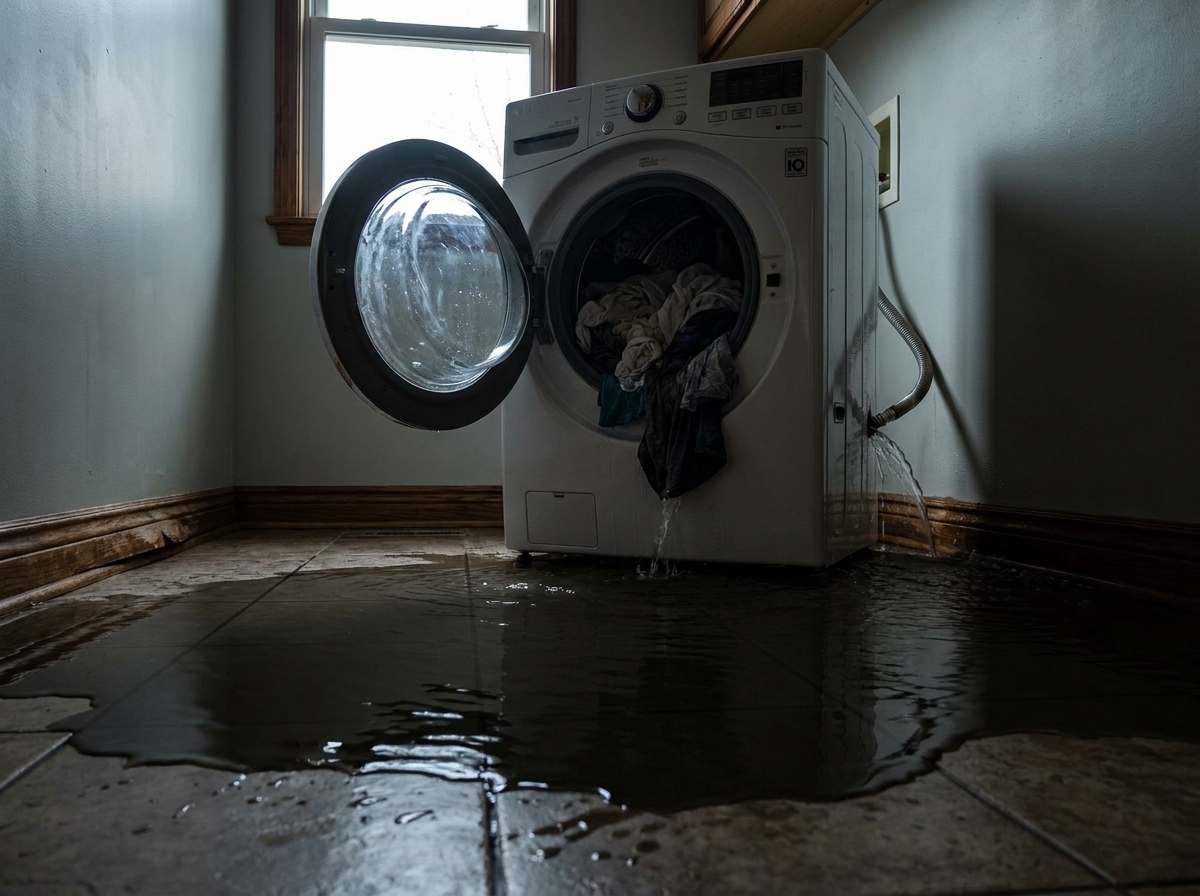
Supply hoses on washers, dishwashers, and ice makers fail without warning. In a slab home there is no crawlspace to catch it, so the water spreads flat and quietly into the next three rooms.
Water is how most losses start. It’s rarely where they end. The same local crew handles all of it.
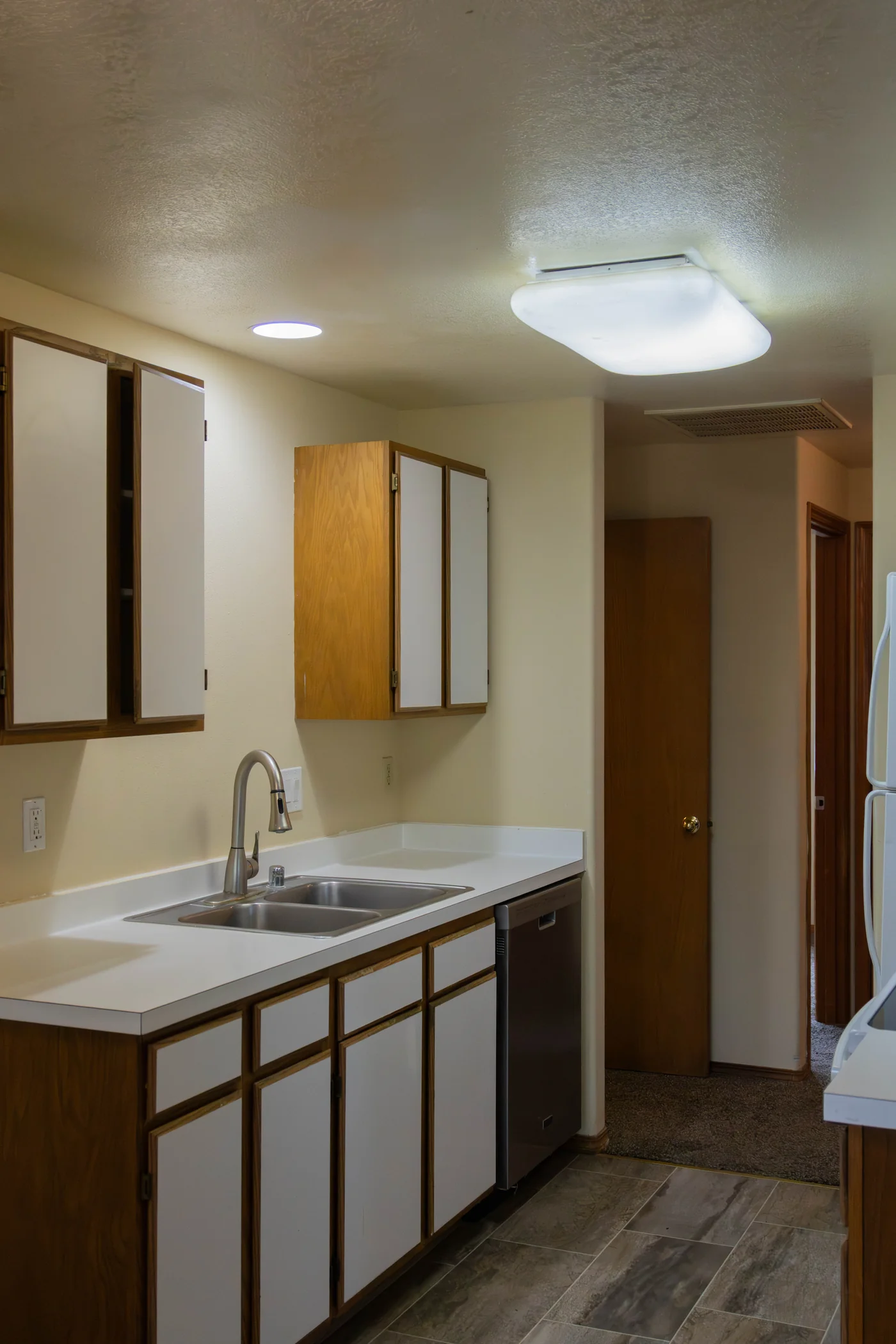
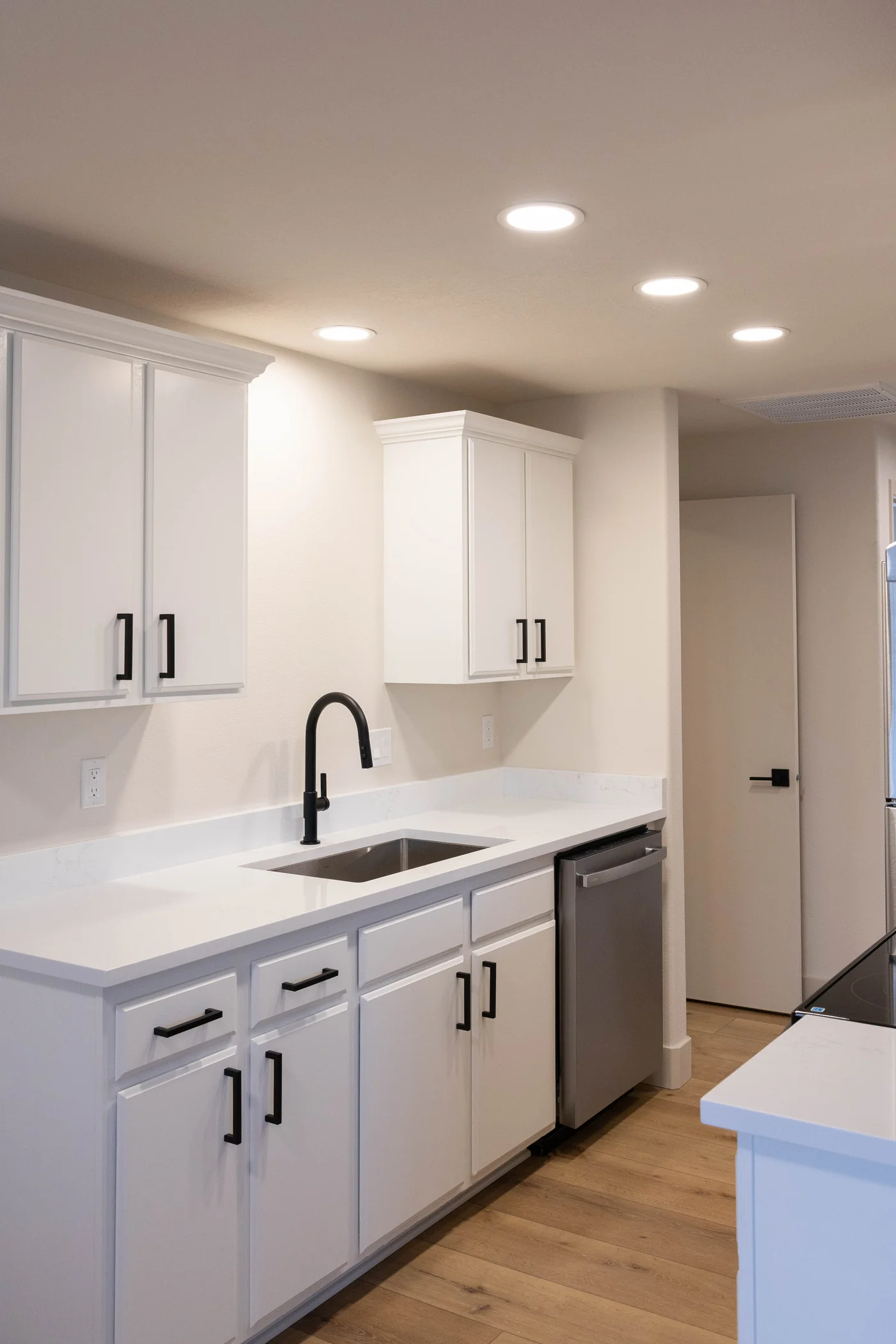
Three real projects, photo-documented for the insurance carrier. Drag each handle to compare.
“One of the pipes in the shower burst and water damage got all over the roof in the kitchen. As new home owners we were very scared and panicked. We contacted Kelly Farmer from Robinson Restoration and believe me when I say I felt like more than half of my problem was solved.”
Nav Basra · Google Review
“Just started a project with Cole and Chuck at Robinson Restoration and had to write a review straight away. These guys have been fantastic. We were away on a week long trip when we had a kitchen leak that destroyed our flooring and subfloor.”
Justin O'Neill · Google Review
“I want to express our sincere gratitude to the Robinson team that quickly moved to identify, rectify, repair, and then clean up the mess left by an itty-bitty hot water leak that went unnoticed because of its location.”
Michael Quinn · Google Review
In Washington, you choose your restoration contractor, and your carrier can’t penalize you for it. We document every Plymouth loss with moisture maps, photos, and daily readings, then bill your insurer directly. You pay your deductible. That’s it.
Subject to policy coverage and deductible. We handle the paperwork, photos, and adjuster calls.
Our dispatch line is answered live at any hour, and the crew covering Plymouth works the Columbia River communities across Benton County. They show up with truck-mounted extractors, air movers, and dehumidifiers, which means drying begins during the same visit rather than a later appointment. Insurance billing is handled on our end, direct to your carrier, with photos and moisture readings included.
We do. Plymouth is inside our Tri-Cities service area, and our crews already run the river corridor on both sides of the Columbia. Dispatch is staffed 24/7, and we target on-site in 90 minutes. Small community or not, the response looks the same: extraction, containment, drying equipment, and documentation for your carrier from the first hour.
Yes, and we do it often. We can coordinate access with a neighbor, a property manager, or a lockbox, then send photos, moisture logs, and daily equipment reports so you can follow the job remotely. Everything is documented the same way it would be if you were standing in the room, which also protects you if the carrier questions the scope later.
Concrete holds water, so we treat the slab as part of the structure. Flooring and any wet underlayment come up, we meter the slab in a grid, and we run dehumidification with directed airflow across the surface until readings level out against a dry standard elsewhere in the building. Putting new flooring over a slab that still reads wet is how Plymouth homeowners end up doing the job twice.
Shut the water off at the main, or at the pressure tank and pump breaker if your Plymouth property is on a well. Kill power to any circuit near standing water at the panel, not at the switch. Move electronics, documents, and anything with legs off wet flooring. Then stay out of the water and let the dispatcher know if the loss involves sewage.
Yes. Metal buildings, ag structures, offices, and equipment shops all get the same process, scaled up. Large open spans need commercial dehumidifiers and a real airflow plan, and stored inventory usually needs to be moved and inventoried before drying starts. We document contents separately from structure so your business claim and your property claim do not get tangled together.
That is the part most Plymouth property owners want off their plate. We bill participating carriers directly, so you generally cover the deductible and nothing else. Our documentation is built for adjusters: dated photos, moisture readings by room and material, equipment logs, and a line-item scope. If an adjuster pushes back on drying time, the readings are there to answer it.
One call gets a Plymouth crew assigned, equipment loaded, and the drying clock started in your favor.
Licensed · Insured · IICRC Certified · Serving Washington & Oregon