Robinson Restoration is an IICRC-certified water damage restoration company serving White Salmon, WA. Crews dispatch 24 hours a day, arrive on-site in 90 minutes or less, document the readings and photos your carrier needs, and bill your insurance directly on covered claims.
White Salmon sits up on the bluff with Mount Hood filling the window and the river dropping away below town. Steep ground moves water fast and in directions nobody planned for. When it ends up inside a house, our certified crews respond around the clock, on-site in 90 minutes or less.
Building here means building on a grade. Houses from the early 1900s sit on post-and-pier foundations over tight crawl spaces, and newer places use daylight basements cut into the slope. This is the seam where the wet west side meets the dry east side, so town gets genuine rain, hard wind, and the occasional ice storm the Gorge is known for. Uphill runoff has to go somewhere, and often it goes under a house.
Klickitat County work is dispatched from our Vancouver, Washington headquarters, and somebody picks up at any hour. The crew that arrives is IICRC certified and follows S500 from the first walkthrough: photograph, map moisture, contain, extract, then dry with equipment matched to the materials in front of them. Readings are taken and logged every day. We submit the drying file and bill your insurance carrier directly, which keeps the claim moving while you handle everything else.

White Salmon calls reach a crew already staged for Gorge weather with equipment loaded, targeting on-site in 90 minutes or less.
24 hours a day, 7 days a week, our crews dispatch the moment you call and start mitigation the same visit. Call dispatch or message us for immediate help.
We stop further damage with commercial extraction, structural drying, and antimicrobial treatment, and we walk you through the entire insurance claim as we work.
We manage your rebuild to pre-damaged condition through our trusted network of licensed contractors and sister companies. One manager, one timeline.
On a slope, your water problem often starts on somebody else's property. Saturated ground above a house sends subsurface flow toward the first thing that interrupts it, which is usually a foundation wall or a crawl space vent. Cut banks, driveway culverts, and undersized drain lines all concentrate it further. By the time it shows up inside, the source can be well above the building.
The older housing stock rests on piers with limited clearance underneath, sometimes less than two feet. Vapor barriers tear, ductwork sits on wet dirt, and the space stays humid enough all winter to feed decay in the joists. Getting equipment into that crawl space takes planning, and drying it properly takes directed airflow rather than a fan pointed at an opening.
Elevation and the Gorge give this area weather from both directions. Wet Pacific systems push rain sideways into siding and window flashing, then the east wind arrives cold and dry and drops temperatures in a hurry. Freezing rain glazes everything. Materials that expand and contract that aggressively open gaps at every joint, and gaps are where water gets in.
Outside the city limits, homes run on private water: a drilled well, a spring box, a pressure tank in an outbuilding. Those systems fail in ways municipal service does not, especially a pump house that loses heat during a cold stretch. A ruptured line on the pressure side keeps producing water until the breaker is pulled, which is rarely quick when nobody is home.
Most of the losses we run in White Salmon start one of three ways: burst and leaking pipes, roof and storm leaks, and sewage backups. Here is why each one happens here, and what it takes to dry it properly.
Cold east wind pushes into crawl spaces and unheated outbuildings that a milder week left unprotected. Supply lines along an exterior wall or under a pier foundation split first, often while a seasonal house sits empty.
Wind-driven rain here hits at an angle that ordinary flashing was never designed for. Water gets behind fascia, around skylights, and under lifted shingles, then runs along framing before it stains a ceiling somewhere else.
Septic drainfields on the slope saturate during long wet stretches and stop accepting flow. The system backs up toward the lowest fixture in the house, and everything it touches has to be treated as contaminated.
Water is how most losses start. It’s rarely where they end. The same local crew handles all of it.
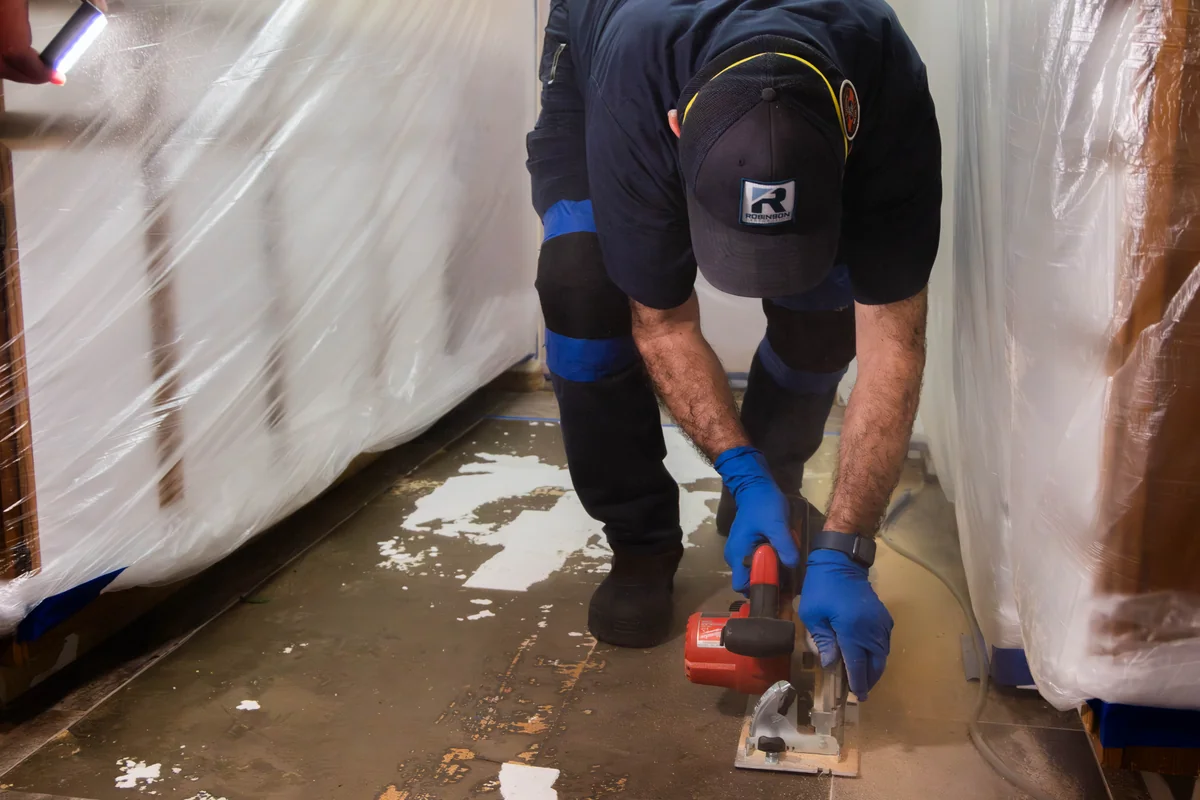
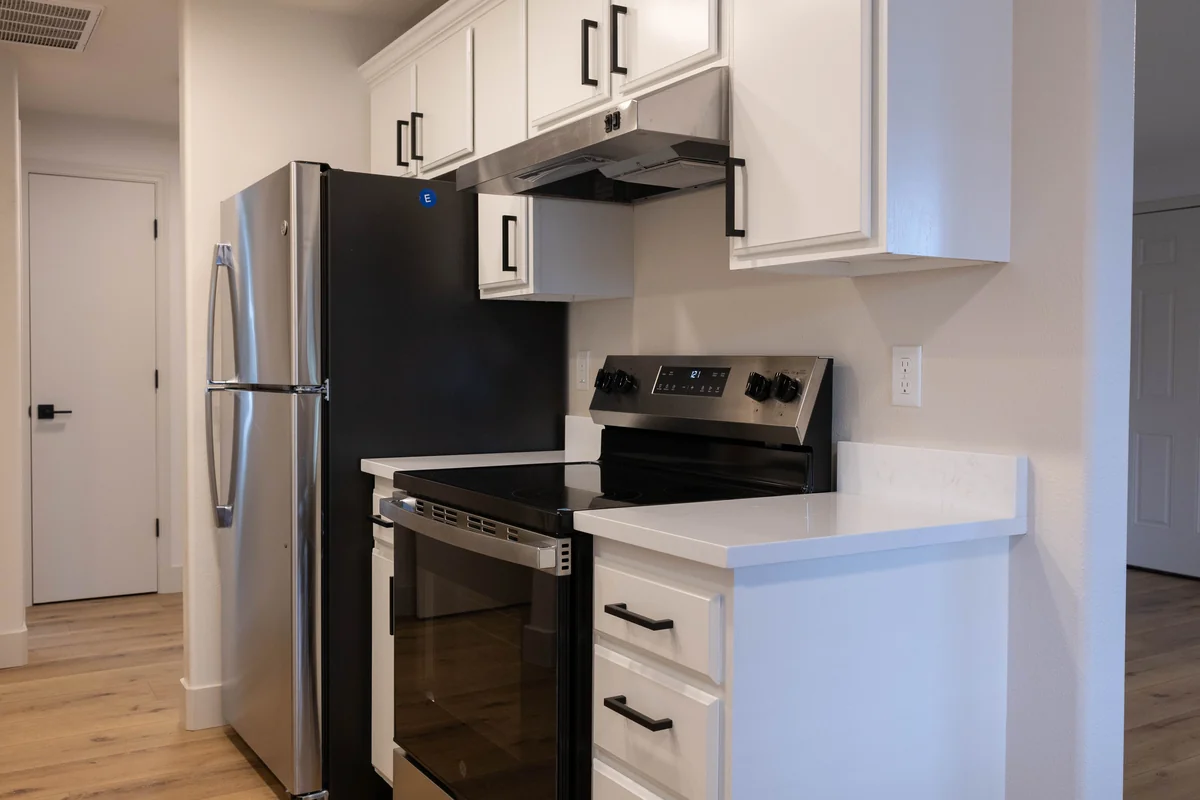
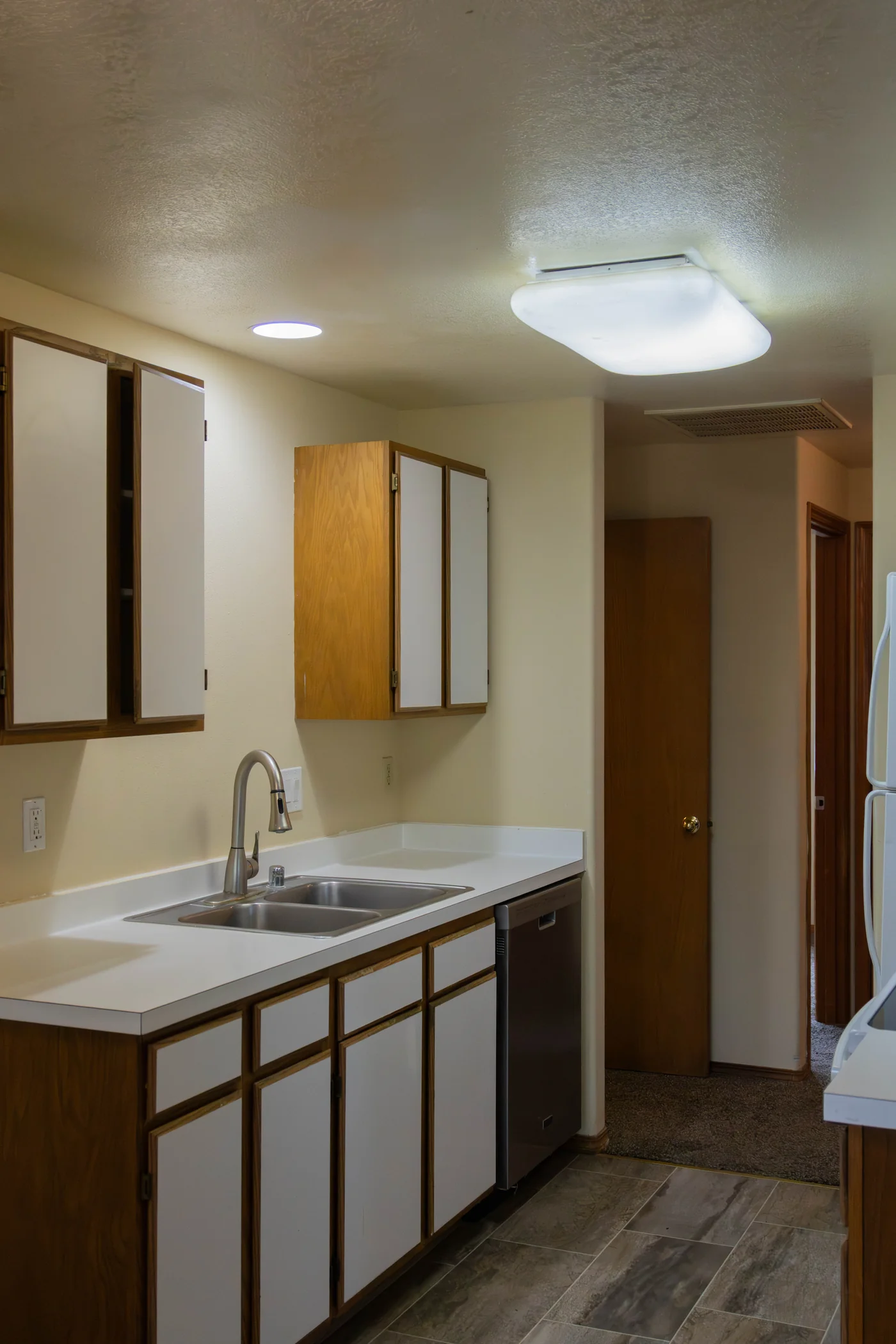
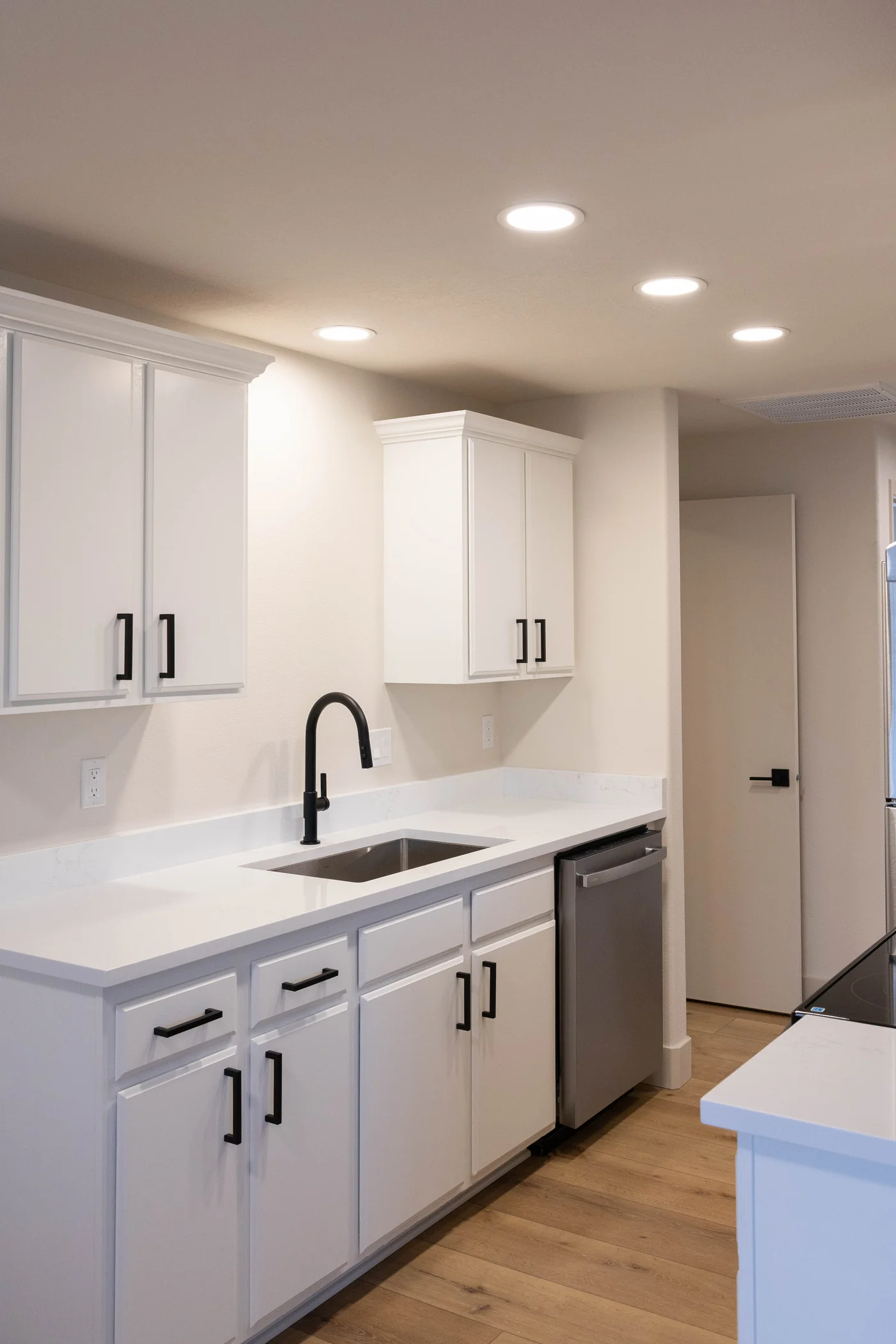
Three real projects, photo-documented for the insurance carrier. Drag each handle to compare.
“Had a leak in our wall and our plumber recommended Robinson Restoration to handle remediation of the water damage. Christian and Adolfo were awesome. Great communication throughout the setup of the containment area and installation of the equipment to start the drying process.”
Won Lee · Google Review
“We recently had an unfortunate plumbing issue that led to some significant flooding issues. On the recommendation of our plumber we reached out to Robinson Restoration to help us with drying out our house and getting it ready to be put back together.”
Don Warner · Google Review
“We've had the bittersweet opportunity to have Robinson in our lives twice now. First, for a major 3,000 sq ft mold remediation of our crawl space. Then last week, we had an unfortunate flood. I don't know what we would have done without them.”
T Marie C · Google Review
In Washington, you choose your restoration contractor, and your carrier can’t penalize you for it. We document every White Salmon loss with moisture maps, photos, and daily readings, then bill your insurer directly. You pay your deductible. That’s it.
Subject to policy coverage and deductible. We handle the paperwork, photos, and adjuster calls.
Distance matters more on this side of the river, where a wrong turn costs real time. Our Gorge crews cover White Salmon and the surrounding county day and night, arriving with truck-mounted extraction, air movers, dehumidifiers, antimicrobial supplies, and moisture meters so nothing waits on a second trip. Documentation starts at the front door, and we bill your insurance carrier directly rather than leaving the paperwork to you.
Almost certainly not under a standard policy, because surface water and subsurface seepage are excluded no matter how much damage they cause. That does not mean you should live with it. We extract, dry the space, treat what has started growing, and document the pathway water is taking so a drainage contractor has something concrete to work from. Knowing the mechanism is what stops it repeating next winter.
Yes. Steep and narrow describes most of the White Salmon properties we work on. Crews carry long hose runs, portable extractors, and stackable drying units precisely because backing a truck to the door is often not an option. Tell dispatch about the access when you call, including gate codes and turnaround space, and the right vehicle and crew size get assigned before anyone leaves.
That water is category three, so the handling changes immediately. Porous materials it contacted, carpet, pad, and typically the lower section of drywall, come out rather than getting dried. We build containment with negative air, extract, clean and apply an antimicrobial to structural surfaces, then dry and verify. The septic system itself needs a pumper and often a drainfield evaluation, which we can help you sequence.
We do, and it is the same crews either way. The bridge means a job in Bingen, a job on the White Salmon bluff, and a job across in Oregon can all be handled the same night. Licensing, documentation standards, and insurance billing all stay consistent, which matters if you own property on both sides or manage a rental across the water.
Usually, yes, and a good share of White Salmon housing qualifies. Old-growth framing is dense and gives up moisture slowly, plaster and lath hold water differently than modern drywall, and layered flooring from multiple remodels traps it in between. That is a scheduling reality, not a reason to rush. We adjust equipment counts and keep taking readings rather than pulling on a fixed timeline, because a house that measures dry on the surface can still be wet underneath.
Robinson manages that phase through licensed contractors and sister companies rather than self-performing it, so you keep one point of accountability from the first extraction visit through final paint. We hold the schedule, coordinate the trades, and keep everything inside the same insurance file. On older homes that means finding people who can match existing trim, siding profiles, and interior finishes rather than approximating them.
Water on a slope keeps moving until someone stops it. Call and a crew starts now.
Licensed · Insured · IICRC Certified · Serving Washington & Oregon