Robinson Restoration is an IICRC-certified mold remediation company serving Beaverton, OR. We find the moisture source first, contain the work area with negative air and HEPA filtration, remove what the water damaged, and verify the space is clean before the containment comes down.
Most Beaverton mold calls don't start with a flood. They start with a smell in a hallway closet or a musty draft coming up through the floor on a wet February morning. By the time it's visible on drywall, it's been feeding on something behind the surface for weeks.
The wet season here runs from October into May, and the ground on the valley floor stays saturated most of it. Older Beaverton neighborhoods sit on vented crawl spaces with thin plastic over bare dirt. Post-war ranches went up with uninsulated walls and aluminum windows that sweat all winter. Newer subdivisions on the slopes toward Cooper Mountain trade that for tight construction, where a small supply leak has nowhere to dry and no way out.
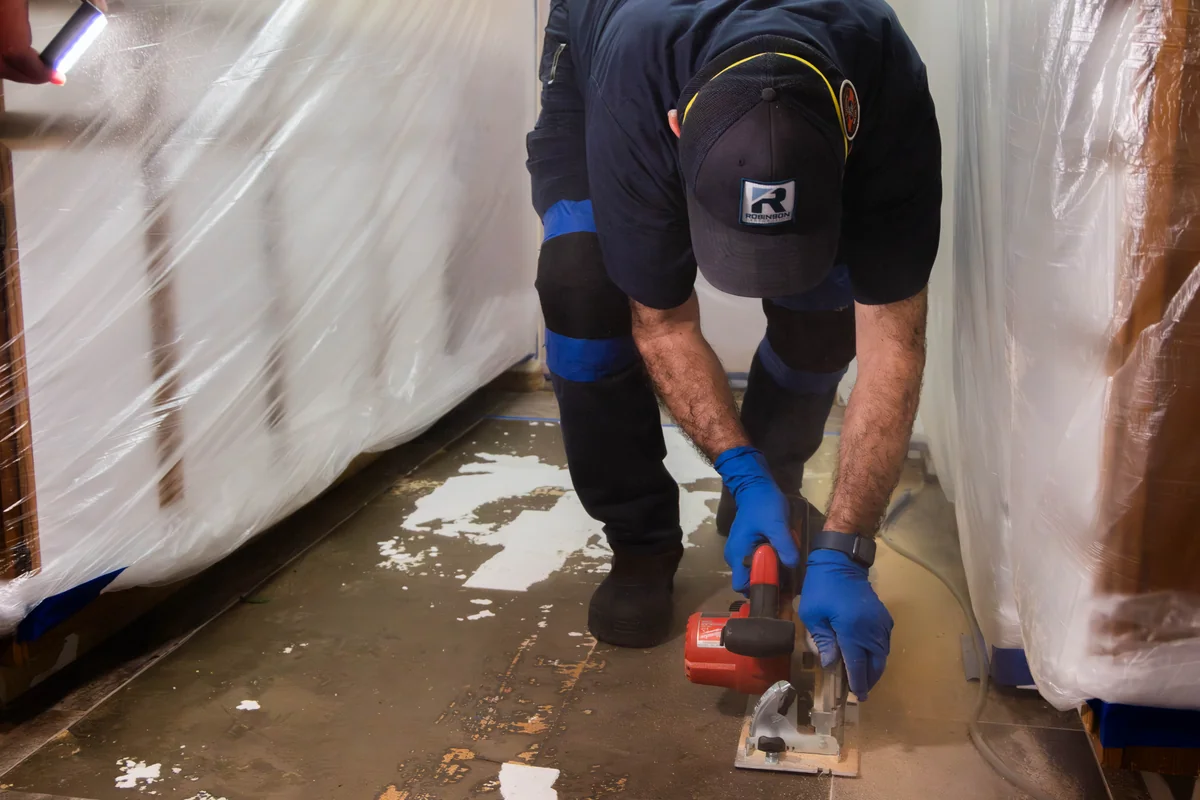
We start with an inspection that looks for the water before it looks for the mold: moisture meters, thermal imaging, and a crawl space walk if the house has one. Containment goes up before anything gets disturbed, with negative air and HEPA filtration so spores don't ride the ductwork into clean rooms. Our crews run the Portland metro out of the Vancouver office. Every finding gets photographed and written up for your carrier, and air and surface testing verifies the space before we clear it.

Mold work in Beaverton starts with an inspection, and when there's active water behind it we can be on-site in 90 minutes or less.
We start with moisture readings and thermal imaging to find the source and map how far growth has spread. Mold you can see is rarely all of it.
Plastic containment and negative air with HEPA filtration go up before removal starts, so spores never travel to clean rooms while we work.
Air and surface checks verify the space is clean before containment comes down. Any repairs are managed through vetted licensed contractors and sister companies.
Beaverton's older streets sit under mature firs and maples, and the north-facing roof planes underneath them never get enough sun to dry out. Moss holds water against the shingles. Needles pack the gutters until winter rain sheets over the edge, soaks the fascia, and runs down siding that stays wet for months. Mold follows the water in, usually at the eaves first.
A lot of the city's 1950s and 1960s stock has uninsulated exterior walls and original aluminum window frames. Those surfaces run cold from November on, and indoor humidity condenses on them every night. Growth shows up at the base of window trim, on closet walls facing north, and behind furniture pushed tight against an outside wall.
Dense housing along the light rail corridor puts bathrooms, laundry closets, and kitchens back to back across a shared wall. One undersized exhaust fan or a slow angle-stop drip can push moisture into framing that two households live against. We document the affected unit and the shared assembly separately, which matters when a property manager and an owner both need a record.
Mold problems here aren't limited to the rainy months. Lawn systems on the west side run daily through July and August, and a misaimed head that hits siding, a crawl vent, or a foundation wall every morning keeps that assembly damp all summer. Homeowners find it in September, when the smell turns up and nobody can point to a leak.
In Beaverton the growth we find is concentrated in three places: crawl spaces, bathrooms, and attics and roof decks. Each one holds moisture for a different reason, which changes how the work gets scoped.
Nearly every older house in town sits over a vented crawl space with plastic laid loose on bare dirt. Ground moisture rises through the gaps, and in summer humid outside air condenses on cold duct runs and joists.
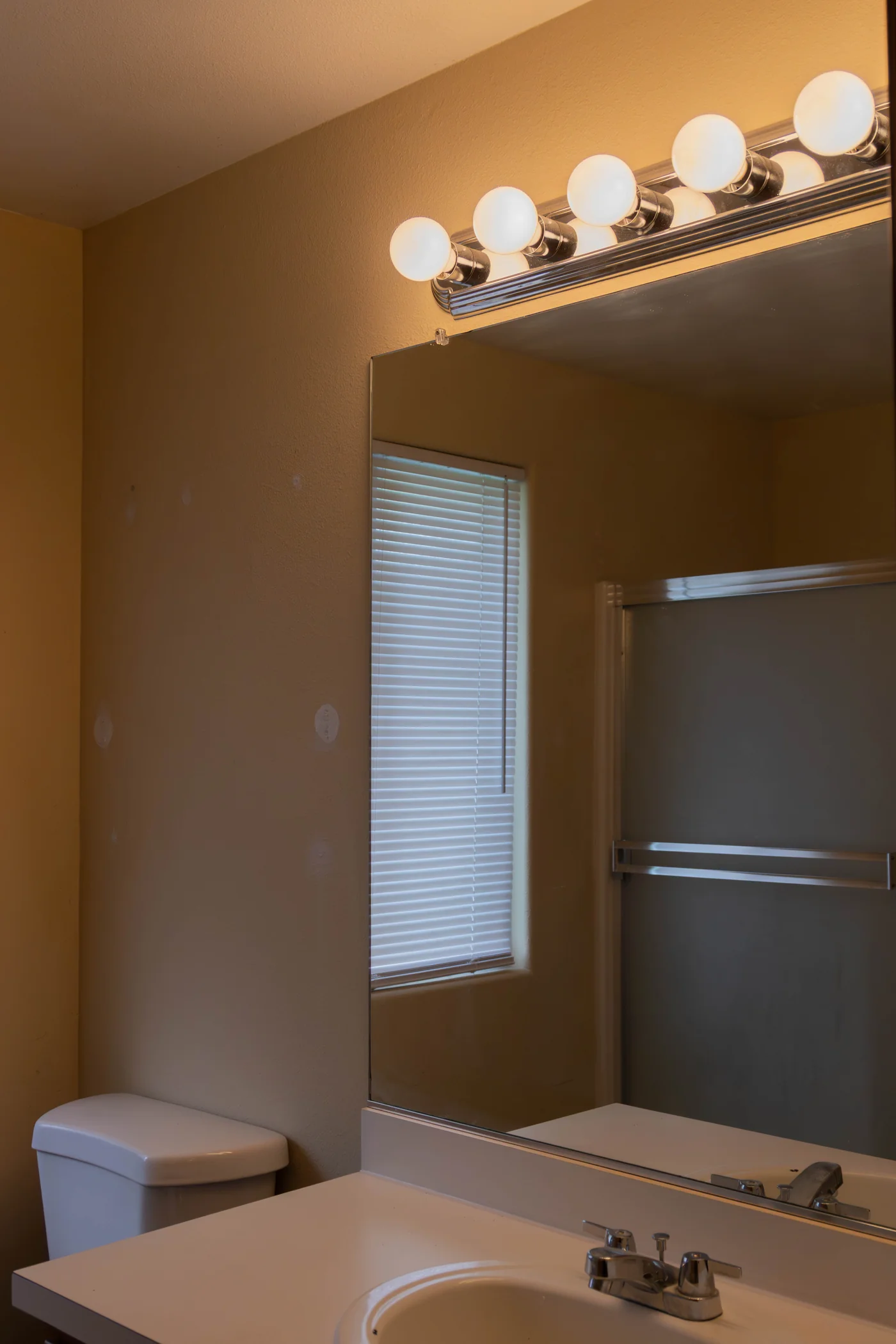
Long showers through eight months of gray weather, plus fans that are either undersized or dumping into the attic instead of outside. Moisture settles in grout, behind the vanity, and in the wall cavity around a tub surround that was caulked once and never again.
Warm indoor air leaks past can lights and the attic hatch, then condenses on cold sheathing and nail points during a valley cold snap. Add a bath fan venting into the same space and the roof deck darkens along the north slope.
Water is how most losses start. It’s rarely where they end. The same local crew handles all of it.
When remediation requires taking out drywall or flooring, we manage the rebuild too. Drag the handle to compare a documented Robinson project.
“We've had the bittersweet opportunity to have Robinson in our lives twice now. First, for a major 3,000 sq ft mold remediation of our crawl space. Then last week, we had an unfortunate flood. I don't know what we would have done without them.”
T Marie C · Google Review
“Chuck and Cole were very professional, courteous and knowledgeable about their restoration skills including close out processes. I'm really happy they were the two employees assigned to our home.”
Joanna Gamble · Google Review
“I want to express our sincere gratitude to the Robinson team that quickly moved to identify, rectify, repair, and then clean up the mess left by an itty-bitty hot water leak that went unnoticed because of its location.”
Michael Quinn · Google Review
In Oregon, you choose your restoration contractor, and your carrier can’t penalize you for it. We document every Beaverton loss with moisture maps, photos, and daily readings, then bill your insurer directly. You pay your deductible. That’s it.
Subject to policy coverage and deductible. We handle the paperwork, photos, and adjuster calls.
Searching for mold removal near you usually means the smell won't go away or something turned up behind a wall. Robinson Restoration covers Beaverton and the rest of the Portland metro with certified crews, containment and HEPA equipment on the truck, and documentation your insurer can actually use. Call and we'll set an inspection, tell you what we find, and give you a written scope before any work starts.
It's common here, and finding it doesn't mean anyone neglected the house. The valley floor holds water, the wet season runs most of the year, and a vented crawl space under an older home is a humid box by design. What matters is what's feeding it. A one-time spill behaves differently than a leaking supply line or a crawl vent that's been sitting in a puddle since November.
Sometimes, and it depends on your policy and on what caused it. Most carriers will consider mold that resulted from a sudden covered water loss, like a pipe that split or an appliance line that failed. Long-term seepage, groundwater, and deferred maintenance are usually excluded, and many policies cap mold at a set dollar amount. Coverage isn't something we can promise. What we can do is document the source, the extent, and the work in the format adjusters expect, and tell you straight what we're seeing.
Testing before the work is optional and sometimes useful, particularly for a landlord, a buyer, or anyone with air quality concerns on record. Visible growth plus a wet source usually tells us enough to scope the job without a lab. Verification at the end is different. We take air and surface samples with containment still in place, after cleaning and drying are finished, and those results have to come back clean before we clear the space and move to repairs.
Usually, yes. A crawl space is the most common place we find mold in Washington County housing, and the floor above it can look perfect while the joists and subfloor underneath are covered. Air moves from the crawl up into the living space through plumbing penetrations and duct leaks, so the smell in your hallway is a fair signal. We inspect it before quoting anything, because the fix depends on whether the water is groundwater, a leak, or bad drainage at the foundation.
It can. Valley freeze events crack lines in unheated garages, exterior walls, and crawl spaces, and a hairline split often weeps instead of bursting. Nobody notices until spring, by which time the cavity has been damp for months. Those cases matter for your claim too, since the original break was a sudden event even though the mold showed up later. Photograph what you can, keep any plumber invoices, and call before more of the wall comes out.
We do the remediation, then manage the rebuild through vetted licensed contractors and our sister companies, so you get one point of contact instead of chasing trades. Small jobs, a section of drywall and some trim, often close out within a week of clearance. Bigger ones, a full crawl space or a gutted bathroom, run longer and depend on materials. You'll get a scope and a schedule before anyone starts cutting.
Musty smell in a Beaverton house? Get an inspection, a written scope, and verified clearance.
Licensed · Insured · IICRC Certified · Serving Washington & Oregon