Robinson Restoration is an IICRC-certified water damage restoration company serving Medina, WA. Crews dispatch 24 hours a day, arrive on-site in 90 minutes or less, document the readings and photos your carrier needs, and bill your insurance directly on covered claims.
A water loss in a Medina home usually involves finish work you cannot buy off a shelf. Quartersawn floors, custom millwork, plaster, wine storage, and lower-level media rooms all react badly to moisture. Our crews stabilize the structure and the contents at the same time, and dispatch is live around the clock.
This part of the Eastside slopes down to Lake Washington, and that grade matters more than anything else. Properties step toward the water with finished lower levels, terraces, and retaining walls that carry hydrostatic pressure through a wet winter. The building stock spans mid-century ramblers, 1980s remodels, and large newer homes with hydronic radiant heat, multiple laundries, spa equipment, and irrigation, every one of them another failure point.
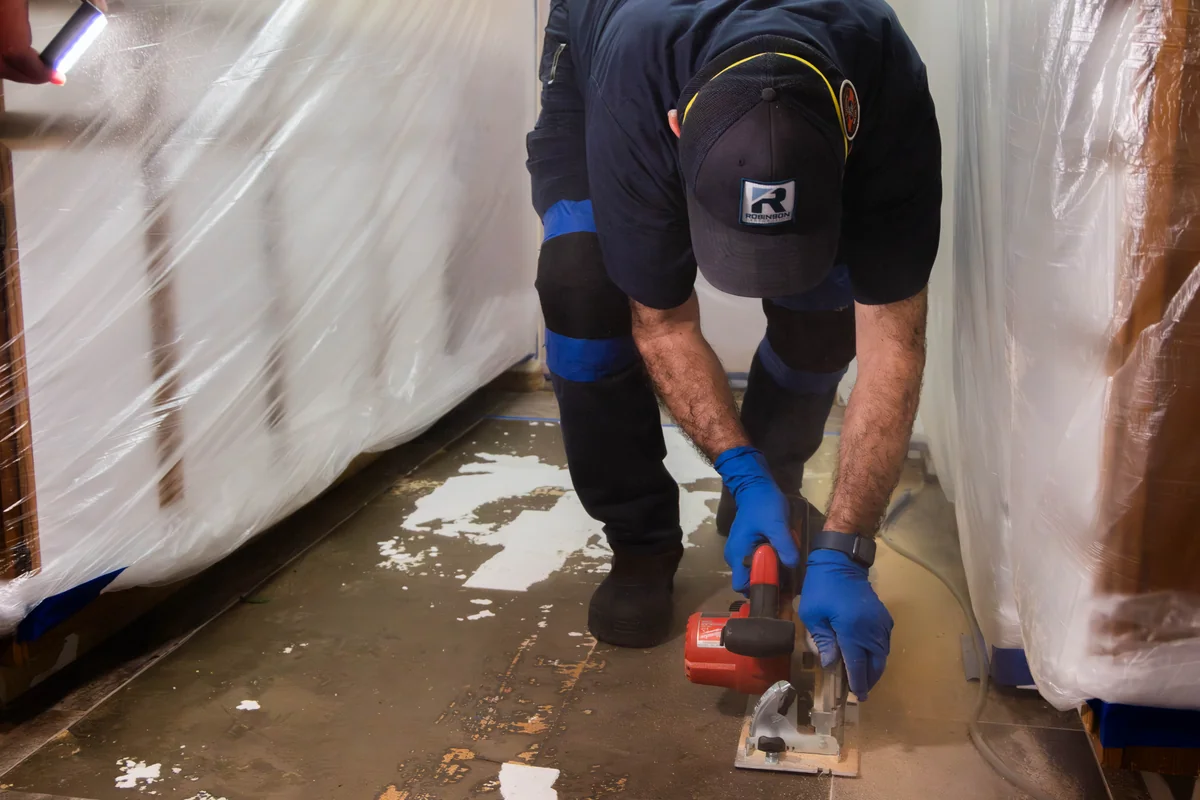
Robinson runs 24/7 dispatch with a standard of on-site in 90 minutes, and crews show up clean, with shoe covers and floor protection down before equipment comes through the door. We photograph and meter before anything moves, keep a daily drying log to IICRC S500, and produce the itemized documentation high-value home policies expect. Billing goes straight to your carrier or adjuster. Rebuild scopes are managed through vetted licensed contractors.

Medina calls reach a live dispatcher at any hour, and crews arrive equipped to protect finishes and contents before extraction even starts.
24 hours a day, 7 days a week, our crews dispatch the moment you call and start mitigation the same visit. Call dispatch or message us for immediate help.
We stop further damage with commercial extraction, structural drying, and antimicrobial treatment, and we walk you through the entire insurance claim as we work.
We manage your rebuild to pre-damaged condition through our trusted network of licensed contractors and sister companies. One manager, one timeline.
Homes stepping down toward Lake Washington put their most finished rooms below grade. After weeks of rain, the soil behind a retaining wall or foundation stays loaded, and water finds cold joints, tie-rod holes, and window wells. Nothing dramatic happens at first. A baseboard darkens, a rug edge feels cool, and the wall cavity behind it has been wet for a while.
In-floor hydronic heat is common in the larger homes here, and a leak in a loop or a manifold releases warm water directly into the slab or subfloor. Warm water spreads faster and drives moisture deeper into wood than a cold supply break does. Locating the failure without opening the whole floor takes thermal imaging and patience, and that is where the job starts.
Rugs, art, cabinetry, instruments, and wine collections often carry more value than the assembly holding them. High-value policies frequently schedule those items separately, with their own appraisals and requirements. We inventory and stabilize contents on day one, pack out what needs controlled drying, and keep that record distinct from the structural scope so nothing gets lost between two coverages.
Large homes here mix low-slope sections, roof decks, parapets, and multiple valleys, and each transition is a place for flashing to fail. Puget Sound rain does not test a roof with volume so much as duration. A slow leak at a deck drain or a chimney saddle can wet framing for an entire season before a ceiling shows anything.
Most of the losses we run in Medina start one of three ways: burst and leaking pipes, flooding and groundwater, and appliance failures. Here is why each one happens here, and what it takes to dry it properly.
Larger homes carry long supply runs to guest wings, outdoor kitchens, and irrigation, and a break in an unheated section can run at full pressure for hours across finished floors.
Saturated hillside soil above a finished lower level drives water through foundation joints and window wells during long stretches of winter rain, and the wet cavity behind a baseboard hides it for weeks.
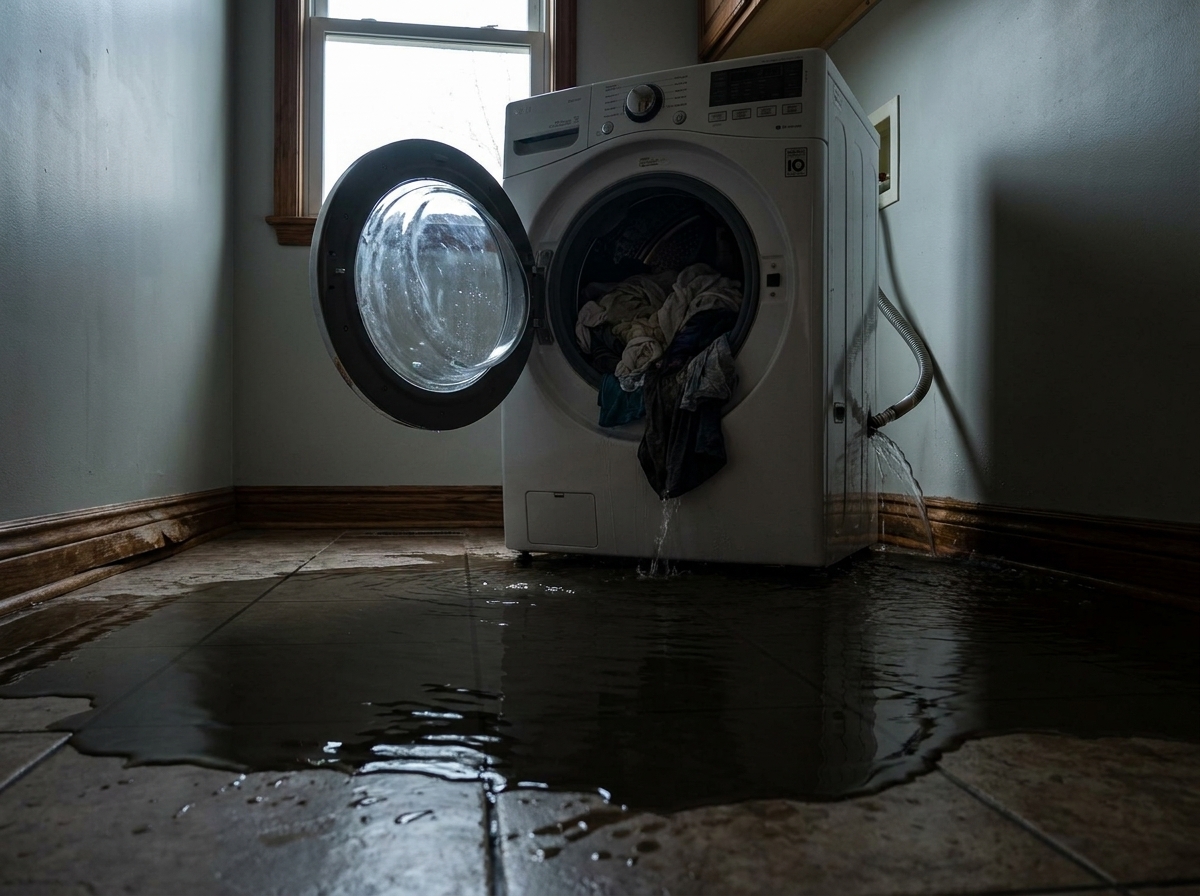
Multiple laundry rooms, refrigerator lines, dishwashers, and spa equipment mean more connections than a typical house, and one supply line behind a built-in appliance can wet cabinetry for days.
Water is how most losses start. It’s rarely where they end. The same local crew handles all of it.
Three real projects, photo-documented for the insurance carrier and backed by our 5-year workmanship warranty. Drag each handle to compare.
“We recently had an unfortunate plumbing issue that led to some significant flooding issues. On the recommendation of our plumber we reached out to Robinson Restoration to help us with drying out our house and getting it ready to be put back together.”
Don Warner · Google Review
“We've had the bittersweet opportunity to have Robinson in our lives twice now. First, for a major 3,000 sq ft mold remediation of our crawl space. Then last week, we had an unfortunate flood. I don't know what we would have done without them.”
T Marie C · Google Review
“Chuck and Cole were very professional, courteous and knowledgeable about their restoration skills including close out processes. I'm really happy they were the two employees assigned to our home.”
Joanna Gamble · Google Review
In Washington, you choose your restoration contractor, and your carrier can’t penalize you for it. We document every Medina loss with moisture maps, photos, and daily readings, then bill your insurer directly. You pay your deductible. That’s it.
Subject to policy coverage and deductible. We handle the paperwork, photos, and adjuster calls.
Older waterfront houses and finished basements on the Eastside can hide water for days, so getting eyes on the damage early matters. Medina is inside our regular service area, dispatch takes calls 24/7, and the crew comes stocked with extraction equipment and commercial dehumidifiers. Insurance billing is handled directly with your carrier, including the photos and readings they ask for.
Crews work without exterior signage on request, arrive in the number of vehicles the job actually needs, and stage equipment where you prefer rather than across the drive. Techs know what they can and cannot discuss. If you have a property manager, estate manager, or family office handling the coordination, we work through that channel and keep the household out of the daily logistics.
Many can be saved if we get there early. Site-finished hardwood over a subfloor often responds to specialty floor drying mats, which pull moisture through the boards instead of tearing them out. Cupping frequently relaxes as the floor dries. Engineered flooring is less forgiving, and anything that stayed wet for days or delaminated at the glue line usually needs replacement. We measure before recommending either path.
Bottles come first, because sustained humidity swings labels and pushes corks. We relocate the collection to stable conditions, photograph and inventory it as we go, and then treat the room itself as its own drying environment. Racking, insulation, and cooling equipment all hold moisture differently. Restoring the room without documenting the collection separately is how insureds lose value on a Medina claim.
More than a standard policy asks for. Carriers writing these homes generally want itemized contents records, appraisals or schedules for high-value pieces, daily moisture logs, and photographs of every affected assembly before and after work. We build that file from the first hour on site. It shortens the claim, and it protects you if the adjuster changes partway through, which happens more often than people expect.
Recurring seepage is usually treated as a maintenance condition rather than a sudden loss, and most policies exclude it. That does not make it harmless. Repeated wetting degrades framing, sill plates, and insulation, and it sets up conditions for microbial growth behind finished walls. We can dry it, tell you plainly what we see about the source, and point you to a drainage contractor who can address the cause.
Typically three to five days, sometimes longer where water reached hardwood, plaster, or cabinetry. Equipment is noisy and warm, and in a Medina home we usually contain the affected area so the rest of the house stays livable. Readings get taken daily, and equipment comes out when the materials match a dry standard from an unaffected room. You will see the numbers, so nothing runs longer than it needs to.
Call the moment you see water. Early extraction is what saves floors, millwork, and everything stored below grade.
Licensed · Insured · IICRC Certified · Serving Washington & Oregon