Robinson Restoration is an IICRC-certified water damage restoration company serving Redmond, WA. Crews dispatch 24 hours a day, arrive on-site in 90 minutes or less, document the readings and photos your carrier needs, and bill your insurance directly on covered claims.
Redmond runs from split-level neighborhoods on the hill down to dense new construction along the Sammamish valley, and water losses look different at each end. Stacked units share plumbing, so one failure becomes several claims. Robinson takes Eastside calls around the clock.
This side of the lake built out in two distinct waves and both show up in our work. Ramblers and split-levels from the 1960s through the 1980s carry aging supply lines, original angle stops, and water heaters well past their service life. Downtown, mid-rise apartments and townhomes stack living space vertically, so a supply hose failing on the fourth floor becomes a claim on three. Low ground near Bear Creek stays wet.
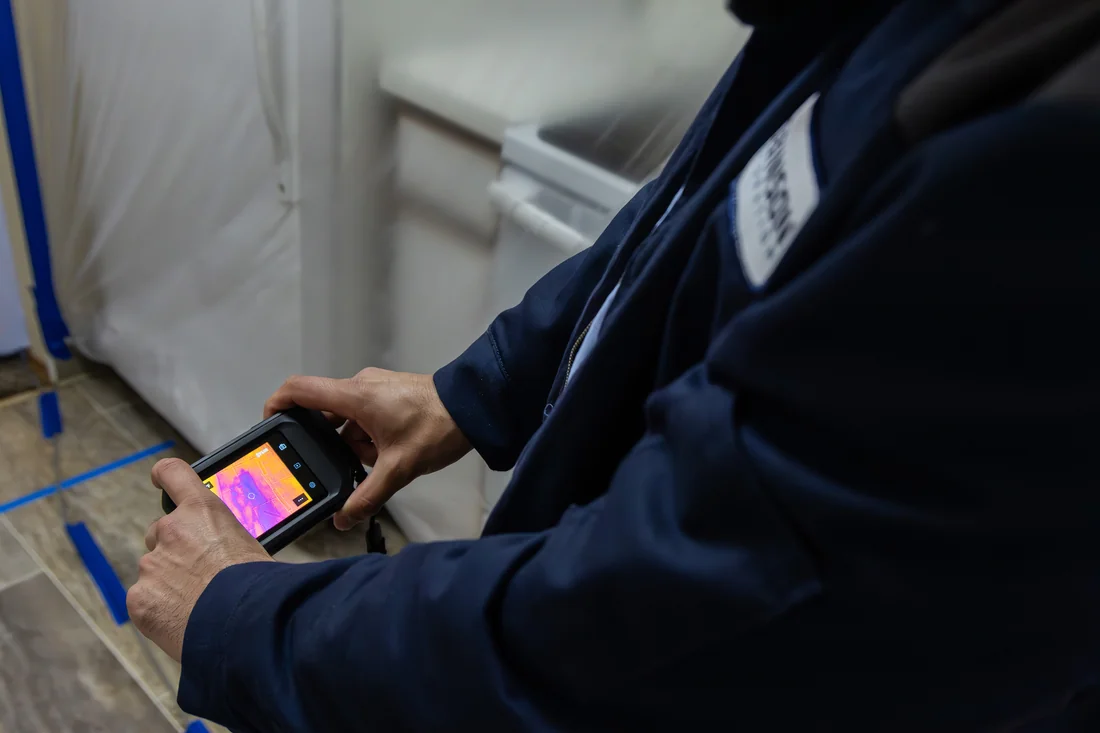
Robinson dispatches 24/7, and our crews document multi-unit losses the way property managers and carriers actually need it: unit-by-unit moisture mapping, photographs before anything is opened, and daily readings through the full drying cycle. We bill insurance directly and dry to IICRC S500. Where a loss requires reconstruction, Robinson manages that scope through vetted licensed contractors and sister companies, so one point of contact carries the whole job.

Redmond calls reach an on-call coordinator 24/7, and multi-unit losses get a crew and equipment package sized to the number of units involved.
24 hours a day, 7 days a week, our crews dispatch the moment you call and start mitigation the same visit. Call dispatch or message us for immediate help.
We stop further damage with commercial extraction, structural drying, and antimicrobial treatment, and we walk you through the entire insurance claim as we work.
We manage your rebuild to pre-damaged condition through our trusted network of licensed contractors and sister companies. One manager, one timeline.
Condos, apartments, and townhomes concentrate risk. One failed connector on an upper floor sends water through ceiling assemblies, down shared walls, and into units whose owners did nothing wrong. Sorting out which damage belongs to the association's policy and which belongs to each unit owner takes documentation kept separate from the first hour, and that is how we scope these losses.
The 1960s through 1980s housing across Redmond is solid, and its plumbing is old. Angle stops seize and then weep, flexible connectors under sinks give out, and water heaters in garages rust through where no one is looking. Split-levels make it worse by putting finished space half below grade, so a garage or utility room failure runs downhill into carpeted rooms.
The valley floor sits low and holds groundwater through the wet season. Property along Bear Creek and the flats near the river deals with saturated soil against foundations from November on, and crawlspaces there take on water without any plumbing failure at all. Drying those spaces means containment and dehumidification, plus addressing the drainage that put the water there.
Redmond has a lot of commercial square footage: office space, labs, and tenant improvements full of equipment that does not tolerate moisture. Those losses tend to be discovered after hours and need containment set fast so the rest of the floor keeps operating. We document for commercial carriers, coordinate with facilities, and phase drying around the areas your people still need to use.
Most of the losses we run in Redmond start one of three ways: appliance failures, burst and leaking pipes, and roof and storm leaks. Here is why each one happens here, and what it takes to dry it properly.
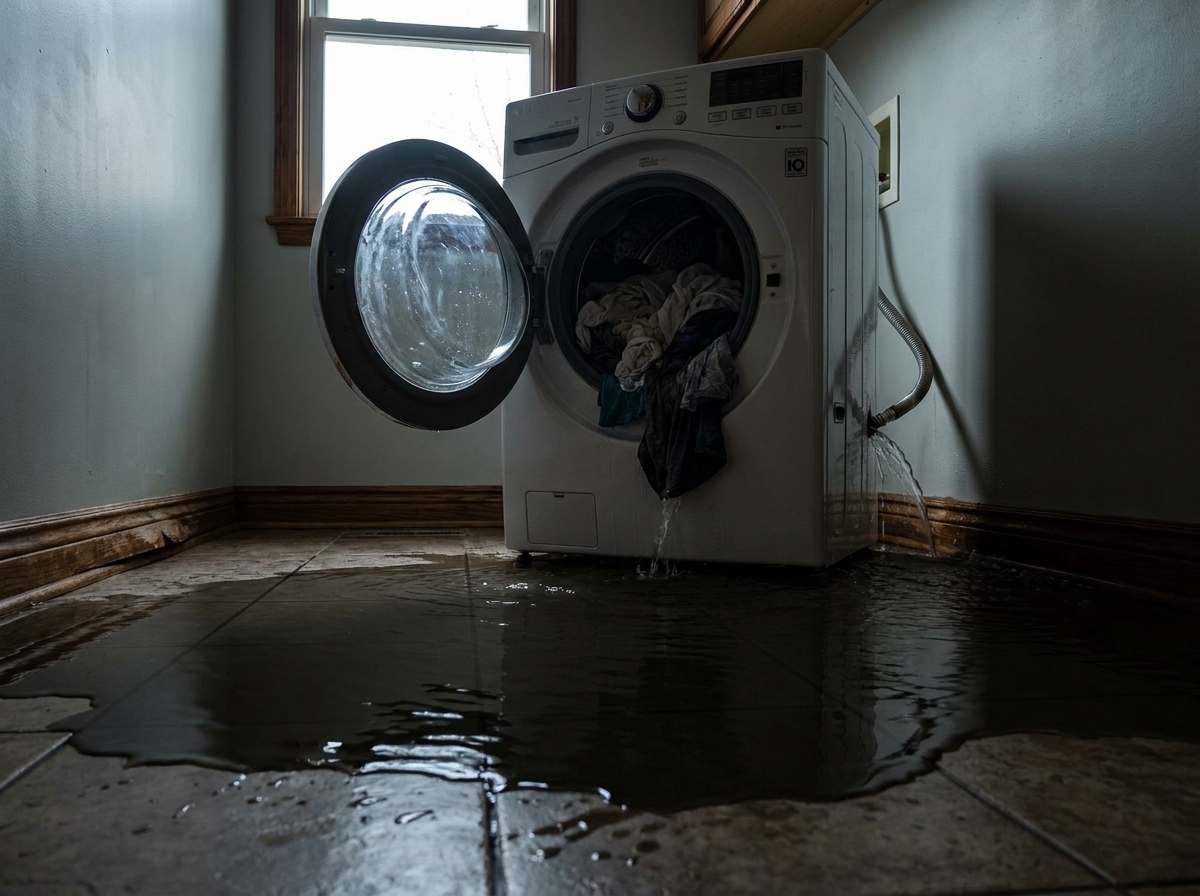
Dishwashers, ice maker lines, and washer connectors fail constantly across Redmond's dense multifamily housing. In a stacked building that water leaves the unit within minutes and becomes a loss for the neighbors below.
Homes built through the 1970s and 1980s have supply lines in exterior walls and vented crawlspaces. A hard Eastside freeze splits them, and the discharge starts when temperatures climb back above freezing.
Flat and low-slope roofs on Redmond's commercial and mid-rise buildings hold water at drains and parapets. Months of steady rain find every failed seam, and the water shows up inside far from the entry point.
Water is how most losses start. It’s rarely where they end. The same local crew handles all of it.
Three real projects, photo-documented for the insurance carrier. Drag each handle to compare.
“Chuck and Cole were very professional, courteous and knowledgeable about their restoration skills including close out processes. I'm really happy they were the two employees assigned to our home.”
Joanna Gamble · Google Review
“We hired Robinson Restoration after a boiler joint failed and leaked what we thought was a small amount of water in our laundry room, but turned out to be more serious than it appeared. They did a fantastic job from first contact to insurance claim approval.”
Randi Covin · Google Review
“We had a major sewer back up a couple of weeks ago, into the laundry room and downstairs bathroom. Panic! We were referred to Robinson Restoration and what a blessing. The whole crew has been wonderful.”
Lynn Dee King · Google Review
In Washington, you choose your restoration contractor, and your carrier can’t penalize you for it. We document every Redmond loss with moisture maps, photos, and daily readings, then bill your insurer directly. You pay your deductible. That’s it.
Subject to policy coverage and deductible. We handle the paperwork, photos, and adjuster calls.
A crew assigned to the Eastside handles Redmond, and the number rings through to a live dispatcher no matter the hour. Trucks carry extraction equipment, air movers, and dehumidifiers, which lets the team start removing water and setting drying equipment on the same visit. Newer construction hides moisture behind tight building envelopes, so we meter walls before calling anything dry. Insurance gets billed directly.
It depends on the building's governing documents and on where the failure occurred. In most Redmond condo buildings the association's master policy covers the structure to a defined point and each unit owner's HO-6 covers improvements and contents inside that line. The upstairs owner may or may not be liable. We keep unit-by-unit documentation so each carrier gets a clean record instead of one blended file.
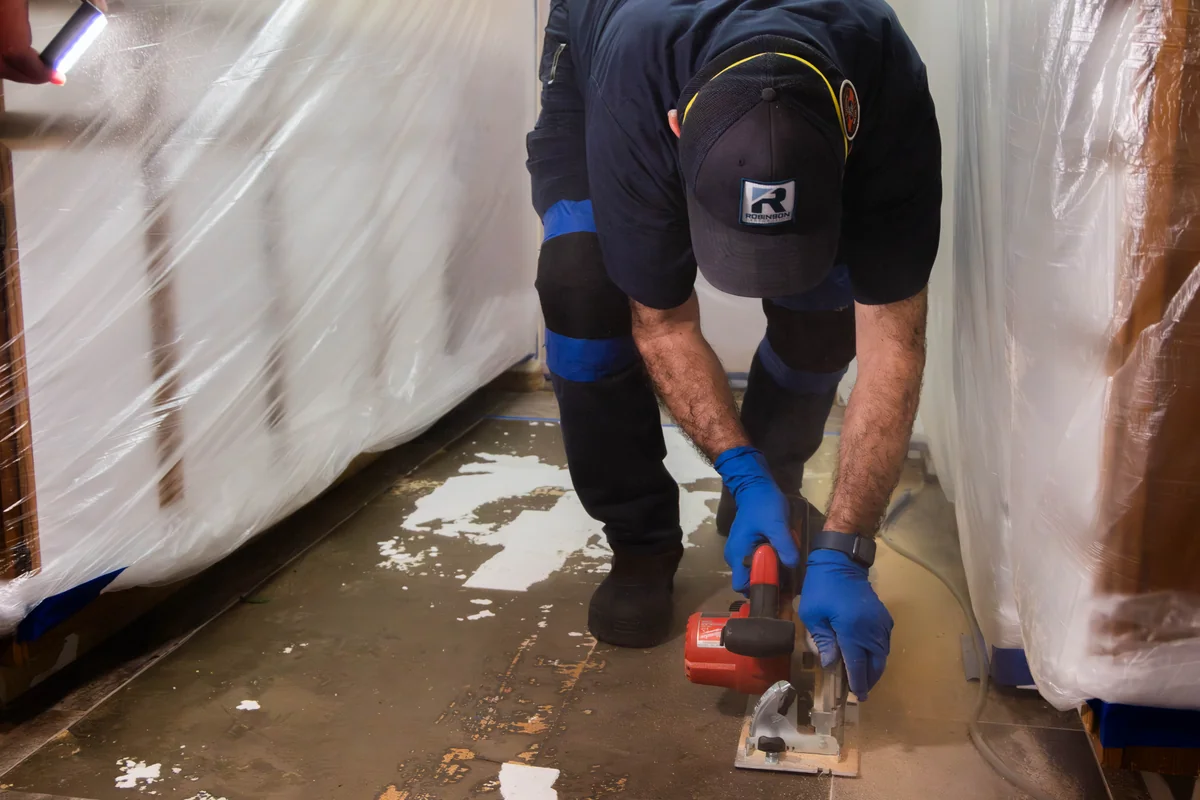
Containment and staging. We isolate affected units with barriers and negative air where needed, place equipment per unit rather than treating the building as one space, and coordinate access windows with the property manager so residents are not locked out longer than necessary. Daily readings tell us which units come off equipment first, and we release them as they hit the dry standard.
Angle stops and flexible supply connectors under sinks and toilets, water heaters that have quietly outlived their warranty, and hose bibs on exterior walls. In homes from that era the supply runs are often in vented crawlspaces where they freeze. Replacing braided connectors and putting a pan with a drain under the water heater takes an afternoon and prevents a large share of what we get called out for.
You are likely on low ground near the Sammamish valley or a creek drainage, where the water table climbs and stays up from November through spring. Vented crawlspaces pull in humid air, the vapor barrier collects standing water, and the joists never get a chance to dry. Fixing it takes extraction, a repaired barrier, dehumidification under containment, and usually drainage work outside the house.
Yes, and it is most of what we do in Redmond. We work from a single point of contact on your side, document each unit separately for the carriers involved, and send the daily moisture logs and photo sets as the job progresses rather than at the end. Access scheduling, resident notices, and equipment placement all get coordinated with your team before crews arrive.
Dispatch answers 24/7 and our target is on-site in 90 minutes. Tell us the number of units affected, whether the source is shut off, and whether water is still moving, and the crew arrives with the right amount of extraction and drying equipment. On multi-unit losses that phone call determines whether we send one truck or several, which is why the details matter.
One failed connector upstairs can put three Redmond units into a claim. Call the moment you find water.
Licensed · Insured · IICRC Certified · Serving Washington & Oregon