Robinson Restoration is an IICRC-certified water damage restoration company serving Mesa, WA. Crews dispatch 24 hours a day, arrive on-site in 90 minutes or less, document the readings and photos your carrier needs, and bill your insurance directly on covered claims.
Out in the Franklin County farm country, a water loss is usually found late. Nobody hears a line break in a Mesa farmhouse at three in the morning, and out here nobody next door hears it either. We dispatch 24/7 and roll with everything needed to start pulling water on arrival.
Mesa sits on the high ground between Pasco and the wheat country north of it, surrounded by circle-irrigated fields and potato and onion sheds. Housing runs to older farmhouses, manufactured homes on acreage, and a handful of newer modulars. Most properties outside the town core are on a well and a septic system, down a long gravel drive. Winters here are dry, windy, and genuinely cold, with nights well into the teens.
Our Tri-Cities crews treat Mesa as part of the regular Franklin County territory, not as an outlying favor. Dispatch answers day or night, and the truck arrives with extraction, air movers, and dehumidifiers rather than a clipboard. We document moisture readings and photos from the first walkthrough, dry to IICRC S500 standards, and bill your carrier directly. Rural properties get an approach built around well systems, septic, and outbuildings.

A Mesa address is on the same dispatch board as everything else in Franklin County, and the truck comes loaded to work on arrival.
24 hours a day, 7 days a week, our crews dispatch the moment you call and start mitigation the same visit. Call dispatch or message us for immediate help.
We stop further damage with commercial extraction, structural drying, and antimicrobial treatment, and we walk you through the entire insurance claim as we work.
We manage your rebuild to pre-damaged condition through our trusted network of licensed contractors and sister companies. One manager, one timeline.
Property around Mesa usually includes more than a house: a shop with a bathroom, a pump house, a storage building with a wash sink. Those structures are unheated most of the winter and unvisited most of the week. A line that lets go in November can run until somebody notices a wet spot in the gravel. We treat outbuildings as part of the loss, not an afterthought.
Gravel drives, gated approaches, and buildings set well back from the road change how a job gets staged. Our crews plan long hose runs for extraction, bring their own power when a panel can't carry the load, and set drying equipment where it won't trip a farm circuit. Knowing that before arrival is the difference between working the loss and making a second trip.
Open farm ground offers nothing to slow a cold north wind, and Mesa nights run well below freezing for stretches in December and January. Water lines in a skirted crawlspace, a well house, or an exterior wall on the north side give out first. Because many homes here sit empty during the day, a break can run for eight or ten hours before anyone walks in on it.
When the water that floods a building comes off a field line, a canal lateral, or a stock tank, it carries soil, fertilizer, and whatever else the ground held. That's not a clean-water loss, and drying alone won't make the building safe. Porous material gets removed, hard surfaces get cleaned and treated, and the category gets documented so your carrier sees why the scope looks the way it does.
Most of the losses we run in Mesa start one of three ways: frozen and split pipes, flooding and groundwater, and water heater failures. Here is why each one happens here, and what it takes to dry it properly.
Cold settles on open ground and stays. Well houses, unheated shops, and manufactured-home plumbing under the skirting are the first to split, and a rural break often runs for hours before anyone is home to hear it.
Field irrigation and canal laterals move a lot of water past Mesa properties all summer. A broken riser, a plugged lateral, or a valve left open sends it toward a shop slab or a home foundation with nothing to stop it.
Well water out here is hard and often high in iron, which scales a tank quickly. Heaters in a utility room or an attached shop fail at the seam and dump forty gallons before the supply can be shut off.
Water is how most losses start. It’s rarely where they end. The same local crew handles all of it.
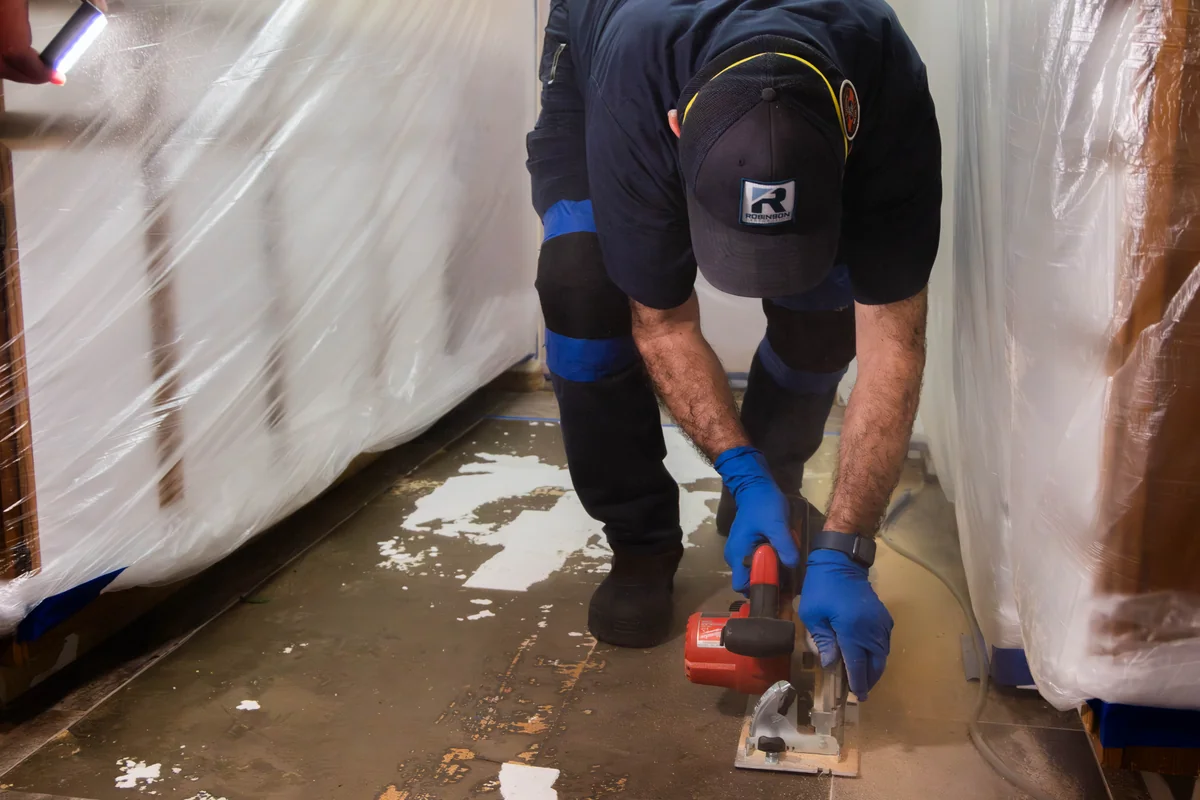
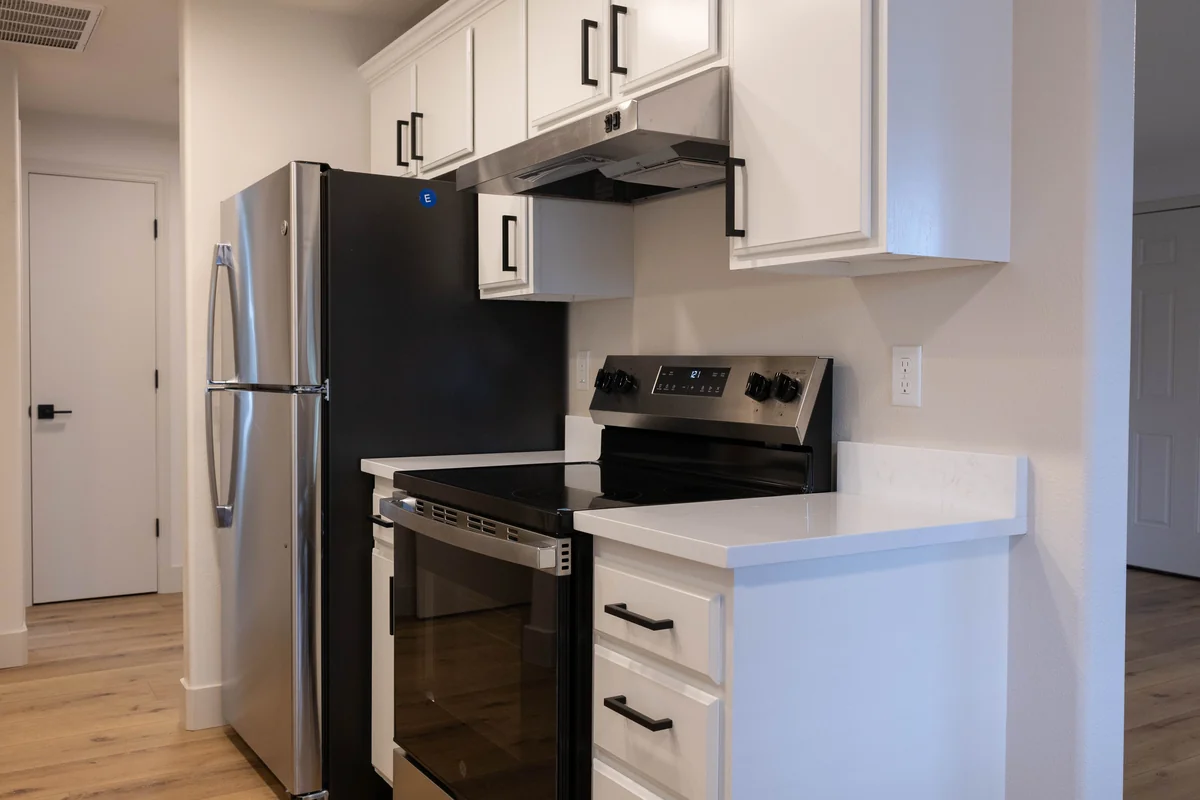
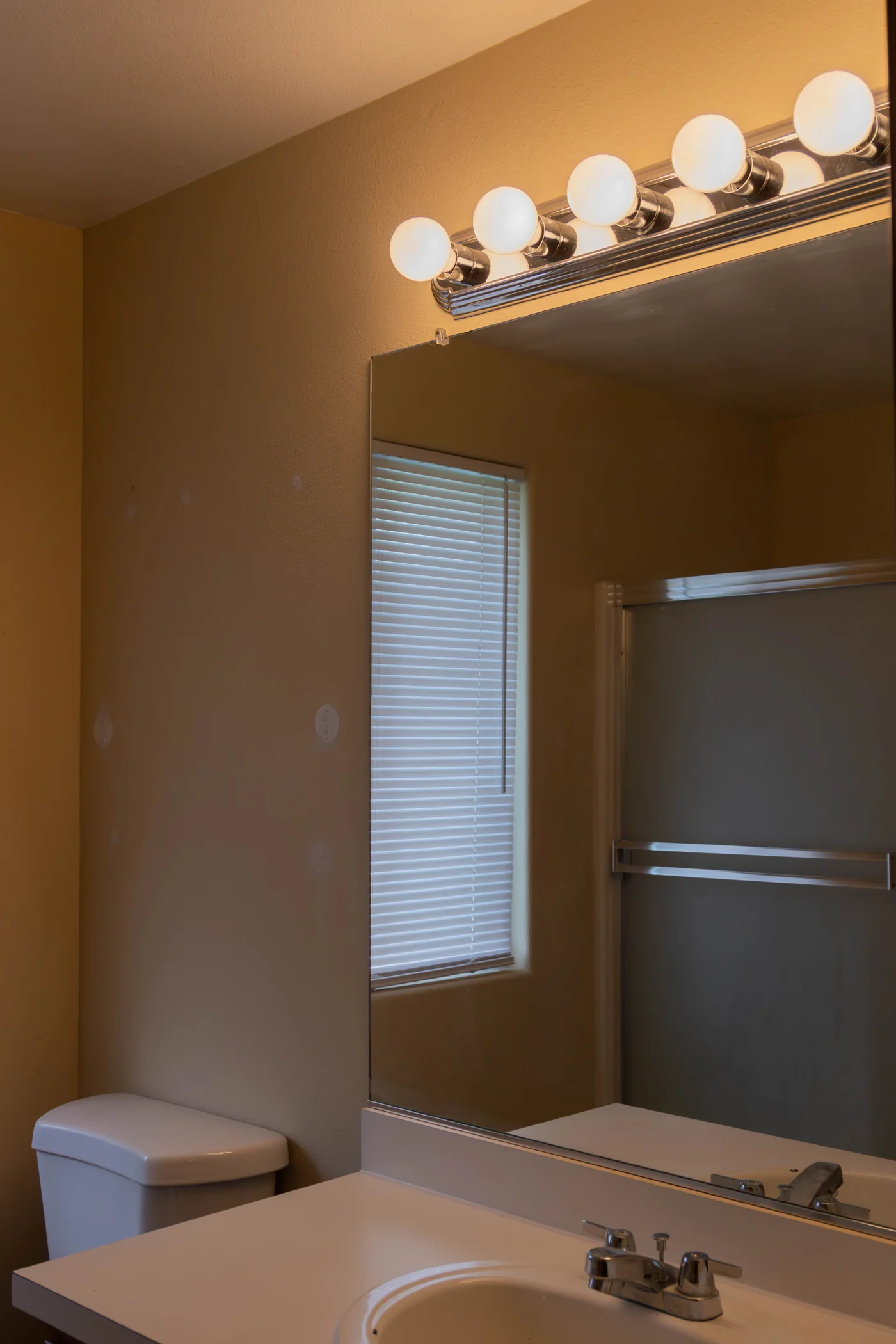
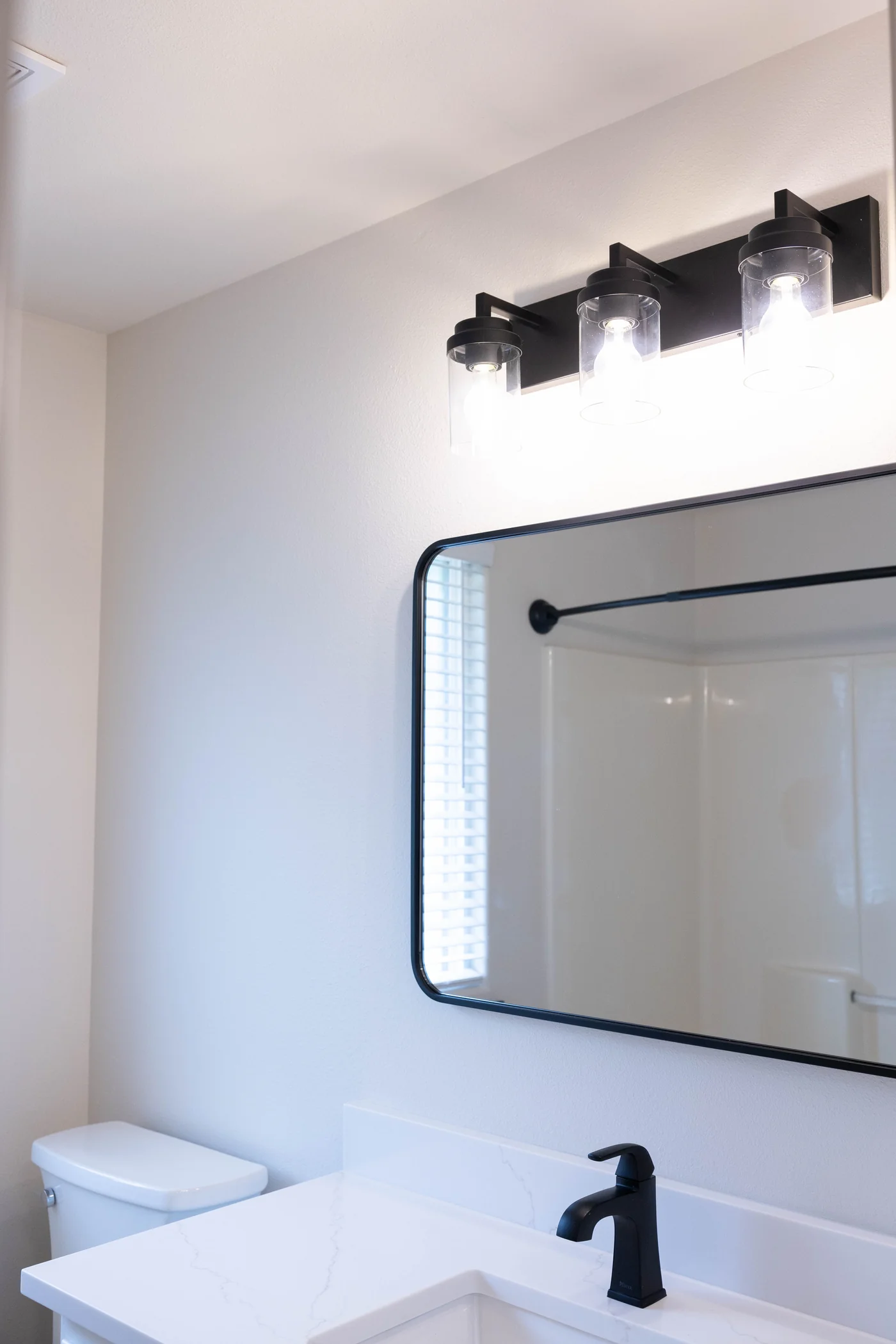
Three real projects, photo-documented for the insurance carrier. Drag each handle to compare.
“Just started a project with Cole and Chuck at Robinson Restoration and had to write a review straight away. These guys have been fantastic. We were away on a week long trip when we had a kitchen leak that destroyed our flooring and subfloor.”
Justin O'Neill · Google Review
“I want to express our sincere gratitude to the Robinson team that quickly moved to identify, rectify, repair, and then clean up the mess left by an itty-bitty hot water leak that went unnoticed because of its location.”
Michael Quinn · Google Review
“Kyla and Jake were super friendly and knowledgeable. Jake was at my house 90 minutes after I called and did a free inspection. I won't need their services this time, but I will definitely call them if I ever have to deal with water damage.”
Carmen Otten · Google Review
In Washington, you choose your restoration contractor, and your carrier can’t penalize you for it. We document every Mesa loss with moisture maps, photos, and daily readings, then bill your insurer directly. You pay your deductible. That’s it.
Subject to policy coverage and deductible. We handle the paperwork, photos, and adjuster calls.
Franklin County properties are covered by our Tri-Cities crew, and Mesa is on that route. Calls hit a 24/7 dispatch desk, so irrigation-line breaks and failed water heaters get worked as they come in. Trucks come loaded with extraction units and drying equipment, then setup starts before anything soaks further into the framing. We bill your insurance carrier directly.
Yes. Mesa is inside the Franklin County area our Tri-Cities crews run, and rural calls are routine work for us. The truck comes stocked so the first visit includes extraction and equipment placement, because a second trip out here helps nobody. Emergency dispatch is answered by a person at any hour, including weekends and holidays.
It changes the shutoff and the volume. A well system keeps pumping until the breaker or the pitless valve is closed, so a break can move far more water than a city service would. Well water around Mesa also runs hard and iron-heavy, which stains carpet, drywall, and grout in ways plain water doesn't. We plan the cleaning and the material decisions around that from the start.
We do it regularly on farm property. Steel buildings hold condensation and the insulation behind the liner panels traps water where you can't see it. Concrete holds moisture longer than people expect and releases it slowly into the air. We pull liner panels where needed, set dehumidification sized to the volume, and monitor the slab until it reads dry rather than just looking dry.
Often, yes. Farm and ranch policies split the dwelling, the outbuildings, and the equipment into separate coverages with their own limits, and some list specific structures by name. Mesa properties frequently have a loss that crosses two or three of those lines at once. We scope each structure separately and photograph everything so the adjuster can apply the right coverage without guessing.
Shut the water off at the source, which on most Mesa properties means the well breaker or the main valve at the pressure tank rather than a curb stop. Kill power to any circuit near standing water. Pull rugs, boxes, and anything with a wood leg off wet flooring so the stain doesn't transfer. Take photos of the water at its worst. Then stay out of the wet area until we get eyes on it.
Robinson runs the emergency and mitigation phase, then manages the rebuild through vetted licensed contractors and sister companies rather than handing you a list of names. That matters more on a rural Mesa property, where finding a trade willing to drive out can take weeks. We keep the same file, the same photos, and the same scope moving through repair so nothing gets relitigated with the carrier.
Rural loss or not, the clock runs the same. Call and we'll head to Mesa now.
Licensed · Insured · IICRC Certified · Serving Washington & Oregon