Robinson Restoration is an IICRC-certified water damage restoration company serving Prosser, WA. Crews dispatch 24 hours a day, arrive on-site in 90 minutes or less, document the readings and photos your carrier needs, and bill your insurance directly on covered claims.
Prosser sits on the Yakima River in the middle of Washington wine country, a county seat with a historic core and tasting rooms out toward the interstate. Water losses here hit century-old houses and modern production space in the same week. Robinson Restoration takes calls around the clock.
The old part of Prosser was built when the town was, which means original wood-frame houses over crawlspaces and basements, cast iron drains, and additions layered on across a hundred years. Outside the core it is vineyards, orchards, and irrigation infrastructure. The Yakima runs right through town and has a history of high water and winter ice jams, and the canals and laterals that feed the valley run under and beside a lot of property.
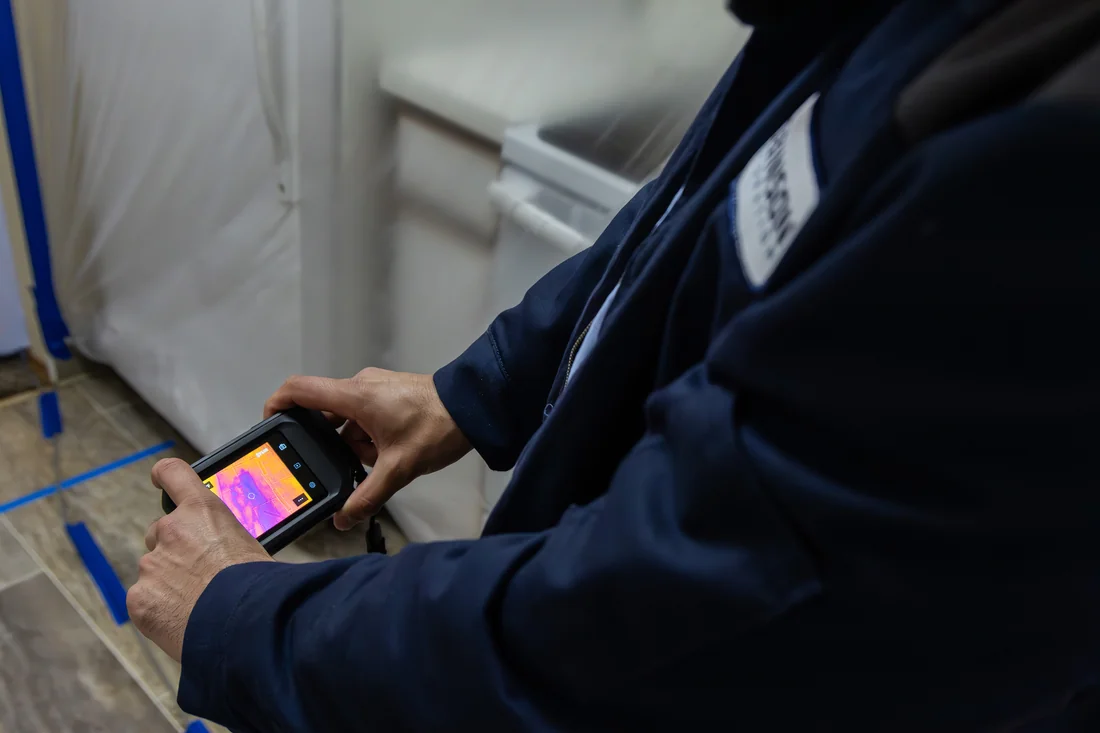
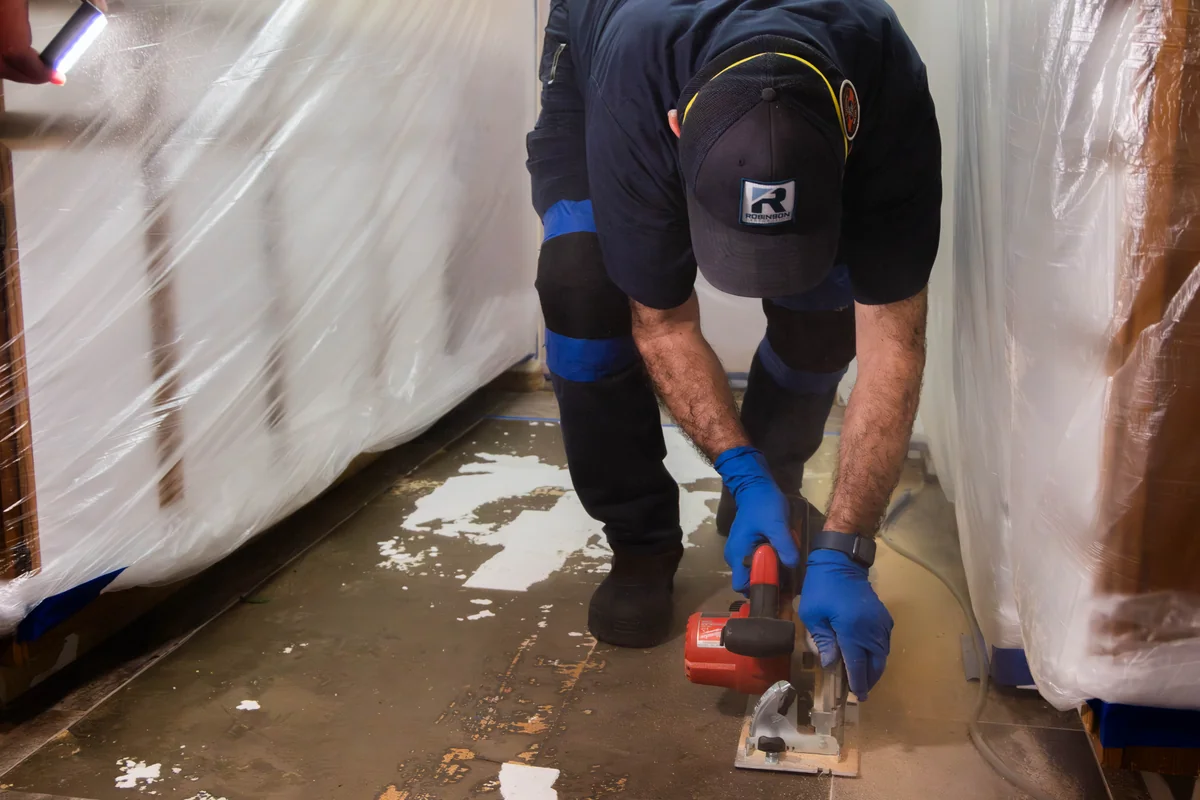
Robinson dispatches Prosser calls 24/7 out of our Tri-Cities operation. A crew shows up with truck-mounted extraction, air movers, and dehumidifiers, plus thermal imaging and moisture meters to map how far the water actually traveled. We dry to IICRC S500 standards, document every reading, and bill your insurance carrier directly. For wineries and tasting rooms, we plan containment so production and the tasting bar can keep running where that is possible.

Prosser gets a live dispatcher at any hour and a crew equipped for old-house crawlspaces, tasting rooms, and production floors alike.
24 hours a day, 7 days a week, our crews dispatch the moment you call and start mitigation the same visit. Call dispatch or message us for immediate help.
We stop further damage with commercial extraction, structural drying, and antimicrobial treatment, and we walk you through the entire insurance claim as we work.
We manage your rebuild to pre-damaged condition through our trusted network of licensed contractors and sister companies. One manager, one timeline.
Wine country property has plumbing a normal house does not: floor drains, wash-down lines, glycol and chilled water loops, and hose bibs that stay in service through freezing nights. A failure in a production area soaks concrete, insulated panel, and stored packaging at once. We build containment, keep the working areas working when we can, and dry with equipment sized for the space.
Prosser's older neighborhoods hold houses with original galvanized supply, cast iron waste, plaster over lath, and additions that were never quite square with the rest. Water follows the framing, not the floor plan, and it will show up two rooms away from the break. Thermal imaging and probe meters find the real edge of the wet area before demolition starts.
The Yakima runs through Prosser, and cold winters can push ice into the channel, which stacks up and shoves water where it does not usually go. High water in late winter and spring is a known pattern in this valley. River water is never clean, so a flood loss gets handled as contaminated: extraction, removal of soaked porous material, disinfection, then structural drying.
From spring through fall the valley around Prosser is full of pressurized water: mainlines, laterals, pivots, drip systems, and the pumps that feed them. Those lines run near shops, pump houses, and homes, and a failure at a fitting can undermine a slab or fill a crawlspace before the system is shut down. Charging lines in the spring is when most of it happens.
Most of the losses we run in Prosser start one of three ways: burst and leaking pipes, flooding and groundwater, and appliance failures. Here is why each one happens here, and what it takes to dry it properly.
Original galvanized and early copper still runs through a lot of Prosser's older houses. Decades of hard water thin the walls of the pipe, and a cold night in an unheated crawlspace finishes the job.
The Yakima has a history of high water and winter ice jams through this stretch of the valley. When it gets into a Prosser basement or crawlspace, it brings silt and contamination with it.
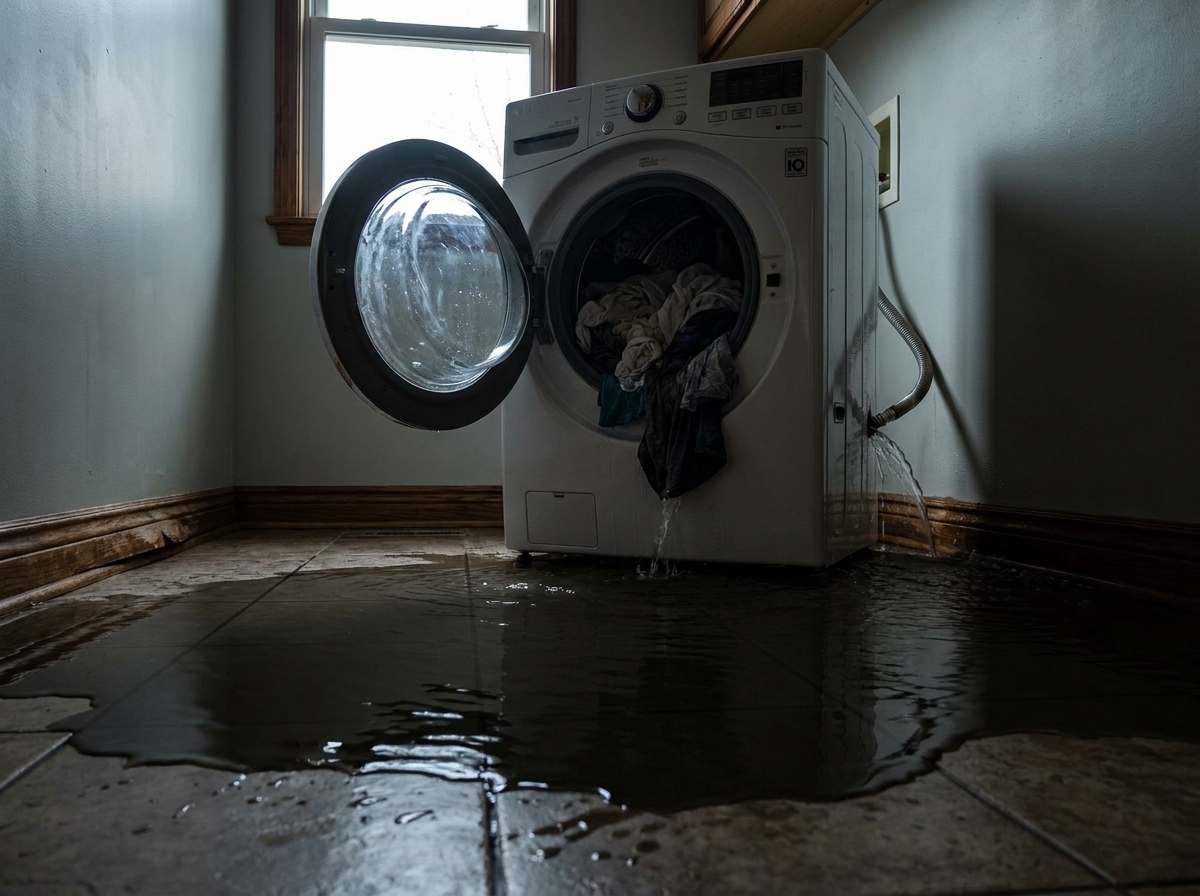
Dishwashers, washing machines, and refrigerator ice lines fail quietly, often overnight. In a Prosser house with hardwood or original fir flooring, a few hours of clean water is still enough to cup and crown the boards.
Water is how most losses start. It’s rarely where they end. The same local crew handles all of it.
Three real projects, photo-documented for the insurance carrier. Drag each handle to compare.
“Kyla and Jake were super friendly and knowledgeable. Jake was at my house 90 minutes after I called and did a free inspection. I won't need their services this time, but I will definitely call them if I ever have to deal with water damage.”
Carmen Otten · Google Review
“Had a leak in our wall and our plumber recommended Robinson Restoration to handle remediation of the water damage. Christian and Adolfo were awesome. Great communication throughout the setup of the containment area and installation of the equipment to start the drying process.”
Won Lee · Google Review
“We recently had an unfortunate plumbing issue that led to some significant flooding issues. On the recommendation of our plumber we reached out to Robinson Restoration to help us with drying out our house and getting it ready to be put back together.”
Don Warner · Google Review
In Washington, you choose your restoration contractor, and your carrier can’t penalize you for it. We document every Prosser loss with moisture maps, photos, and daily readings, then bill your insurer directly. You pay your deductible. That’s it.
Subject to policy coverage and deductible. We handle the paperwork, photos, and adjuster calls.
When a supply line lets go in Prosser, the call reaches a live dispatcher at any hour, day or night. A local crew brings extractors, air movers, and dehumidifiers along, so standing water goes out and drying equipment goes in. Homes across the lower Yakima Valley often sit on slabs, which hides migration under flooring. Claims get billed straight to your insurance company.
Yes, and we plan those jobs differently. Production space, barrel storage, and a public tasting room each have their own priorities, so we sequence the work to keep as much of the operation running as we can. Containment goes up first, equipment is chosen for the volume of the space, and we document business personal property separately from the building for the claim.
It can be. First we find out whether it is a broken irrigation line, a failed domestic supply, or groundwater migrating in. Standing water in a Prosser crawlspace wets insulation, subfloor, and joists, and it will keep feeding humidity into the house above until it is removed. We extract, pull ruined insulation, dry the framing, and tell you what needs a plumber or a drainage fix.
Most Prosser residential jobs run three to five days of active drying, though plaster, hardwood, and saturated framing take longer. The honest answer is that the equipment comes out when the meters say the materials are dry, not on a fixed schedule. We take readings daily, share them with you and the adjuster, and adjust equipment as the numbers come down.
Generally no. Homeowners coverage handles sudden water from inside the building, and surface water from the Yakima or a canal falls under separate flood insurance. Prosser property owners near the river or below a lateral should ask their agent about it directly. Either way, call us first. Mitigation still needs to start immediately, and we can document the loss properly while the coverage question gets sorted out.
Plaster over wood lath behaves nothing like drywall. It holds water in the lath and the keys behind it, and it can look dry on the surface while the cavity is still saturated. We check it with probe meters and thermal imaging, dry through cavities where we can, and only remove what will not come back. Salvaging original plaster is usually worth the extra drying days.
Our scope covers emergency response, extraction, drying, and controlled demolition. Robinson then manages the rebuild through vetted licensed contractors and sister companies, with one file and one point of contact from the first night through the last coat of paint. On Prosser's older homes that coordination matters, because the trim profiles and flooring in a hundred-year-old house are not stock items.
Every hour of standing water costs more materials. Call now and a Prosser crew gets assigned immediately.
Licensed · Insured · IICRC Certified · Serving Washington & Oregon