Robinson Restoration is an IICRC-certified water damage restoration company serving Woodburn, OR. Crews dispatch 24 hours a day, arrive on-site in 90 minutes or less, document the readings and photos your carrier needs, and bill your insurance directly on covered claims.
Nursery fields and hazelnut orchards run right up to the edge of town, and the Pudding River loops past on its way north. Woodburn deals with valley clay, a long wet season, and a housing stock that has been quietly aging. We answer at any hour, on-site in 90 minutes or less.
Downtown and the blocks around it hold prewar and postwar houses with crawl spaces, cast-iron drains, and additions from several different decades. West of there, the large retirement community built in the 1960s is almost entirely single-level homes still running on original supply lines. Underneath all of it sits heavy valley clay that stops absorbing sometime in November and pushes winter rain sideways along the surface toward foundations.
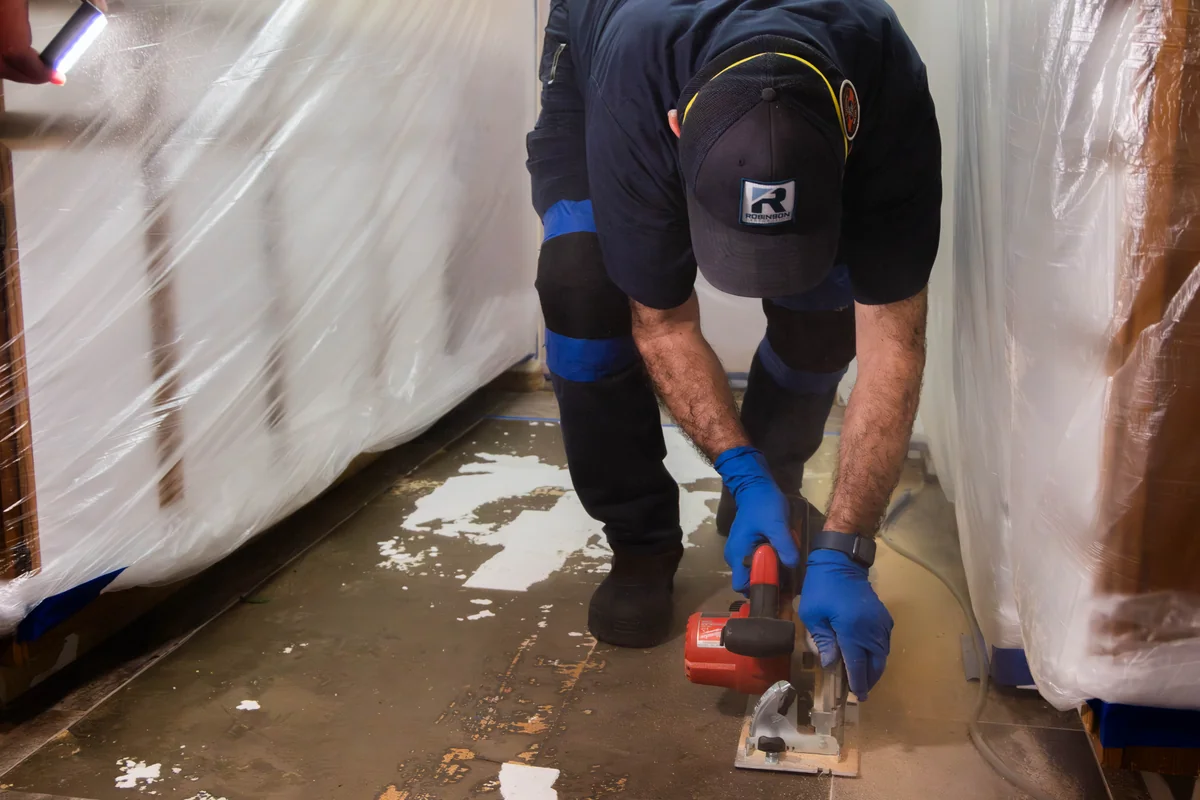
North Willamette Valley calls are handled from our Vancouver, Washington headquarters, and a live dispatcher answers at any hour of the night. Crews are IICRC certified and work to S500 standards: initial documentation, moisture mapping into adjoining rooms, containment, extraction, then structural drying verified by daily meter readings. Photos, logs, and the written scope get packaged for your adjuster, and we bill the carrier directly so you are not fronting the mitigation cost.

Woodburn sits on the interstate corridor our valley crews run daily, equipment loaded, with a target of on-site in 90 minutes or less.
24 hours a day, 7 days a week, our crews dispatch the moment you call and start mitigation the same visit. Call dispatch or message us for immediate help.
We stop further damage with commercial extraction, structural drying, and antimicrobial treatment, and we walk you through the entire insurance claim as we work.
We manage your rebuild to pre-damaged condition through our trusted network of licensed contractors and sister companies. One manager, one timeline.
Thousands of homes here were built in one push during the sixties and seventies, which means an entire neighborhood reaches the end of its plumbing life at roughly the same time. Angle stops seize, copper develops pinholes, and cast-iron drains scale shut. Everything is on one floor over a crawl space, so a failure at the water heater can reach three rooms before anyone hears it.
Agriculture here is nursery stock, berries, hops, and hazelnuts, and every one of those operations moves water at volume. Irrigation manifolds, greenhouse misting systems, and washdown lines in packing buildings all fail eventually, usually at a fitting. Office space, coolers, and equipment barns attached to those operations get wet in the process and need drying that works around a harvest schedule.
Willamette Valley clay is nearly impermeable once it is saturated, and it stays saturated from November into spring. Water that used to soak in starts running along the surface toward the lowest point on the lot, which is often a foundation wall or a crawl space vent. Crawl spaces take standing water quietly, and the smell reaches the living room long before anyone looks underneath.
The interchange district carries a lot of commercial square footage: outlet retail, restaurants, medical offices, and light industrial. Those buildings run fire suppression, commercial dishwashers, ice machines, and rooftop units, and any one of them can flood a floor after closing. We work overnight with containment so a business can open in the morning while drying continues behind plastic.
Most of the losses we run in Woodburn start one of three ways: sewage backups, appliance failures, and flooding and groundwater. Here is why each one happens here, and what it takes to dry it properly.
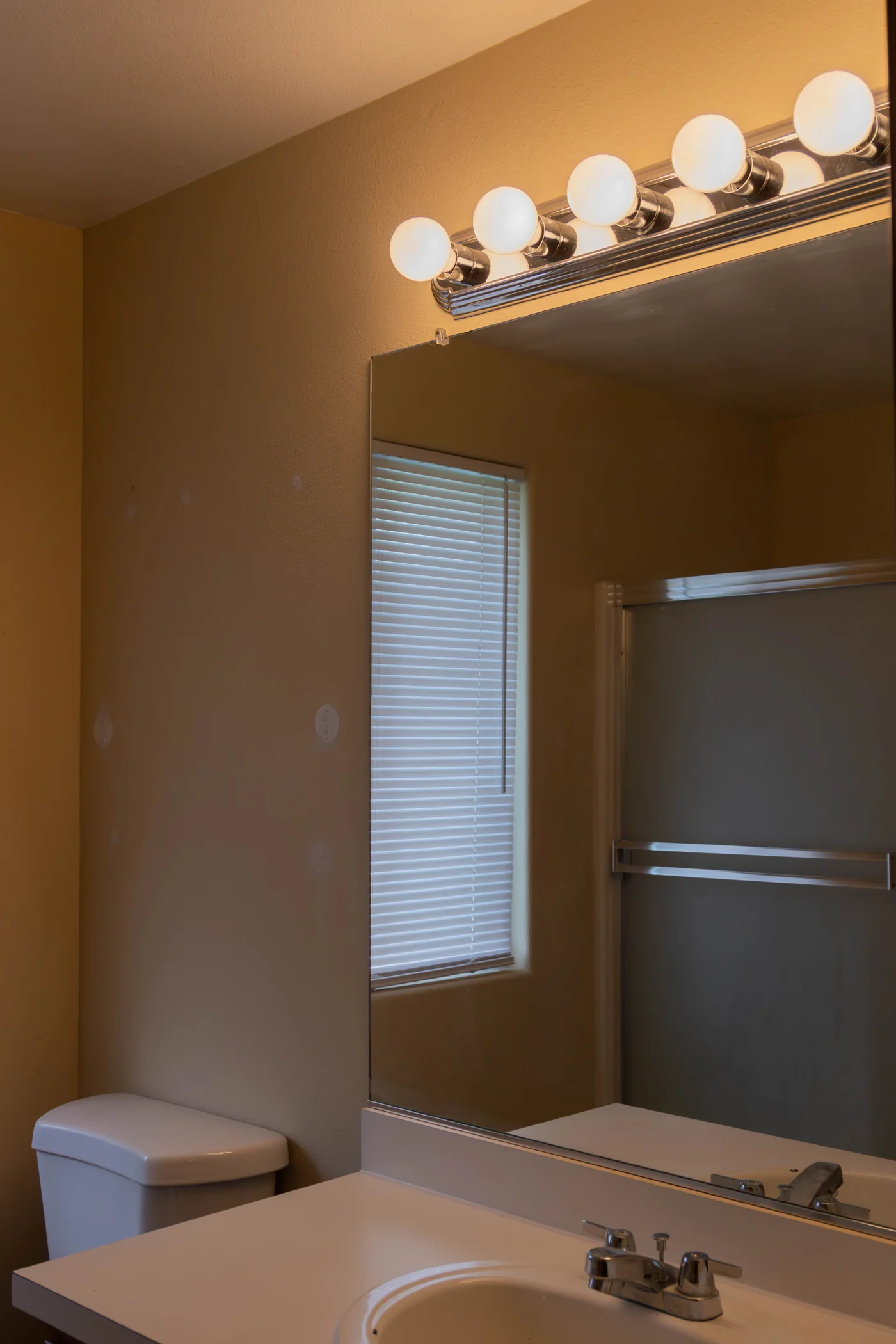
Older neighborhoods drain through clay laterals with decades of root intrusion, and heavy winter rain fills the system. The line backs up and surfaces at the lowest fixture, which is usually a hallway bathroom or a laundry drain.
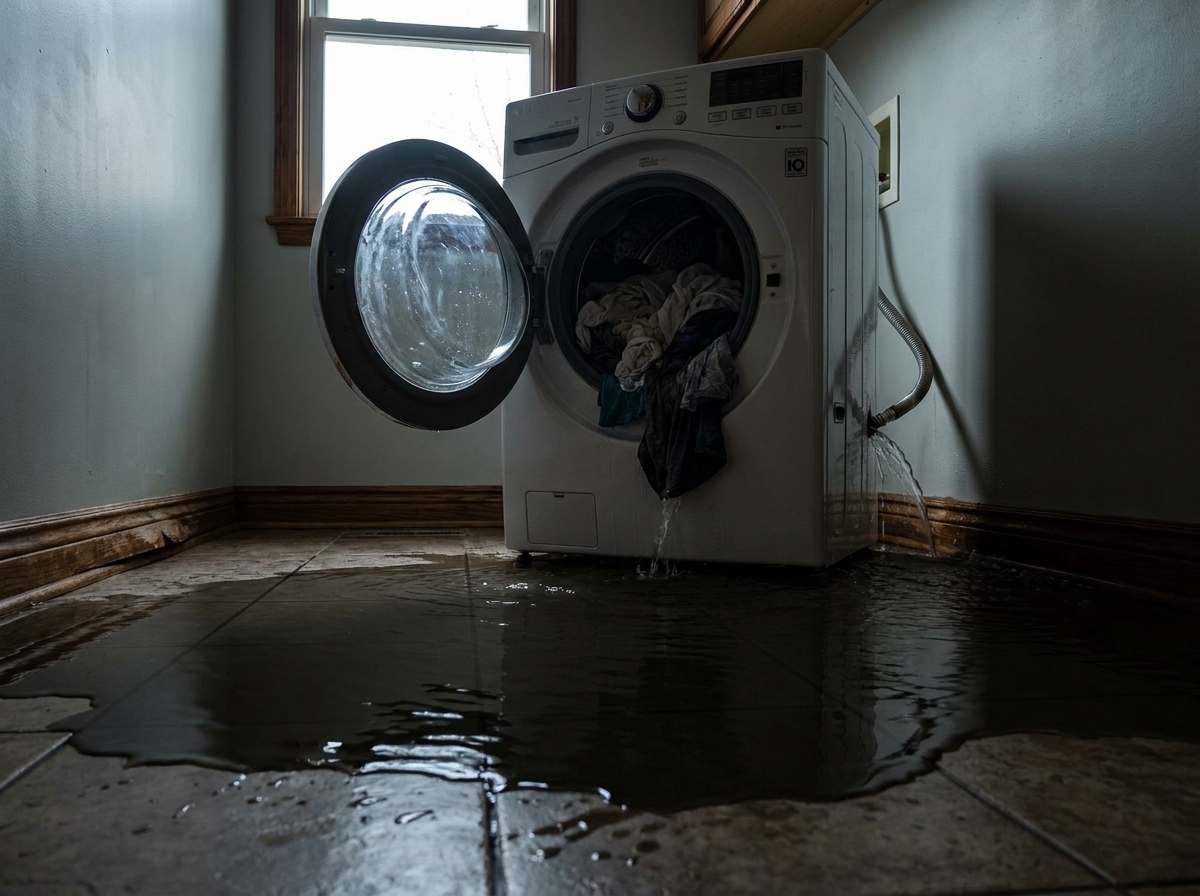
Washing machine hoses, refrigerator ice maker lines, and dishwasher supply fittings account for a large share of local losses. On a single-level home the water spreads flat and fast, wicking up drywall in every direction at once.
Saturated valley clay stops taking water partway through winter. Runoff collects against foundations, fills crawl spaces, and finds its way into garages and lower rooms without any river ever leaving its banks.
Water is how most losses start. It’s rarely where they end. The same local crew handles all of it.
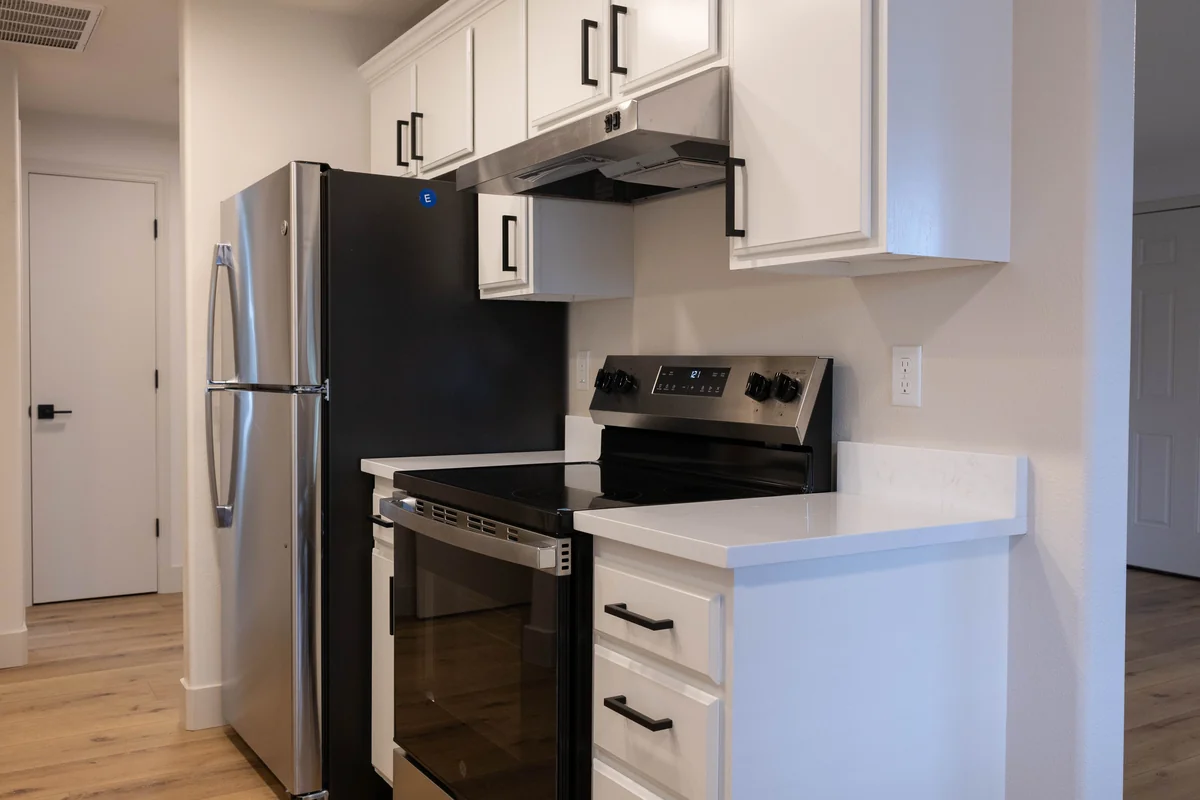
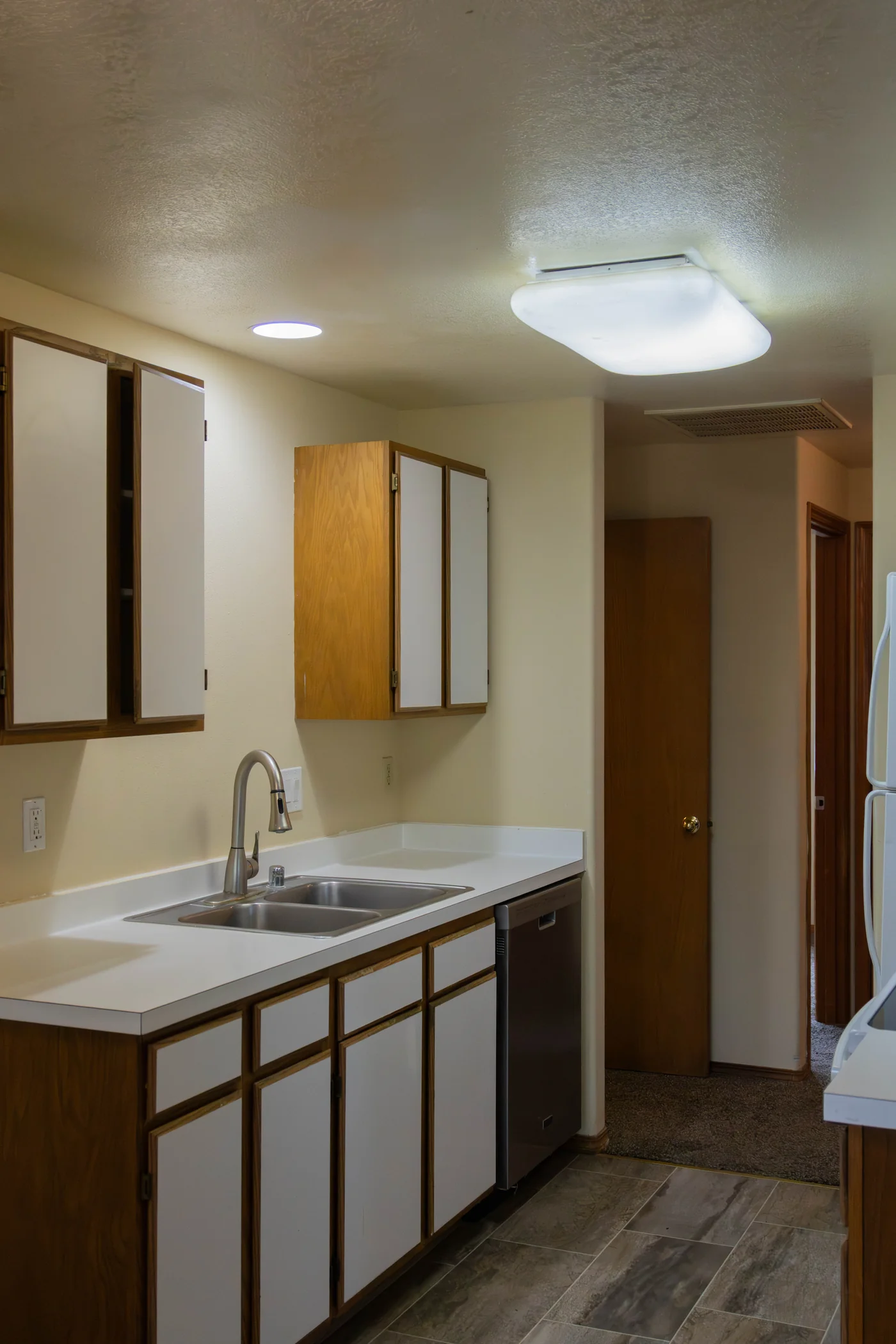
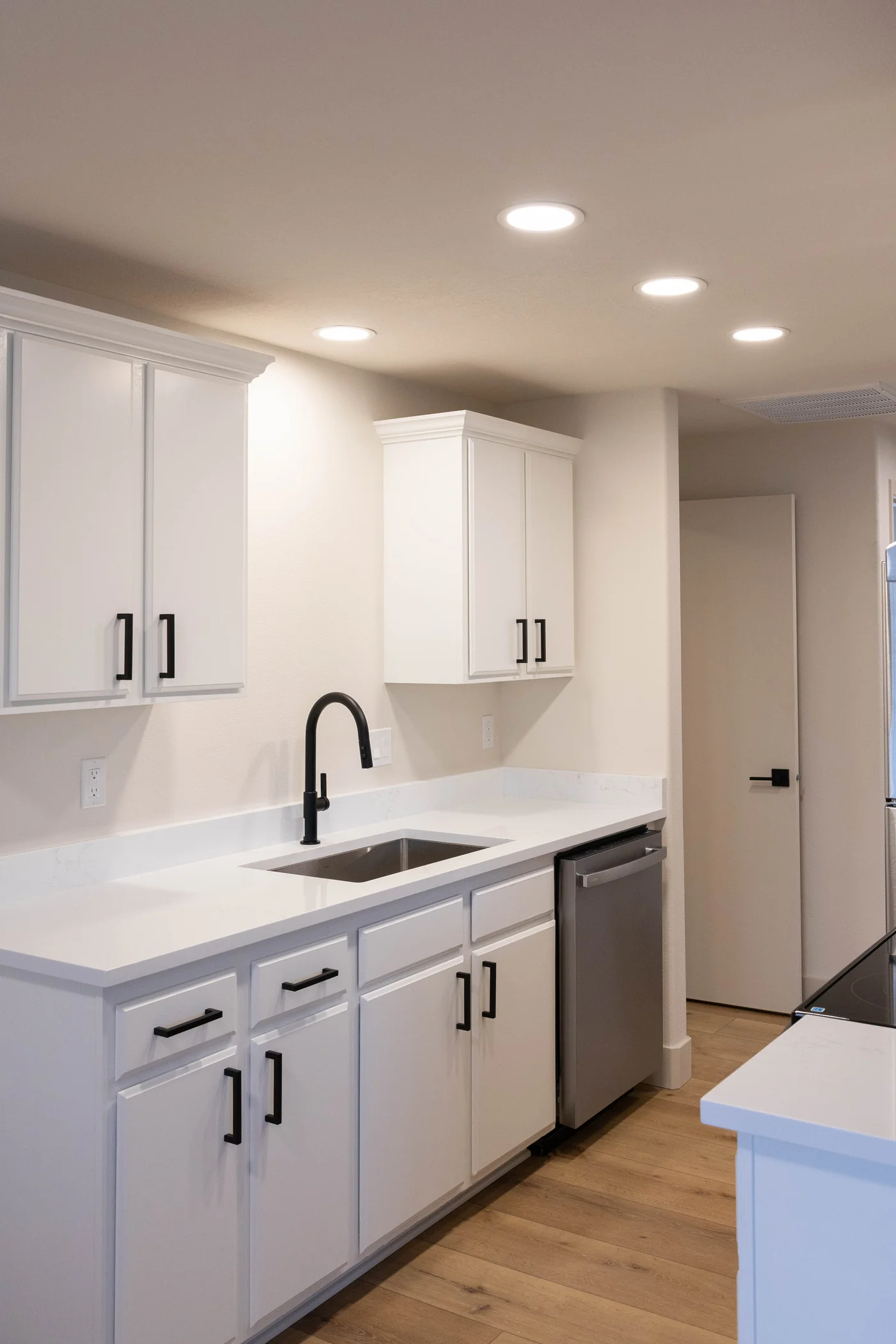
Three real projects, photo-documented for the insurance carrier. Drag each handle to compare.
“Had a leak in our wall and our plumber recommended Robinson Restoration to handle remediation of the water damage. Christian and Adolfo were awesome. Great communication throughout the setup of the containment area and installation of the equipment to start the drying process.”
Won Lee · Google Review
“We recently had an unfortunate plumbing issue that led to some significant flooding issues. On the recommendation of our plumber we reached out to Robinson Restoration to help us with drying out our house and getting it ready to be put back together.”
Don Warner · Google Review
“We've had the bittersweet opportunity to have Robinson in our lives twice now. First, for a major 3,000 sq ft mold remediation of our crawl space. Then last week, we had an unfortunate flood. I don't know what we would have done without them.”
T Marie C · Google Review
In Oregon, you choose your restoration contractor, and your carrier can’t penalize you for it. We document every Woodburn loss with moisture maps, photos, and daily readings, then bill your insurer directly. You pay your deductible. That’s it.
Subject to policy coverage and deductible. We handle the paperwork, photos, and adjuster calls.
The nearest available crew is the one that matters at two in the morning. Woodburn is covered day and night by our north valley teams, and the responding truck arrives loaded with extraction units, air movers, dehumidifiers, containment materials, and moisture meters so mitigation begins on the first visit. We photograph and log from the start, then bill your insurance carrier directly rather than leaving you to file the claim alone.
Supply connections, in our experience: angle stops under sinks and toilets, the flexible lines feeding them, and the water heater itself. Copper of that vintage also develops pinhole leaks, which weep into a wall cavity for months before anything shows. If your home still has original shutoffs and the heater is past a decade old, those are the two things worth replacing before they choose their own timing.
No, and we would rather tell you that plainly. Sewage is category three water, so carpet, pad, and typically the bottom section of drywall come out rather than getting dried. We set containment with negative air first so nothing spreads, extract, remove the affected materials, clean and treat the structure with an antimicrobial, then dry and verify. Hard surfaces and framing usually survive; soft goods do not.
Our valley crews run this corridor constantly, and the goal is on-site in 90 minutes or less from your call, day or night. Dispatch is live rather than an answering service, so the truck is assigned while we are still talking. Shut off the water at the main if you can safely reach it, and if a ceiling is holding water, stay out from under it and wait for the crew.
Usually not. Hydrostatic pressure and groundwater seepage are excluded on nearly every homeowner policy, even though the damage they cause is genuine. We can still dry the space, treat what has grown, and document the pathway so a drainage contractor can address it correctly. Often the fix is unglamorous: gutter extensions, regrading against the foundation, or a footing drain that stopped working.
Both. Restaurants, retail spaces, clinics, offices, and agricultural buildings are regular work for our valley crews, and commercial drying is a different exercise. Containment lets one wet section get dried while the rest of the operation stays open, desiccant equipment handles large open volumes, and we schedule the loud work overnight where we can. Documentation for a business interruption claim gets built alongside the mitigation file.
Then the conversation with your carrier changes, and it is better to know that early. Most policies pay for sudden and accidental discharge, not for long-term seepage, and adjusters look closely at staining patterns and material condition to tell them apart. We document exactly what we find without editorializing. Even when coverage is denied, the structure still has to be dried and treated, and we will scope that honestly.
Wet drywall and subfloor only get worse overnight. Call now and a certified crew responds.
Licensed · Insured · IICRC Certified · Serving Washington & Oregon