Robinson Restoration is an IICRC-certified water damage restoration company serving Independence, OR. Crews dispatch 24 hours a day, arrive on-site in 90 minutes or less, document the readings and photos your carrier needs, and bill your insurance directly on covered claims.
Independence built its name on hops, and the brick downtown still shows it. West-bank riverfront, farm ground in every direction, and a housing stock that spans a century. When water gets loose in one of those buildings, our crews are on-site in 90 minutes or less, any hour.
The Willamette runs along the east edge of town, and the ground between the river and the historic district sits low enough that winter high water shows up as groundwater long before anything overtops. Older homes near downtown were built with basements and cellars, which is unusual for the valley and means water has somewhere to collect. Newer subdivisions to the west sit on ag ground with clay soils and shallow crawl spaces.
Independence and Monmouth are covered by the same 24/7 dispatch that runs the rest of the southern valley. Crews document before they demo: moisture map, thermal scan, photos, written scope. Daily readings get logged against IICRC S500 dry standards so the file shows progress rather than assertions. We bill your carrier directly and stay in front of the adjuster. Repair work after drying is managed through licensed contractors and sister companies, not self-performed.

Independence and Monmouth calls run through the same round-the-clock dispatch, with equipment loaded before the address is even confirmed.
24 hours a day, 7 days a week, our crews dispatch the moment you call and start mitigation the same visit. Call dispatch or message us for immediate help.
We stop further damage with commercial extraction, structural drying, and antimicrobial treatment, and we walk you through the entire insurance claim as we work.
We manage your rebuild to pre-damaged condition through our trusted network of licensed contractors and sister companies. One manager, one timeline.
Independence has an unusual concentration of old agricultural and commercial structures from its hop era, along with the houses built by the families who ran them. Those buildings carry heavy timber framing, board sheathing, and plumbing added generations after construction. Water tracks along beams and sill plates rather than dropping straight down, so finding where it went takes metering, not guessing.
Real basements are rare in the Willamette Valley, and Independence has more of them than most towns its size. That's a liability when the river runs high, because the water table rises to meet the slab. Finished basements take the worst of it: carpet, pad, drywall, and everything stored down there, usually discovered days after the water arrived.
The established streets around the historic district are lined with big trees, and those root systems have spent decades looking for the sewer lateral. Clay pipe with root intrusion runs fine until a wet week fills the line, then backs up through the lowest fixture. Sewage is Category 3 water, which changes the whole scope: containment first, then removal, then drying.
Storms coming up the valley hit Polk County with wind before the rain arrives, and that order matters. Wind lifts shingles and pulls flashing loose, then hours of rain drives through the openings. Independence homeowners often find the leak days later as a ceiling stain, by which time the insulation above it has been holding water the entire time.
Most of the losses we run in Independence start one of three ways: flooding and groundwater, sewage backups, and burst and leaking pipes. Here is why each one happens here, and what it takes to dry it properly.
Independence sits on the west bank with low ground between downtown and the Willamette. Winter high water raises the table until basements and crawl spaces take groundwater without the river ever leaving its channel.
Older laterals under the historic streets are clay pipe surrounded by mature tree roots. A heavy rain overwhelms a partially blocked line and the backup comes up through basement floor drains and first-floor tubs.
Century-old Independence houses run supply lines through uninsulated basement walls and crawl spaces. A hard valley freeze splits them, and a basement gives the water somewhere to collect deep before anyone notices.
Water is how most losses start. It’s rarely where they end. The same local crew handles all of it.
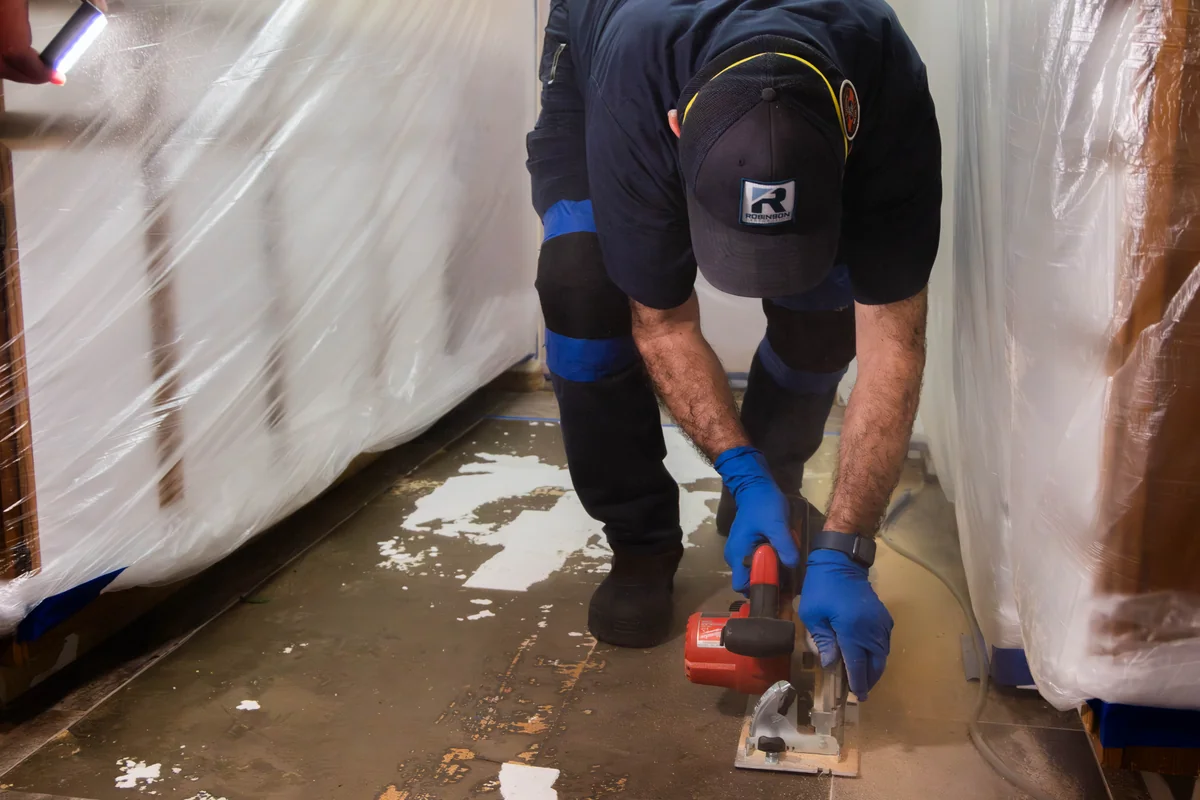
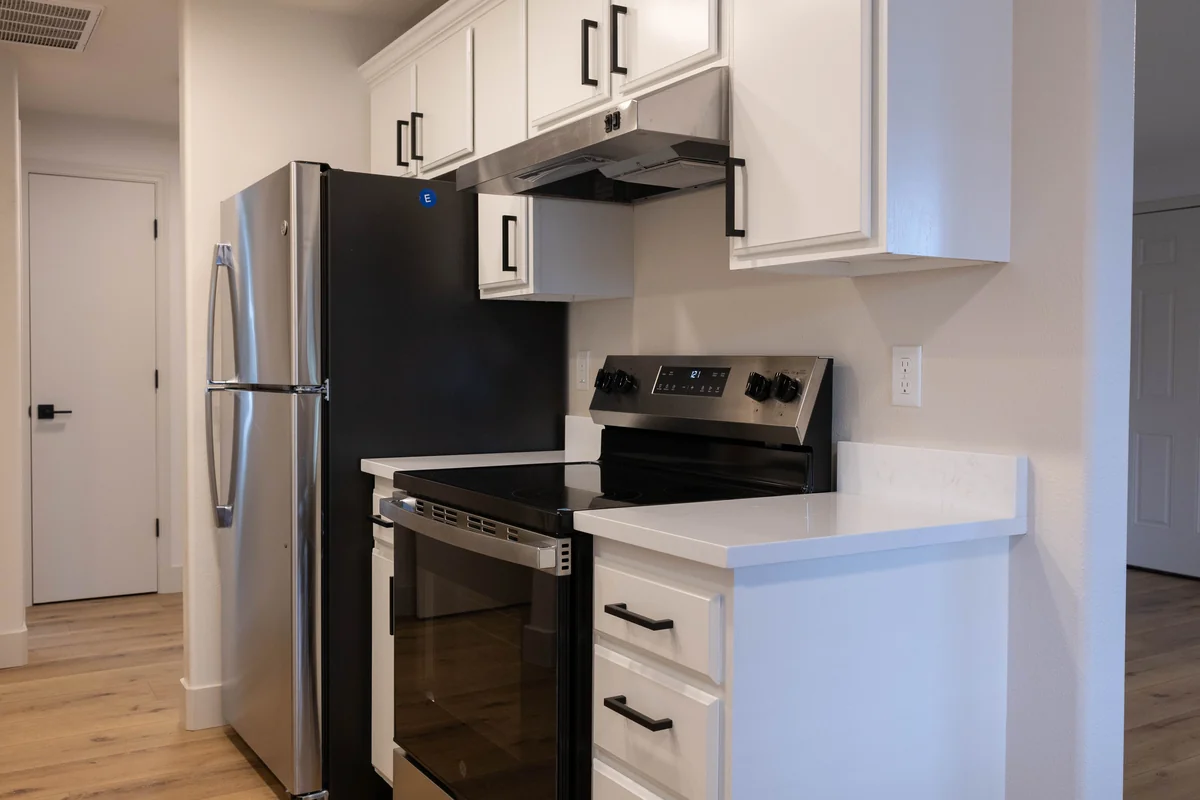
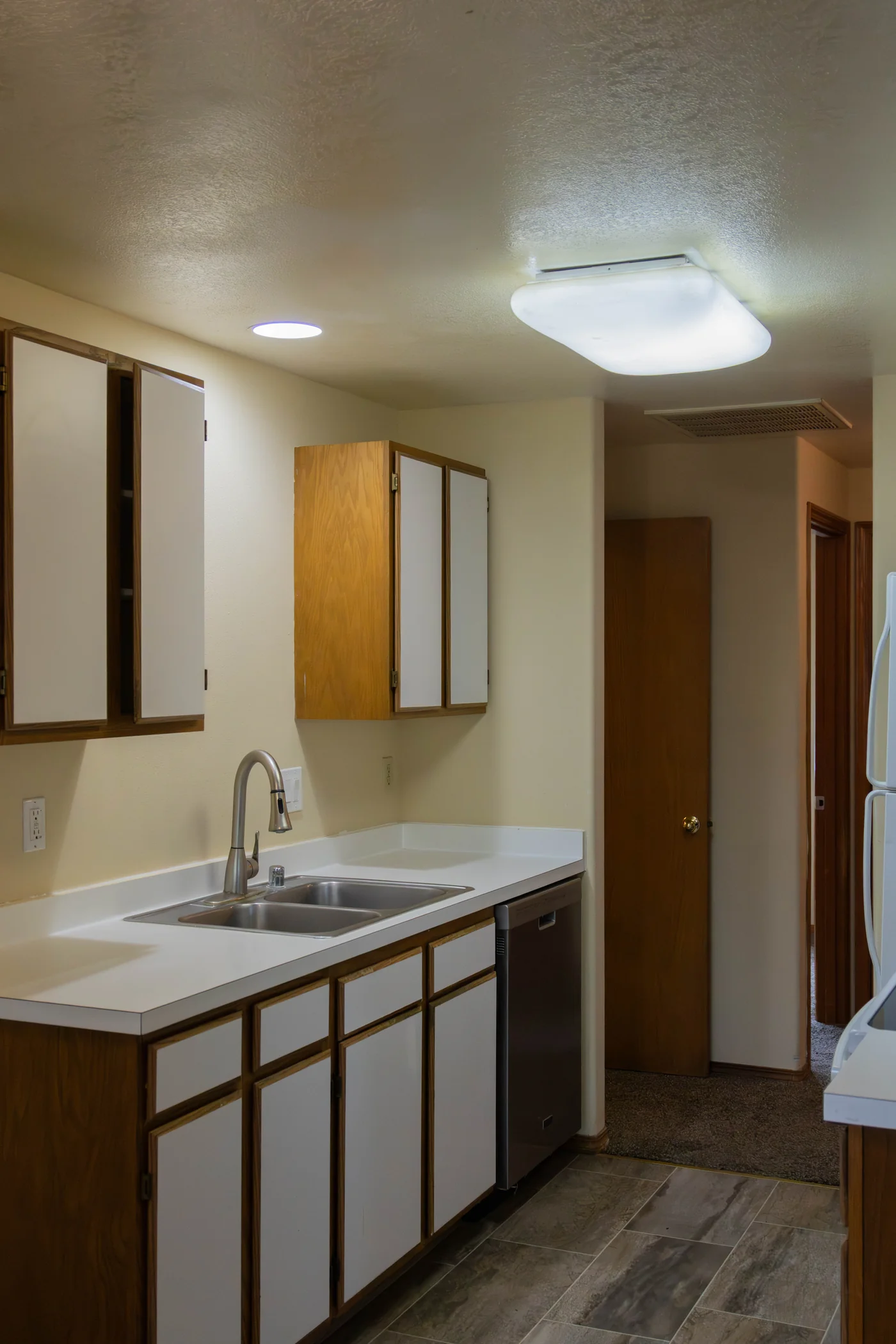
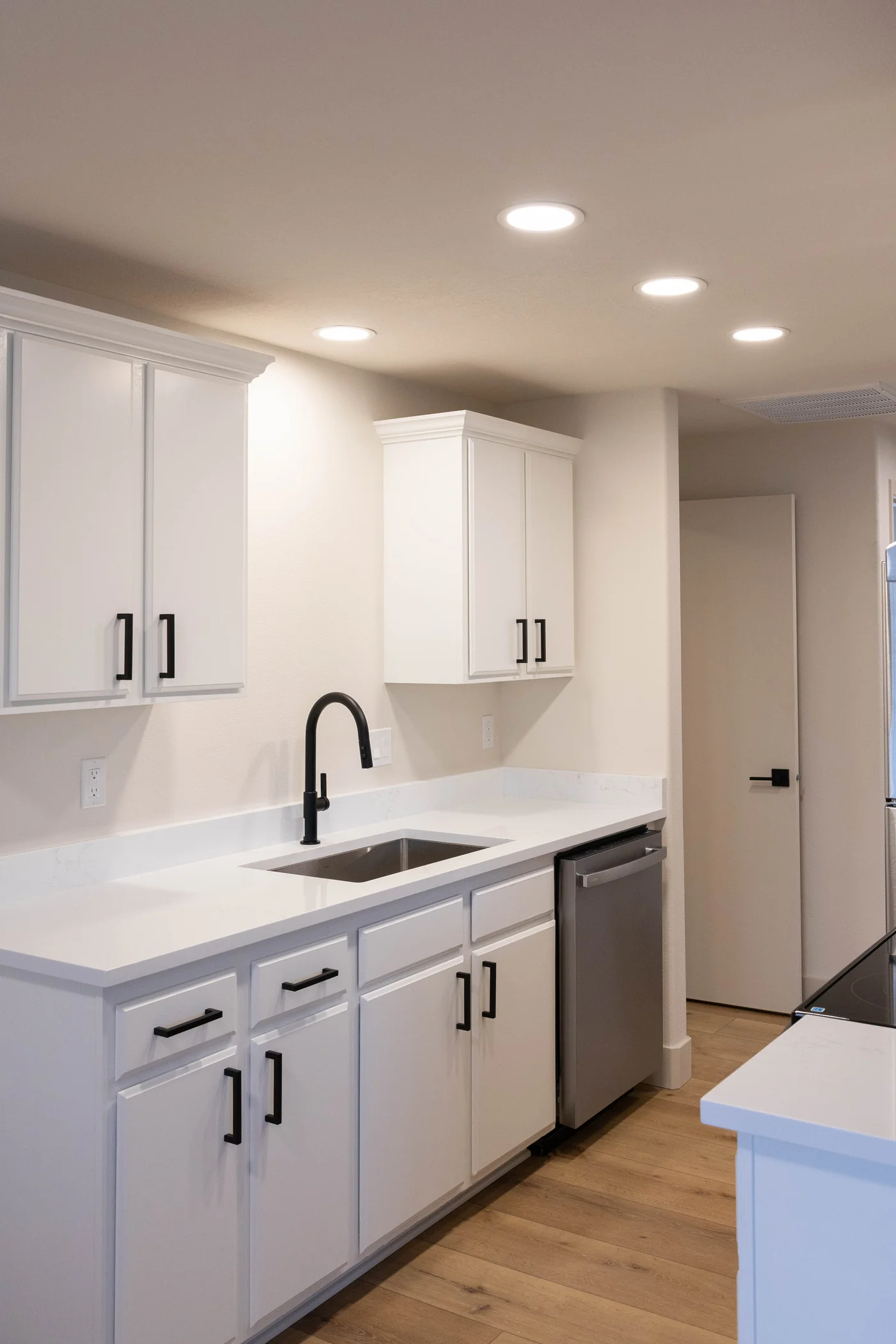
Three real projects, photo-documented for the insurance carrier. Drag each handle to compare.
“One of the pipes in the shower burst and water damage got all over the roof in the kitchen. As new home owners we were very scared and panicked. We contacted Kelly Farmer from Robinson Restoration and believe me when I say I felt like more than half of my problem was solved.”
Nav Basra · Google Review
“Just started a project with Cole and Chuck at Robinson Restoration and had to write a review straight away. These guys have been fantastic. We were away on a week long trip when we had a kitchen leak that destroyed our flooring and subfloor.”
Justin O'Neill · Google Review
“I want to express our sincere gratitude to the Robinson team that quickly moved to identify, rectify, repair, and then clean up the mess left by an itty-bitty hot water leak that went unnoticed because of its location.”
Michael Quinn · Google Review
In Oregon, you choose your restoration contractor, and your carrier can’t penalize you for it. We document every Independence loss with moisture maps, photos, and daily readings, then bill your insurer directly. You pay your deductible. That’s it.
Subject to policy coverage and deductible. We handle the paperwork, photos, and adjuster calls.
Yes, we keep a crew assigned to this end of the valley, and our dispatch line is answered by a person at any hour. Call it in and a truck heads toward Independence with extraction equipment, commercial air movers, and dehumidifiers already loaded. We document the loss, bill your insurance carrier directly, and keep you posted as the structure dries.
Power and safety first, then extraction. A flooded Independence basement usually has submerged outlets and possibly a wet furnace or water heater, so we kill the circuits before anyone steps in. Then we pump, remove saturated carpet and pad, cut drywall above the water line where it wicked, and set dehumidification. Contents come out and get inventoried, because photographing what was down there matters for the claim.
Both, and the two towns run through the same dispatch. Housing differs enough between them that we scope differently: Independence carries more historic construction and basements near the river, while Monmouth has a larger share of student rentals and multi-unit buildings around the university. Same response, same documentation, different expectations about what we'll find behind the wall.
Some of it. Hard, non-porous surfaces clean and sanitize well. Porous materials that absorbed Category 3 water do not, so carpet, pad, and affected drywall come out regardless of how they look. In Independence we see this most often after sustained rain overloads an old lateral. We contain the area, remove and dispose properly, apply antimicrobial, then dry and verify with readings.
That's usually the goal. The historic homes around Independence have millwork, fir floors, and plaster worth preserving, and controlled drying protects them better than aggressive demolition. We use small drilled access points, injection drying into wall cavities, and floor mats that pull moisture through boards gradually. It costs more equipment days and saves materials that can't be bought at a lumberyard.
You call us, we start work, and you notify your carrier. From there we handle the technical side: scope, photos, moisture logs, and line-item pricing submitted in the format adjusters expect, with direct billing so you pay the deductible and nothing else. If a question comes up about cause or scope on your Independence property, we answer it with the documentation instead of a conversation.
We manage it, working through licensed contractors and sister companies rather than self-performing the reconstruction. That keeps one team accountable for the schedule and one point of contact for you. On an older Independence home it also means the trades who show up have matched period trim and plaster before, which matters more than speed when the goal is a repair nobody can spot.
Water in a basement doesn't drain itself. Call now and Independence crews start pumping tonight.
Licensed · Insured · IICRC Certified · Serving Washington & Oregon