Robinson Restoration is an IICRC-certified water damage restoration company serving Deer Island, OR. Crews dispatch 24 hours a day, arrive on-site in 90 minutes or less, document the readings and photos your carrier needs, and bill your insurance directly on covered claims.
Deer Island is acreage country: gravel driveways off the highway, wells instead of meters, and septic instead of sewer. Water problems here start out of sight, under a house on posts or inside an unheated shop. Our crews are set up for rural property and they run at any hour.
The ground splits into two worlds along this part of the Columbia. Below the highway, low pasture and bottomland stay wet all winter and depend on ditches and drainage works to move water off. Above it, homes sit on forested slopes where runoff comes downhill and collects against foundations and outbuildings. Housing runs older: farmhouses, additions built in stages, manufactured homes on private lots, and shops that were wired and plumbed by whoever owned the place at the time.
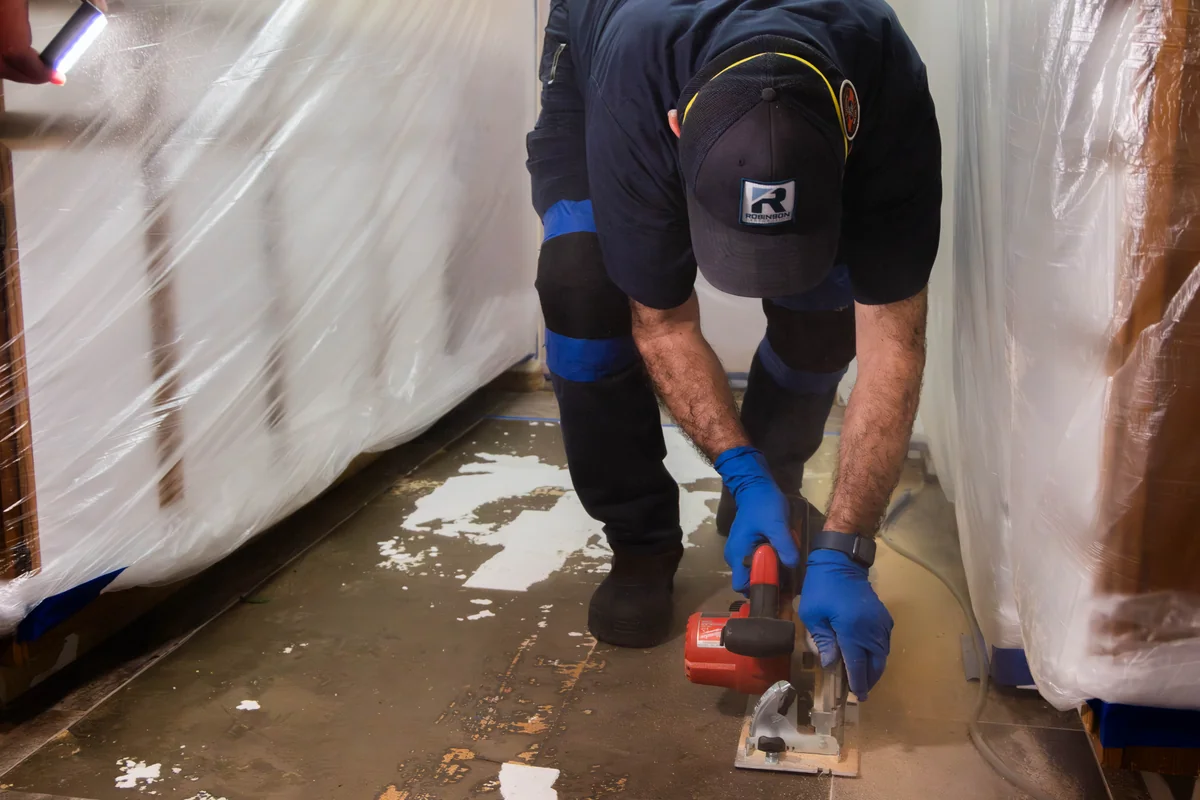
Dispatch is live 24/7, and the truck that shows up carries its own power and enough hose to reach a crawlspace at the back of a lot. Our techs document to IICRC S500: moisture readings on every affected material, daily logs, and photographs tied to a floor plan. We bill your insurance company directly. If your water comes from a well or the loss involved septic, that goes in the file too, because it changes the category and the scope.

A Deer Island call gets a crew that expects no city water, no sidewalk, and a crawlspace worth checking first.
24 hours a day, 7 days a week, our crews dispatch the moment you call and start mitigation the same visit. Call dispatch or message us for immediate help.
We stop further damage with commercial extraction, structural drying, and antimicrobial treatment, and we walk you through the entire insurance claim as we work.
We manage your rebuild to pre-damaged condition through our trusted network of licensed contractors and sister companies. One manager, one timeline.
Slopes above the highway shed a lot of water in a wet week, and it does not always stay in the ditch. Runoff undercuts a driveway, saturates a cut bank, and pushes into daylight basements and crawlspaces from the uphill side. We find where it is entering, dry the structure, and point out the grading or drainage issue behind it.
The low ground along the river holds water into spring, and drainage works only move so much of it during a long wet stretch. Shops, barns, and homes near the flats deal with high groundwater rather than a dramatic flood: slow seepage, wet slabs, standing water under floors. That kind of damage is easy to live with and expensive to ignore.
Coverage questions come up more often on unincorporated parcels: a detached shop or barn may fall under a different limit than the house, and a manufactured home may be on its own policy form. We document each structure separately with its own moisture record and photos, which keeps an adjuster from lumping a barn loss into the dwelling scope or leaving it out entirely.
Fir and maple over a country roof mean packed gutters by December and a valley that cannot clear itself. Water backs under shingles, runs along rafters, and drops into attic insulation where nobody sees it. On homes with additions, the worst leaks tend to be at the roofline where old and new construction meet and the flashing was an afterthought.
Most of the losses we run in Deer Island start one of three ways: roof and storm leaks, flooding and groundwater, and water heater failures. Here is why each one happens here, and what it takes to dry it properly.
Country roofs under heavy tree cover collect needles and moss, and gutters plug by mid-winter. Water backs up under shingles and soaks attic insulation, usually showing on a ceiling long after the damage began.
High groundwater and hillside runoff both end up in the same place. Crawlspaces and shop slabs on the lower ground take standing water in a long wet stretch, and ditches that worked last year do not always keep up.
Tanks on well systems work hard and often sit in a garage or utility room with no drain pan. When the tank lets go, it empties into the floor and travels along the framing into finished rooms before anyone notices.
Water is how most losses start. It’s rarely where they end. The same local crew handles all of it.
Three real projects, photo-documented for the insurance carrier and backed by our 5-year workmanship warranty. Drag each handle to compare.
“Had a leak in our wall and our plumber recommended Robinson Restoration to handle remediation of the water damage. Christian and Adolfo were awesome. Great communication throughout the setup of the containment area and installation of the equipment to start the drying process.”
Won Lee · Google Review
“We recently had an unfortunate plumbing issue that led to some significant flooding issues. On the recommendation of our plumber we reached out to Robinson Restoration to help us with drying out our house and getting it ready to be put back together.”
Don Warner · Google Review
“We've had the bittersweet opportunity to have Robinson in our lives twice now. First, for a major 3,000 sq ft mold remediation of our crawl space. Then last week, we had an unfortunate flood. I don't know what we would have done without them.”
T Marie C · Google Review
In Oregon, you choose your restoration contractor, and your carrier can’t penalize you for it. We document every Deer Island loss with moisture maps, photos, and daily readings, then bill your insurer directly. You pay your deductible. That’s it.
Subject to policy coverage and deductible. We handle the paperwork, photos, and adjuster calls.
Robinson keeps a crew assigned to Columbia County, so a call from Deer Island reaches people who already work the lower Columbia. Our emergency line is staffed overnight and through holidays, and dispatchers can send a truck rather than take a message. Techs arrive with truck-mounted extractors, air movers, and dehumidifiers, and we bill your insurer directly once the claim is open.
Yes. Property outside city limits is a regular part of our Columbia County work, including places on wells, septic, and long private drives. Dispatch is available 24/7 and we aim to be on-site in 90 minutes. When you call, mention gate codes, livestock, and whether the driveway is passable for a box truck, since that determines what equipment the crew loads.
Kill power to the pump at the breaker before anything else, then close the valve at the pressure tank if you can reach it. Well water is usually clean water at the start, but it turns dirty fast once it sits in soil and picks up whatever is under the house. We extract, pull saturated insulation and vapor barrier, dry the framing, and confirm readings before closing it back up.
Generally not under a standard homeowners policy. Water that rises from the ground or runs in from outside is treated as flood, and that needs separate coverage. A failed supply line, a water heater, a washer hose, or a roof leak from a storm-damaged roof is a different category and is often covered. We write the cause up clearly either way so nothing gets denied on a vague description.
Yes, and we scope them as their own structures. Open buildings, slab floors, and block walls hold and release moisture differently than a finished house, so the equipment plan is different: more airflow, more dehumidification capacity, and readings taken at wall height rather than just at the floor. Contents and stored equipment get evaluated too, since a lot of what sits in a Deer Island shop is worth more than the building.
Extraction first, then controlled demolition of materials that cannot be saved, then air movers and dehumidifiers sized to the space. We take moisture readings daily and compare them against dry materials elsewhere in the building. Most jobs run a few days, longer for hardwood or dense subfloor. You get the readings and photos as we go, not a summary at the end.
We handle mitigation and cleanup, then manage reconstruction through vetted licensed contractors and sister companies. That coordination matters on rural Columbia County property, where lining up a framer, a drywall crew, and a flooring installer on your own can take weeks. Our documentation from the drying phase becomes the basis of the repair scope, so the insurer is working from one consistent record.
Wet framing does not dry on its own. Call and we will get a crew out to Deer Island.
Licensed · Insured · IICRC Certified · Serving Washington & Oregon