Robinson Restoration is an IICRC-certified water damage restoration company serving Pacific, WA. Crews dispatch 24 hours a day, arrive on-site in 90 minutes or less, document the readings and photos your carrier needs, and bill your insurance directly on covered claims.
Pacific sits low on the White River, on flat valley ground that sends water to the nearest low spot in a hurry. A failed supply line or a saturated crawlspace turns into a real problem in a matter of hours here. Our crews take calls nights, weekends, and holidays.
Flat ground and a river with a long flood history make this a wet-foundation town, though most homes here have no basement to speak of. They have crawlspaces sitting on a high water table, slab additions, and older manufactured homes on skirted foundations. Post-war cottages still carry galvanized supply in the walls. Warehouse and light industrial buildings along the valley add another layer: big slabs, interior roof drains, and charged fire lines.
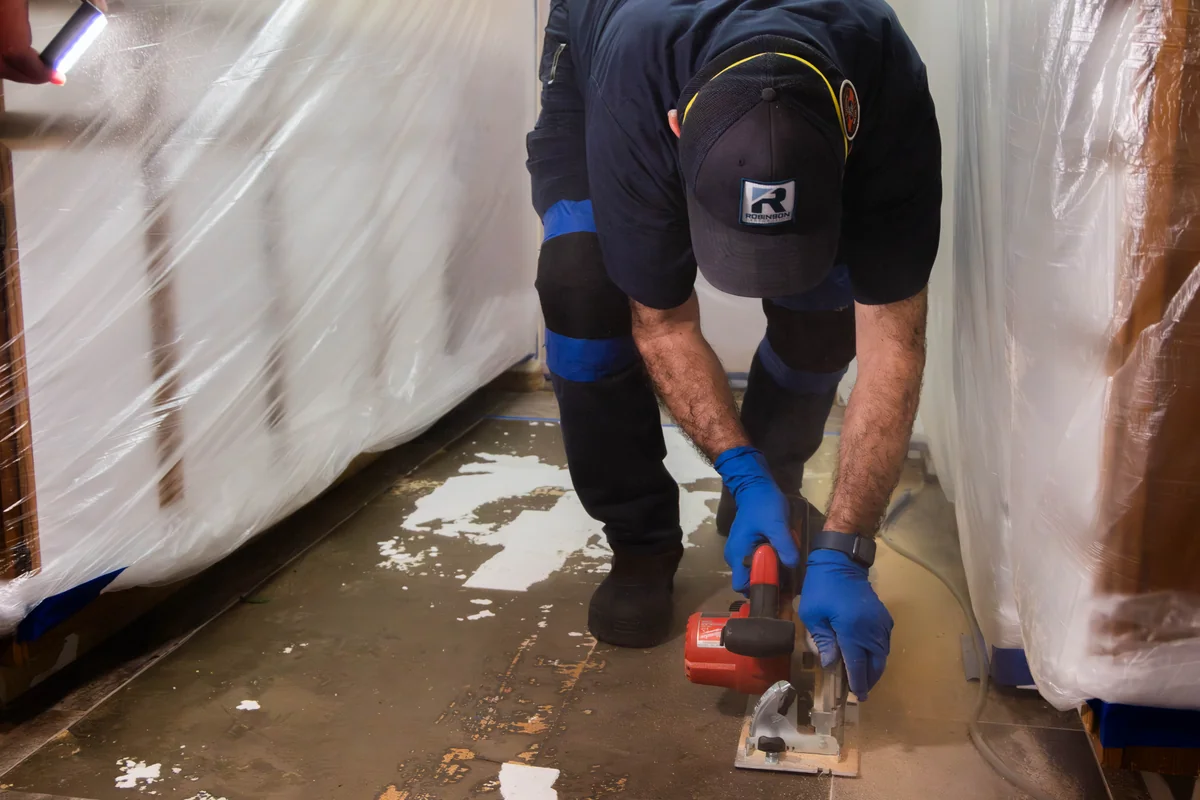
Robinson runs 24/7 dispatch, and our Kent operations center handles the south valley corridor daily. We meter affected materials, photograph the loss before anything moves, and keep a daily drying log so your adjuster sees exactly what we saw. Direct insurance billing is standard on residential and commercial work alike. Every job follows IICRC S500 drying standards, and rebuild work is managed through vetted licensed contractors and sister companies.

Pacific losses go to our on-call valley team, with extraction and drying equipment staged so mitigation begins during that first visit.
24 hours a day, 7 days a week, our crews dispatch the moment you call and start mitigation the same visit. Call dispatch or message us for immediate help.
We stop further damage with commercial extraction, structural drying, and antimicrobial treatment, and we walk you through the entire insurance claim as we work.
We manage your rebuild to pre-damaged condition through our trusted network of licensed contractors and sister companies. One manager, one timeline.
Ground here is flat, low, and close to the White River, so winter rain has nowhere to go but sideways and up. Crawlspaces take on groundwater through the vents and the footings, and standing water under a floor keeps joists and subfloor damp for months. Drying that space properly means containment and a dehumidifier, not a fan pointed at the access hatch.
The older housing stock in Pacific is modest and built simply, which means small crawls, undersized vents, and supply piping that has been in service a very long time. Manufactured homes bring a different problem: the belly wrap under the floor holds water like a bag, and unless it gets opened and dried, insulation stays wet and the framing above it follows.
The valley through Pacific is working ground, full of distribution buildings, contractor yards, and small shops. Commercial losses run on different rules: interior roof drains that back up, sprinkler heads that discharge, and slab moisture that wrecks racking and stored product. We scope for business continuity, so drying and containment get set up around the areas you still need to operate.
Because of the flood history along this stretch of river, plenty of Pacific owners carry a separate flood policy alongside their homeowners coverage. The two respond to different events, and the paperwork goes to different places. We document the entry point, the water category, and the moisture pattern so the claim lands with the right carrier instead of bouncing between them.
Most of the losses we run in Pacific start one of three ways: flooding and groundwater, appliance failures, and water heater failures. Here is why each one happens here, and what it takes to dry it properly.
The White River has put water into this valley before, and flat terrain with a high water table means runoff spreads instead of draining. Ground water reaching a crawlspace is treated as contaminated until proven otherwise.
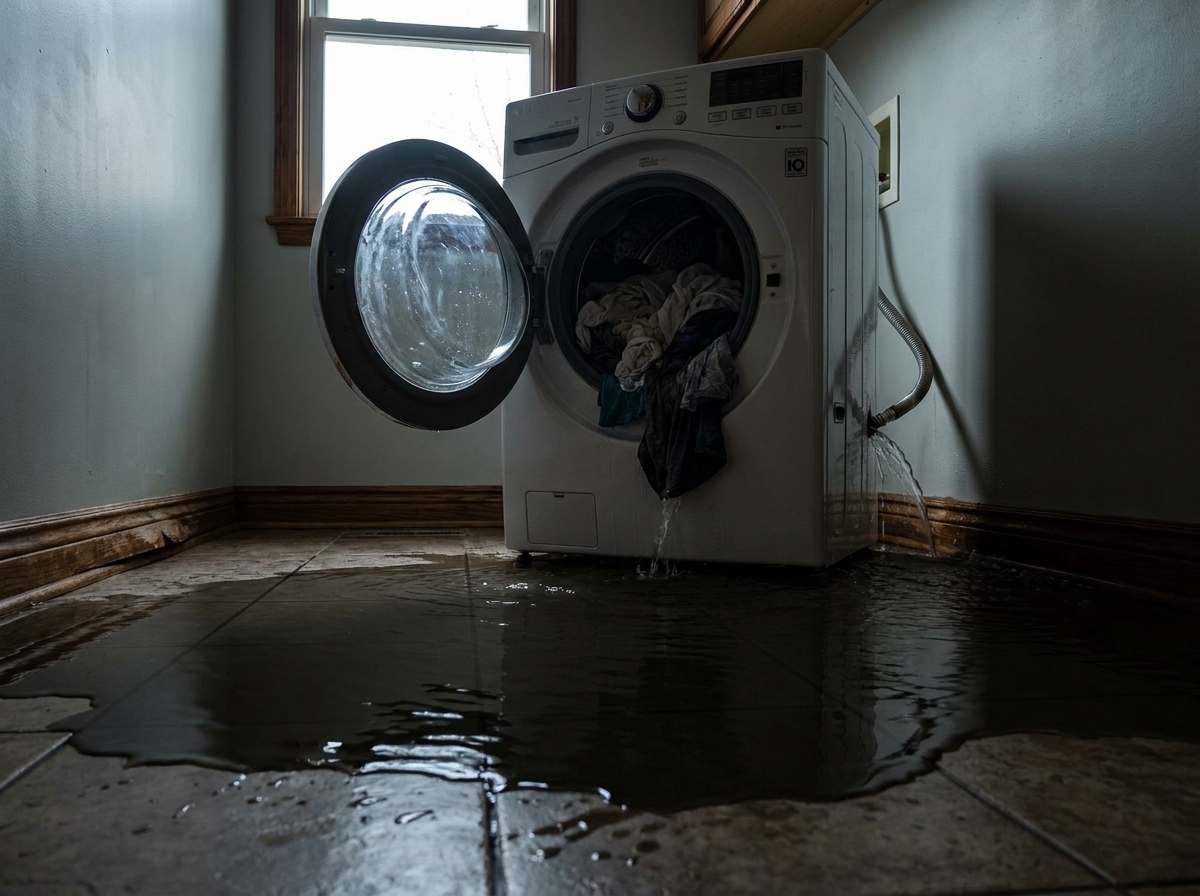
Washing machines, dishwashers, and ice maker lines fail quietly in single-story homes where nobody hears the drip. On a slab or over a shallow crawl, that water runs under cabinets and flooring before it ever reaches open floor.
Water heaters in Pacific tend to sit in a garage or utility closet on a slab with no pan and no floor drain. When the tank rusts through, the discharge tracks straight into adjoining living space and under the flooring.
Water is how most losses start. It’s rarely where they end. The same local crew handles all of it.
Three real projects, photo-documented for the insurance carrier. Drag each handle to compare.
“Had a leak in our wall and our plumber recommended Robinson Restoration to handle remediation of the water damage. Christian and Adolfo were awesome. Great communication throughout the setup of the containment area and installation of the equipment to start the drying process.”
Won Lee · Google Review
“We recently had an unfortunate plumbing issue that led to some significant flooding issues. On the recommendation of our plumber we reached out to Robinson Restoration to help us with drying out our house and getting it ready to be put back together.”
Don Warner · Google Review
“We've had the bittersweet opportunity to have Robinson in our lives twice now. First, for a major 3,000 sq ft mold remediation of our crawl space. Then last week, we had an unfortunate flood. I don't know what we would have done without them.”
T Marie C · Google Review
In Washington, you choose your restoration contractor, and your carrier can’t penalize you for it. We document every Pacific loss with moisture maps, photos, and daily readings, then bill your insurer directly. You pay your deductible. That’s it.
Subject to policy coverage and deductible. We handle the paperwork, photos, and adjuster calls.
We staff the White River corridor year round, so Pacific has a crew that already knows the area. Someone answers dispatch at any hour, including nights and weekends. Trucks carry extraction units, air movers, commercial dehumidifiers, and moisture mapping tools. Low-lying lots near the river hold water long after the rain quits. Insurance billing goes straight to your carrier.
It depends entirely on where the water came from. Rising water that enters from outside is a flood claim. Water that came out of a pipe, a fixture, or an appliance inside the house is a homeowners claim. In Pacific we see both, sometimes in the same season, so our documentation always establishes the entry point first and the damage second. That order keeps the claim from stalling.
Differently than a stick-built house. The underbelly wrap traps water against the insulation and floor decking, so it has to be opened, drained, and the wet insulation removed rather than dried in place. We meter the floor decking from above and below, dry the interior with containment and dehumidification, then reseal the belly once the readings come back to a dry standard. Skipping that step guarantees a soft floor later.
Both. A lot of the square footage in this part of the valley is warehouse, shop, and light industrial space, and those losses need scoping that residential jobs do not: product protection, racking, drying around active operations, and documentation your commercial carrier and your accountant can both use. We can phase the work so part of the building keeps running while the affected area dries.
Shut the water off at the main and cut power to any circuit feeding a wet area. Then start taking photos and video before you move anything, because those images become the baseline for the claim. Pull small valuables and paper off wet floors. Do not run a shop vac through standing water near live outlets, and call us while you are doing the rest.
Because in Pacific the plumbing repair only stops the addition of new water. The soil under the house is already saturated, the vapor barrier is holding puddles, and the vents pull in humid outdoor air all winter. Until the standing water is removed, the barrier is repaired, and the space is actively dehumidified, the wood keeps reading wet and the odor keeps coming up through the floor.
You pay your deductible and we bill the carrier for the rest of the covered mitigation. Our file goes over with daily moisture readings, equipment logs, photos of every affected assembly, and a scope written in the estimating format adjusters use. If a line item gets questioned, we take that conversation ourselves rather than handing it back to you to argue.
Standing water only gets more expensive the longer it sits. Call now and a Pacific crew is dispatched.
Licensed · Insured · IICRC Certified · Serving Washington & Oregon