Robinson Restoration is an IICRC-certified water damage restoration company serving Spanaway, WA. Crews dispatch 24 hours a day, arrive on-site in 90 minutes or less, document the readings and photos your carrier needs, and bill your insurance directly on covered claims.
Spanaway runs on gravelly prairie soil, quick-built subdivisions, and a steady rotation of military families moving in and out. A water loss here often gets found by a landlord, a property manager, or a neighbor holding a key. Robinson Restoration answers 24/7 and starts drying the day the call comes in.
The prairie under this part of Pierce County is glacial outwash: gravel and sand that drains fast on top and then hits a hardpan layer that does not. Winter rain pools in yards, pushes against foundations, and finds its way into crawlspaces. Housing stock leans 1970s through 1990s tract construction, plus manufactured homes and a lot of rentals, which means aging water heaters, builder-grade supply lines, and washers sitting over finished space.
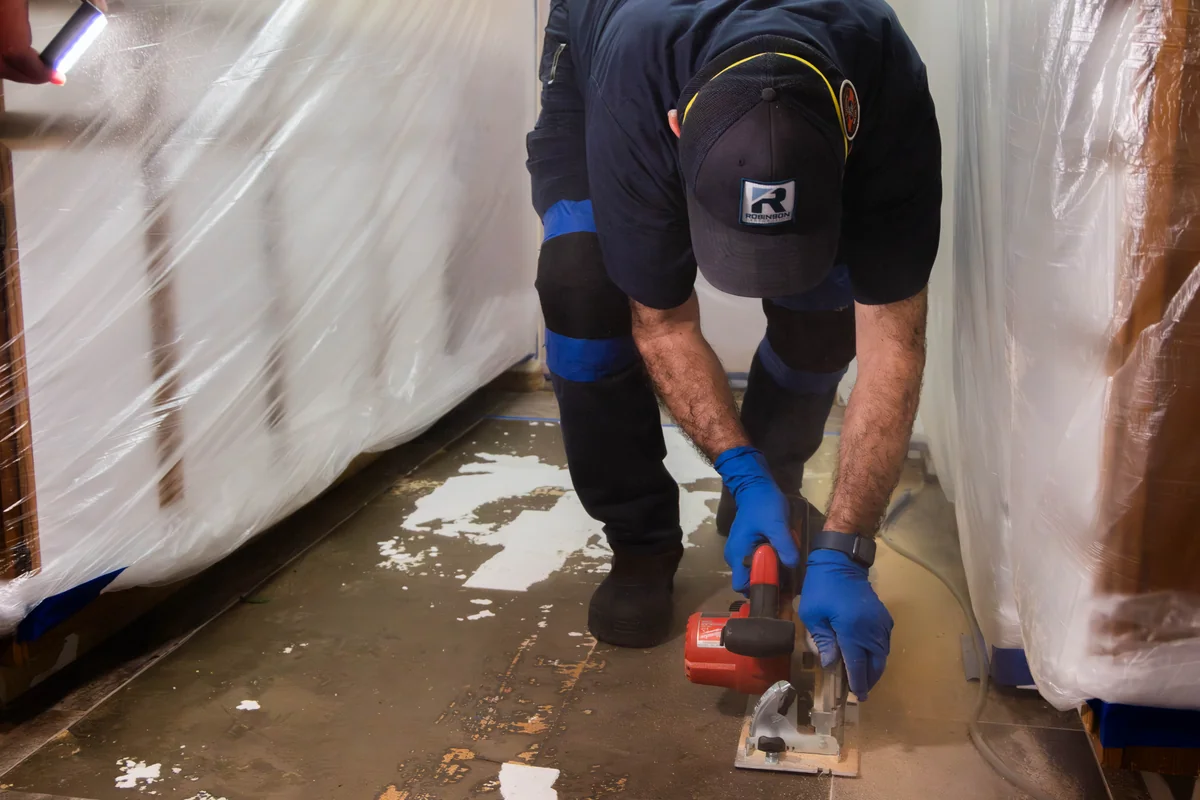
Our Kent operations center runs dispatch around the clock, and crews carry IICRC S500 training plus the documentation habits that keep claims moving. Every Spanaway job gets moisture mapping, daily readings, equipment logs, and photos before anything gets cut out. We bill carriers directly. For rentals and military households on orders, we can loop in a landlord, a property manager, or a spouse handling things solo, so nobody has to relay updates secondhand.

Spanaway sits inside our regular Pierce County coverage, so calls here get a live dispatcher, an assigned crew, and equipment on the truck immediately.
24 hours a day, 7 days a week, our crews dispatch the moment you call and start mitigation the same visit. Call dispatch or message us for immediate help.
We stop further damage with commercial extraction, structural drying, and antimicrobial treatment, and we walk you through the entire insurance claim as we work.
We manage your rebuild to pre-damaged condition through our trusted network of licensed contractors and sister companies. One manager, one timeline.
Subdivisions built through the 1980s and 1990s are now old enough that original water heaters, angle stops, washing machine hoses, and plastic supply fittings are past their design life all at once. On a slab or over a shallow crawlspace, a slow supply leak wicks into carpet pad and baseboard for weeks. We locate the failure point, then dry structure instead of just surfaces.
The gravelly outwash under Spanaway drains beautifully until it reaches a compacted layer, then water spreads sideways. Yards hold puddles for days after a November storm, footing drains overload, and crawlspaces turn into shallow ponds. Standing groundwater under a house feeds mold in floor joists and insulation even when it never reaches the finished floor above.
Manufactured housing is common here, and the water problems are specific: belly wrap that traps moisture instead of draining it, supply lines running through unheated underfloor cavities, and skirting that keeps wind out and standing water in. We open the belly board where needed, dry the cavity properly, and document the repair scope for carriers who often want extra detail on these homes.
A lot of Spanaway housing is tenant-occupied, which splits a water loss across a renters policy for contents and a landlord or dwelling policy for structure. That gets messy fast when nobody knows who authorizes the work. We can start emergency mitigation with the occupant's go-ahead, then coordinate documentation for both carriers so the two claims do not stall each other.
Most of the losses we run in Spanaway start one of three ways: appliance failures, water heater failures, and flooding and groundwater. Here is why each one happens here, and what it takes to dry it properly.
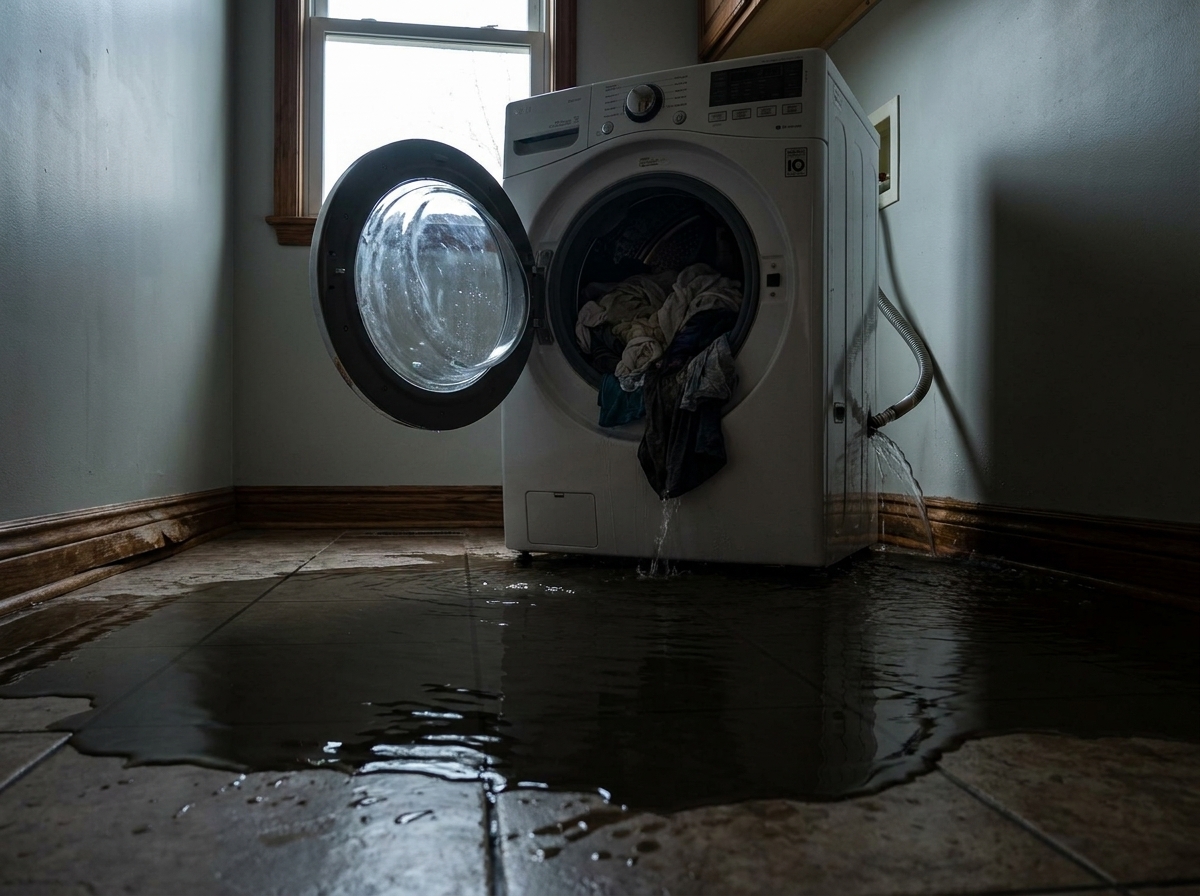
Rental turnover means washers, dishwashers, and refrigerator ice lines get swapped in without anyone tracking hose age. Braided lines and supply valves in Spanaway homes routinely outlast their rating, then fail while the unit sits empty between tenants.
Tanks installed with the original 1980s and 1990s subdivisions are decades past a normal service life. When one lets go in a garage or a hall closet, forty to fifty gallons hit the slab and travel under walls before the drip pan matters.
Hardpan under the prairie soil sends winter runoff sideways instead of down. Crawlspaces take standing groundwater, and a saturated underfloor cavity will grow mold in joists long before anyone notices a problem upstairs.
Water is how most losses start. It’s rarely where they end. The same local crew handles all of it.
Three real projects, photo-documented for the insurance carrier and backed by our 5-year workmanship warranty. Drag each handle to compare.
“We hired Robinson Restoration after a boiler joint failed and leaked what we thought was a small amount of water in our laundry room, but turned out to be more serious than it appeared. They did a fantastic job from first contact to insurance claim approval.”
Randi Covin · Google Review
“We had a major sewer back up a couple of weeks ago, into the laundry room and downstairs bathroom. Panic! We were referred to Robinson Restoration and what a blessing. The whole crew has been wonderful.”
Lynn Dee King · Google Review
“One of the pipes in the shower burst and water damage got all over the roof in the kitchen. As new home owners we were very scared and panicked. We contacted Kelly Farmer from Robinson Restoration and believe me when I say I felt like more than half of my problem was solved.”
Nav Basra · Google Review
In Washington, you choose your restoration contractor, and your carrier can’t penalize you for it. We document every Spanaway loss with moisture maps, photos, and daily readings, then bill your insurer directly. You pay your deductible. That’s it.
Subject to policy coverage and deductible. We handle the paperwork, photos, and adjuster calls.
Renters, homeowners and property managers in Spanaway all reach the same 24/7 dispatch line, and a crew gets assigned before the call ends. Standing water comes out with truck-mount and portable extraction, then air movers and dehumidifiers run until the structure reads dry. We bill insurance carriers directly. If the repair goes past drying, we manage the rebuild through licensed contractors.
Yes, and we do it often around Spanaway. We can take authorization by phone or email, document the entire loss with photos and moisture readings, and coordinate with a spouse, a landlord, a property manager, or a power of attorney holder. Everything gets written up so a carrier can process the claim without you sitting in the living room. Orders and deployments do not have to stall a repair.
In Spanaway it usually is. The prairie hardpan holds water under houses long after the yard looks dry, and a saturated crawlspace pushes humidity up through the floor system all winter. Insulation falls, joists stay damp, and mold gets going out of sight. We measure moisture in the framing rather than only the air, then let the readings decide between drying equipment and a vapor barrier repair.
Generally the landlord's dwelling policy covers the building and your renters policy covers your belongings, though the details vary by policy. What causes trouble is delay while both sides argue. We can begin emergency mitigation with the occupant's authorization to stop the damage from spreading, then document the loss in a way both carriers accept. Most Spanaway landlords would rather we start drying than wait.
Yes. Manufactured homes need a different approach because the belly wrap under the floor holds water instead of letting it drain. We open the underside where necessary, remove saturated insulation, dry the cavity with directed airflow, and seal it back up. Skirting also has to be addressed so the space vents properly. We document the whole sequence, since carriers ask more questions on these structures.
Dispatch answers live 24 hours a day, and our goal for Spanaway is on-site in 90 minutes or less. While the crew is loading, we walk you through the immediate steps: find the main shutoff, cut power to wet circuits if you can do it safely, and pull rugs, boxes, and electronics off wet flooring. Those first moves often save a full room of finishes.
We do the heavy lifting. Robinson bills your carrier directly on covered losses, so you handle the deductible. Our reports use the moisture logs, equipment records, and photo documentation adjusters look for, and we answer their questions ourselves. You still own the claim decisions, though you should not have to explain drying standards to an adjuster from your kitchen in Spanaway.
Standing water in a Spanaway home gets worse by the hour. Reach us any time, day or night.
Licensed · Insured · IICRC Certified · Serving Washington & Oregon