Robinson Restoration is an IICRC-certified water damage restoration company serving Olympia, WA. Crews dispatch 24 hours a day, arrive on-site in 90 minutes or less, document the readings and photos your carrier needs, and bill your insurance directly on covered claims.
Olympia sits at the closed end of Puget Sound, where the rain stalls out and the water table stays high all winter. Century-old bungalows and state office buildings both take losses here, for completely different reasons. Robinson runs live dispatch 24/7 and starts extraction on the first visit.
The older neighborhoods around the Capitol campus are full of 1900s to 1930s Craftsman bungalows on post-and-pier foundations with shallow crawlspaces and original cast iron waste lines. Downtown sits on filled tideflats at the head of Budd Inlet, low enough that king tides and heavy rain arriving together push water into ground floors. West-side subdivisions from the 1970s onward have their own issue: Thurston County's high groundwater comes up through slabs in a wet February.
Robinson dispatches around the clock, and our Kent operations center covers Thurston County the same way it covers King and Pierce. Every job starts with photographs, moisture mapping, and a written scope, then daily readings logged against IICRC S500 dry standards. For state offices, clinics, and rental property we work after hours and stage containment so the space stays usable. Billing goes direct to your carrier or your property manager's carrier, whichever the loss calls for.

Olympia calls reach a live dispatcher any hour, and a crew is on-site in 90 minutes with extraction and drying equipment already loaded.
24 hours a day, 7 days a week, our crews dispatch the moment you call and start mitigation the same visit. Call dispatch or message us for immediate help.
We stop further damage with commercial extraction, structural drying, and antimicrobial treatment, and we walk you through the entire insurance claim as we work.
We manage your rebuild to pre-damaged condition through our trusted network of licensed contractors and sister companies. One manager, one timeline.
Olympia's historic neighborhoods are full of homes built between 1900 and 1935, and the crawlspaces under them are tight, damp, and often barely accessible. Cast iron waste lines crack at the hub, and original supply runs travel through uninsulated walls with no access panel anywhere. Getting drying equipment under those floors takes experience. We do it without tearing out old-growth fir flooring that cannot be matched.
Downtown Olympia was built on fill at the head of Budd Inlet, and that ground sits close to sea level. When a king tide lines up with a heavy rain event, storm drains stop draining and water comes up rather than down. Ground-floor retail, offices, and parking levels take it first. Tidal water is contaminated, so the response is removal and antimicrobial treatment.
Thurston County has some of the highest winter groundwater in western Washington, and west Olympia subdivisions built on it feel that every February. Water pushes up through slab cracks, garage floors, and crawlspace soil with no leak to find and no storm to blame. Carriers treat that differently than a sudden failure, so we identify the mechanism precisely before anybody files anything.
Olympia's economy runs on government, education, and healthcare, which means a lot of the buildings here cannot simply close for a week. We work nights and weekends, build containment that keeps corridors open, and stage equipment so a floor stays occupied while it dries. Documentation gets structured for facilities managers and risk departments as well as insurance adjusters, because those are the people who sign off.
Most of the losses we run in Olympia start one of three ways: flooding and groundwater, burst and leaking pipes, and sewage backups. Here is why each one happens here, and what it takes to dry it properly.
Downtown Olympia sits on filled tideflats near sea level. King tides paired with a heavy rain event overwhelm the storm system, and water enters ground floors and parking levels from below rather than over a threshold.
Century-old bungalows near the Capitol campus run supply lines through uninsulated exterior walls and shallow crawlspaces. A short cold snap is enough to split one, and the water lands on original fir flooring.
The oldest parts of the Olympia sewer system serve homes with clay side sewers full of tree roots. When a heavy rain loads the line, the backup finds the lowest fixture in a basement or ground-floor bathroom.
Homes here date to the early 1900s and sit on graded slopes, so perimeter drainage failures show up in basements.
Some of Olympia's oldest housing stands on this hillside, with add-on bathrooms and laundry rooms tied into original plumbing.
Tight lots, 1910s through 1950s houses, and plenty of duplex conversions running two kitchens off one aging supply line.
Subdivisions built from the 1970s onward, where supply valves, washer hoses, and water heaters quietly age out in garages.
Wooded acreage on the peninsula, much of it on septic, where winter saturation stresses drainfields and clogs gutters fast.
Waterfront cabins converted to year-round homes, often with unheated crawlspaces and plumbing run along an exterior foundation wall.
Rural parcels on private wells, where a failed pressure tank or pump house line floods a garage unnoticed.
Newer attached and stacked housing in southeast Olympia, where one upstairs supply leak reaches two or three units.
Ranch homes and lake-adjacent lots southwest of town, sitting low enough that crawlspace grade stays wet all winter.
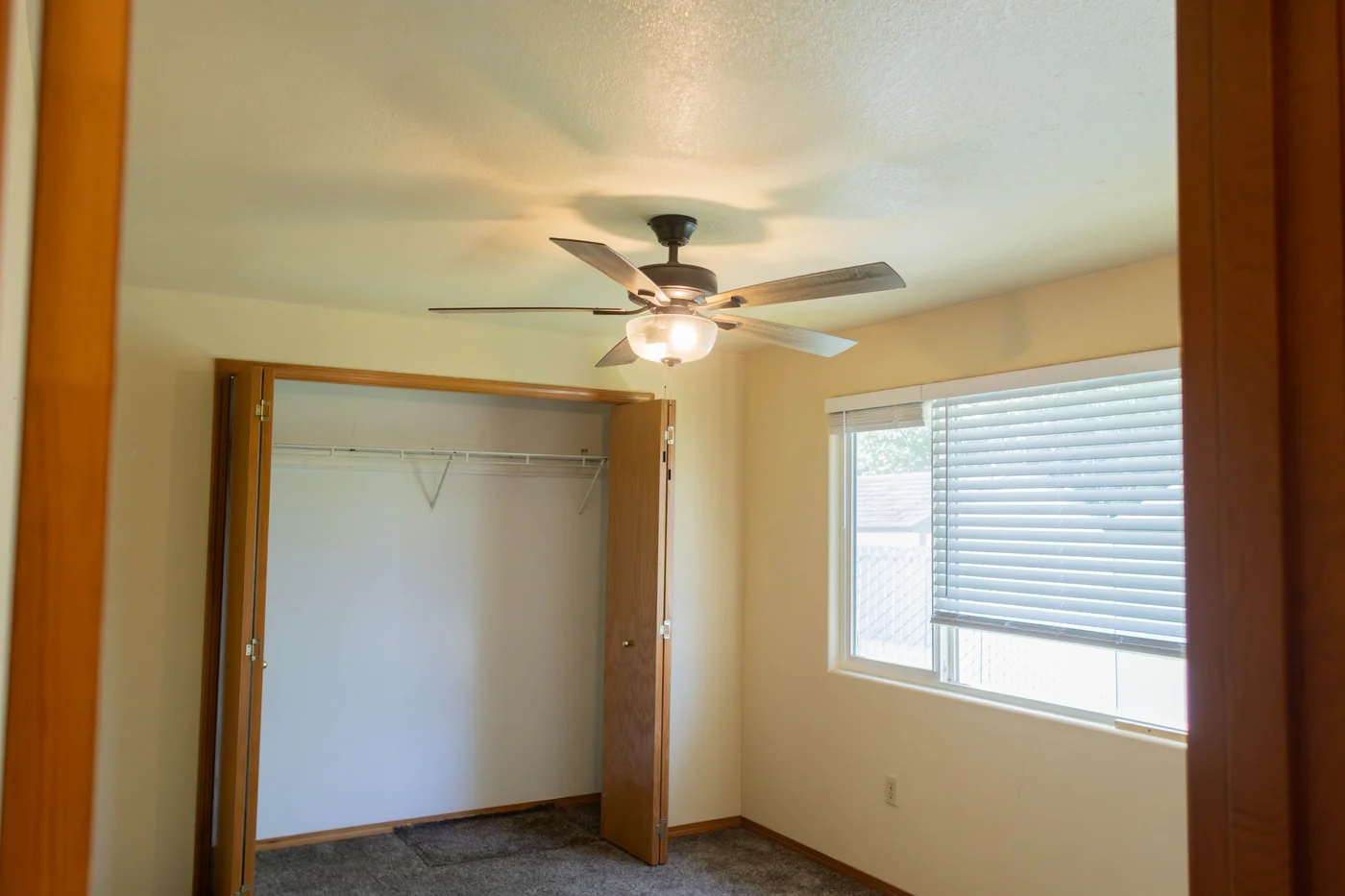
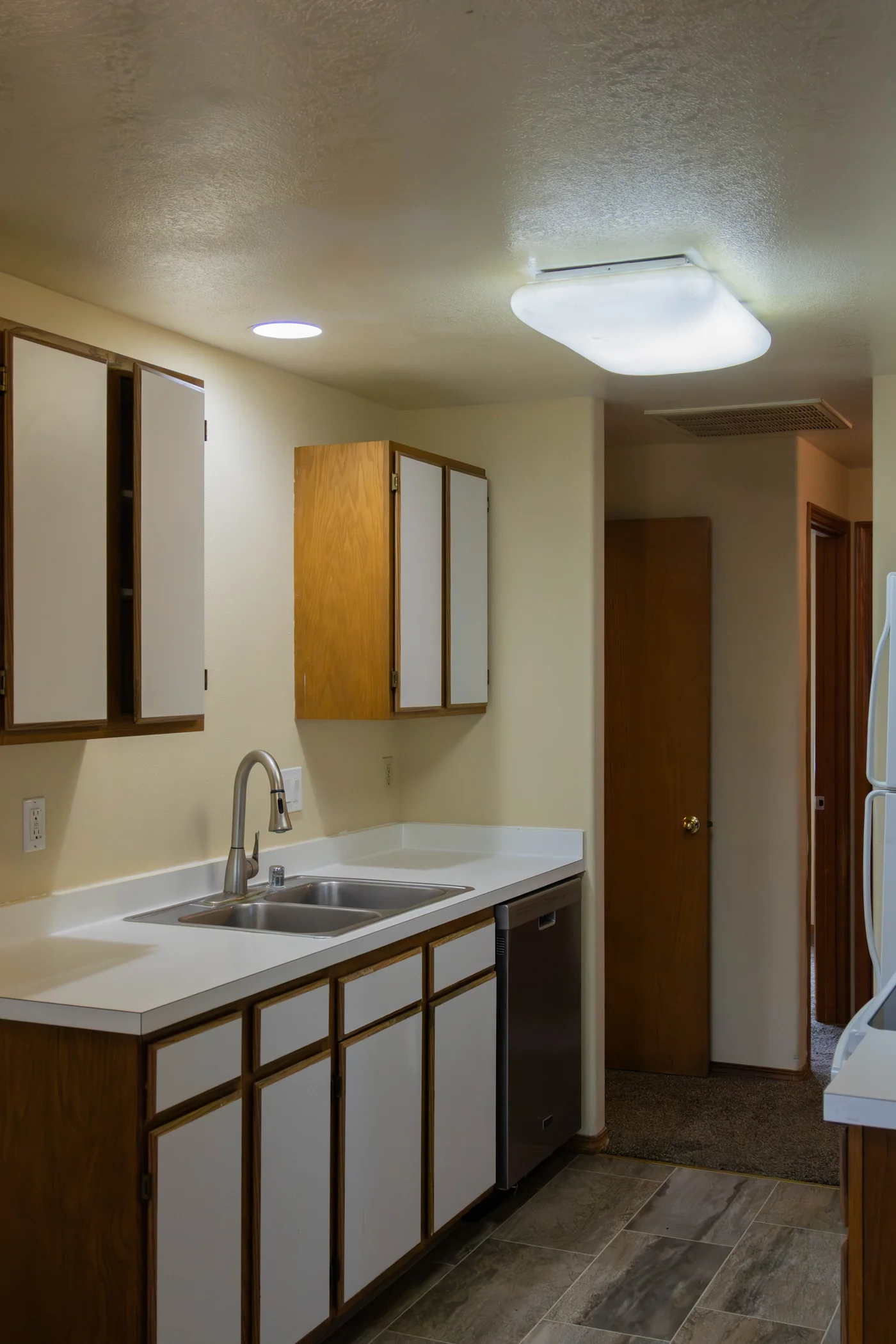
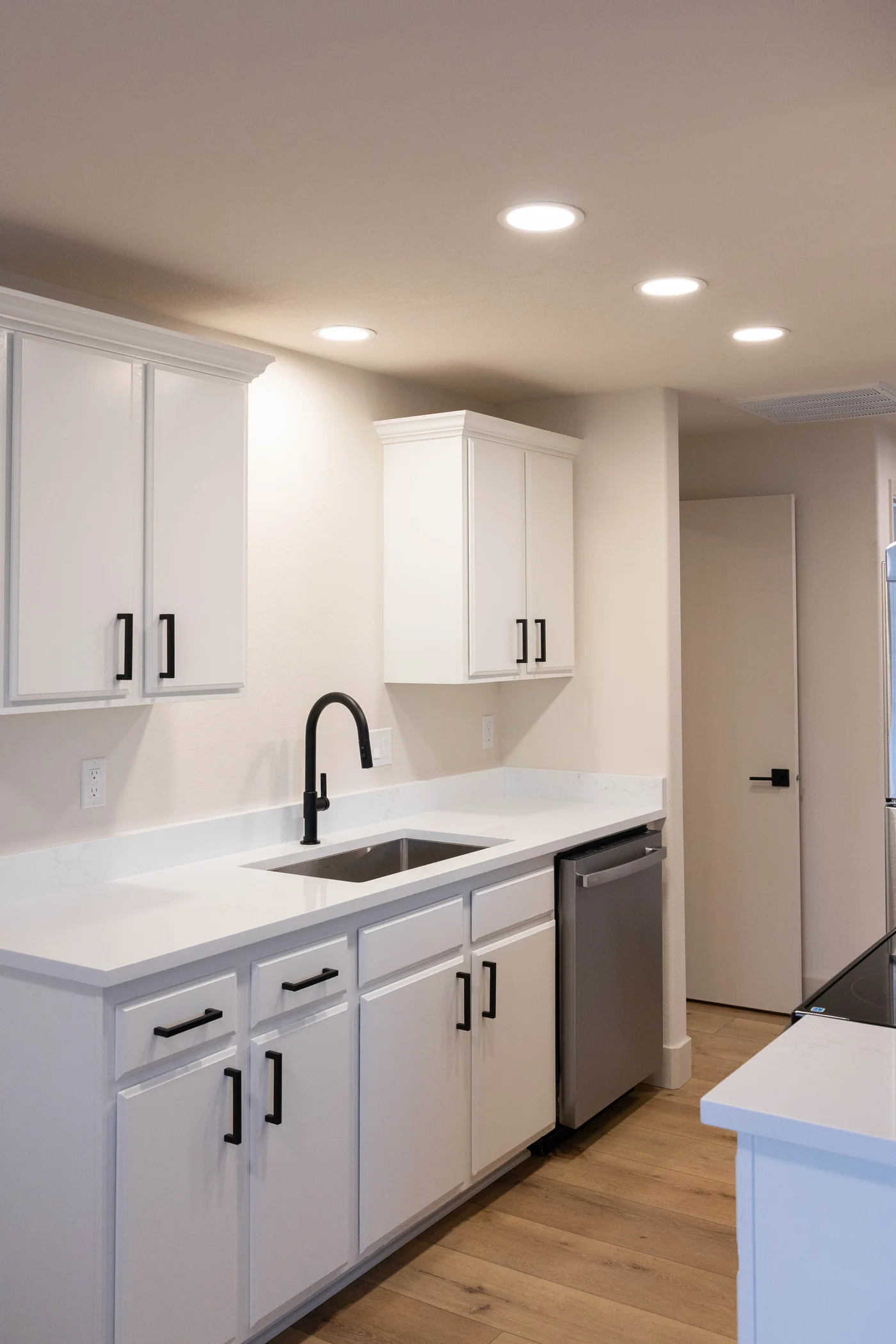
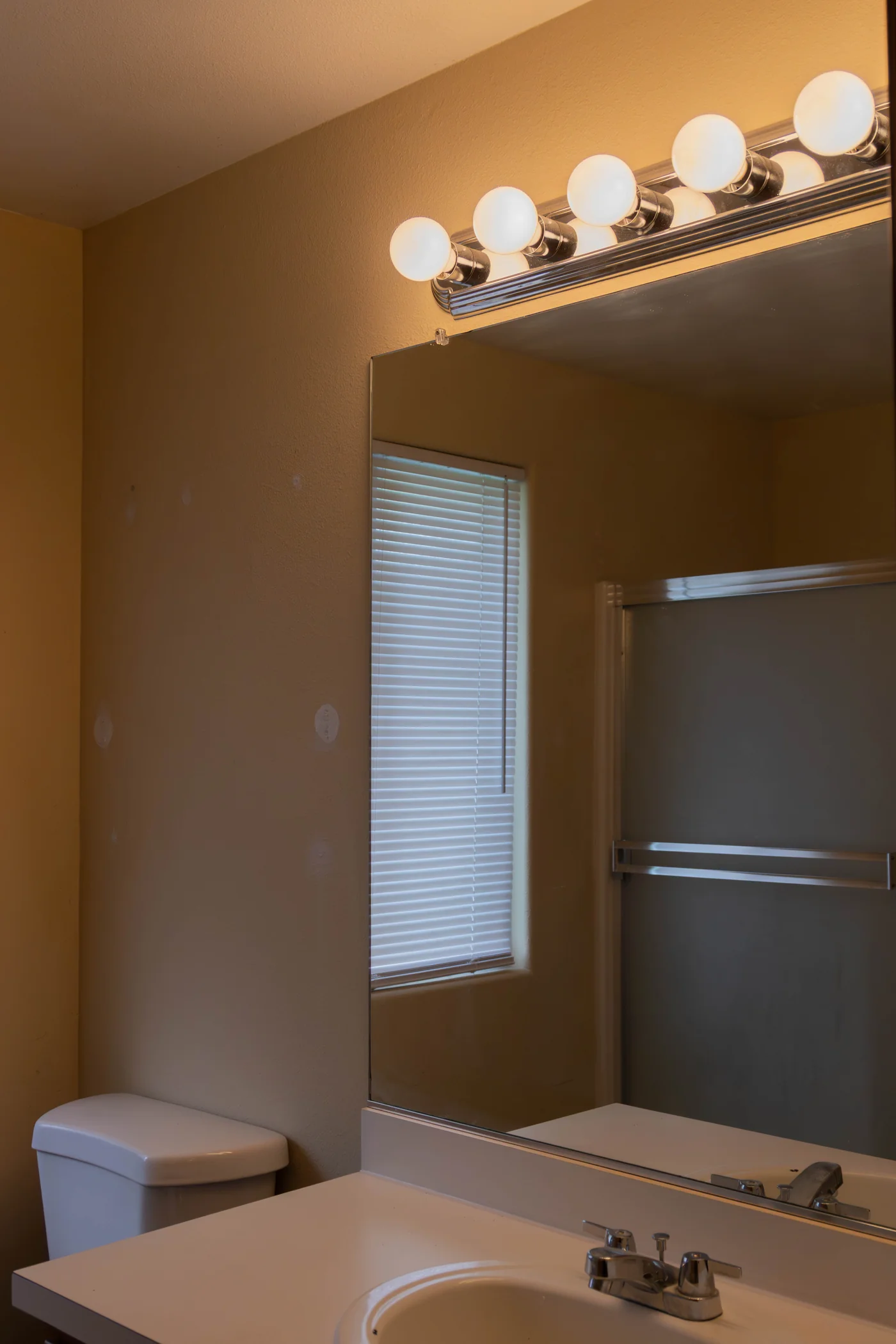
These photos come from Robinson jobs across our Puget Sound service area. They show the work the way it actually happens: assessment first, then extraction and drying, then managed rebuild once the readings come back dry.
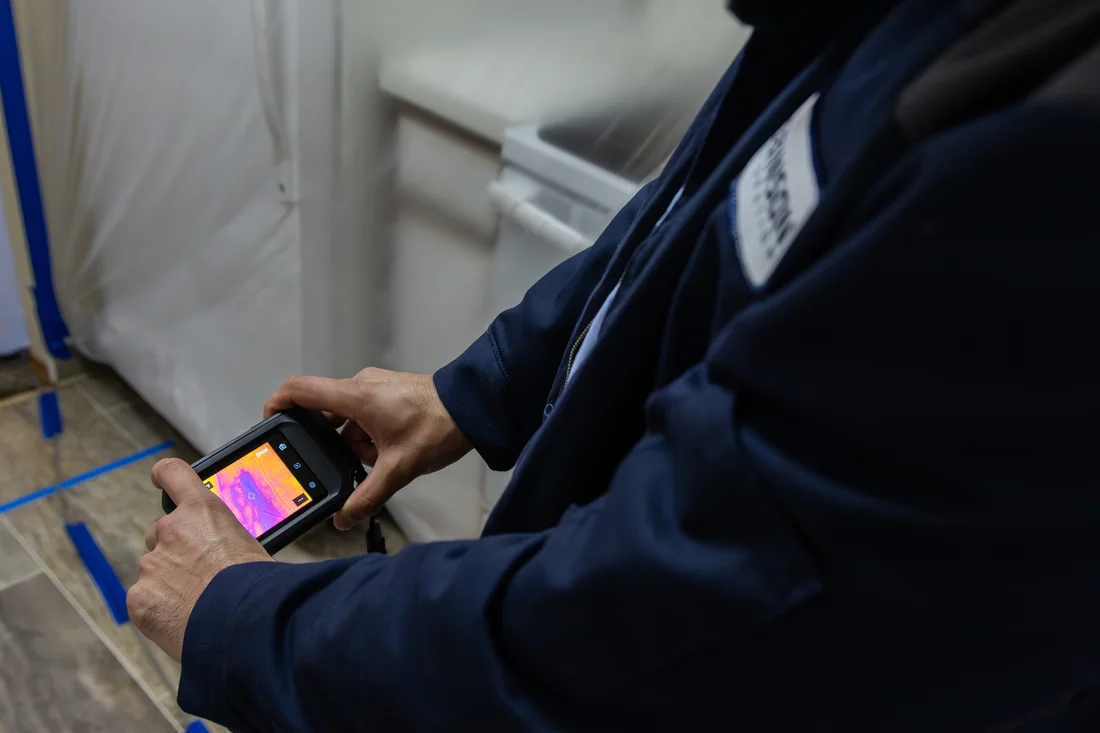
Every loss starts with meters, a thermal camera, and photographs of what the water touched. Our crews mark the wet line on the structure itself, then write the scope from those readings instead of guessing.
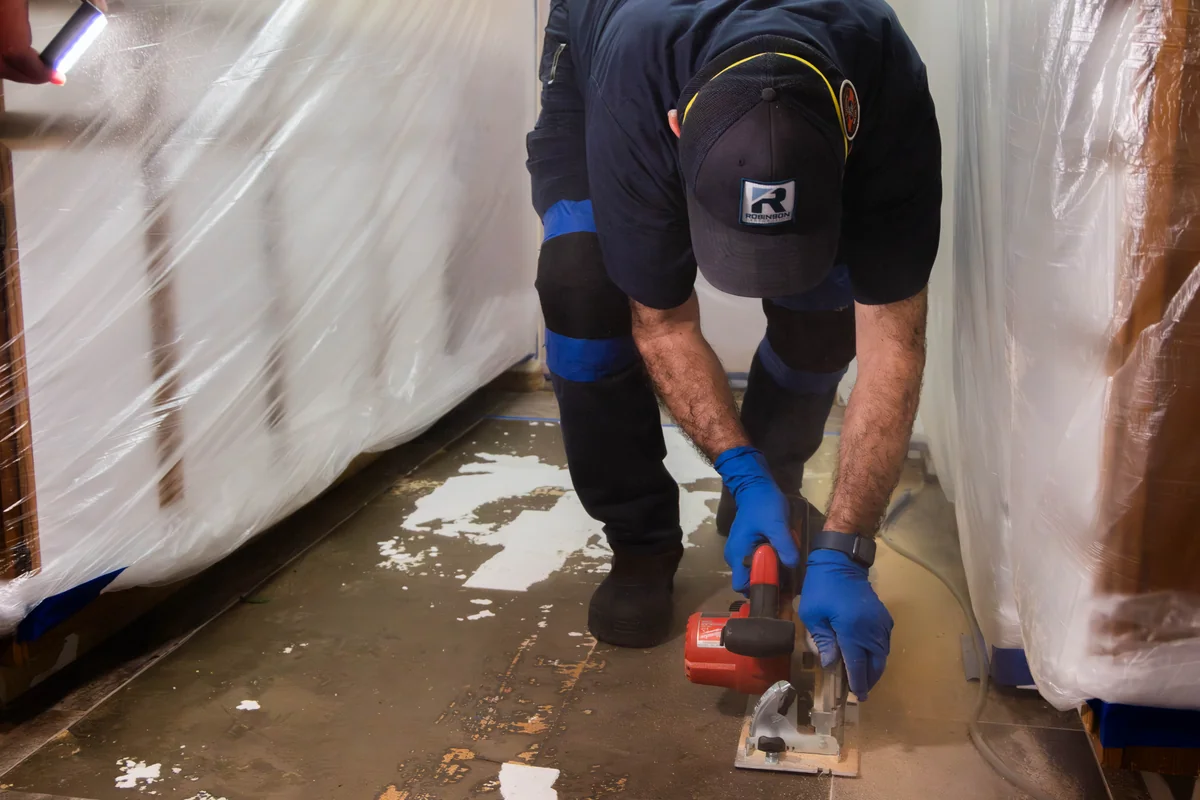
Poly walls, zippered access, and negative air let us tear out a wet section while the rest of the building stays open. Crews document the barrier so an adjuster can see what was isolated and why.
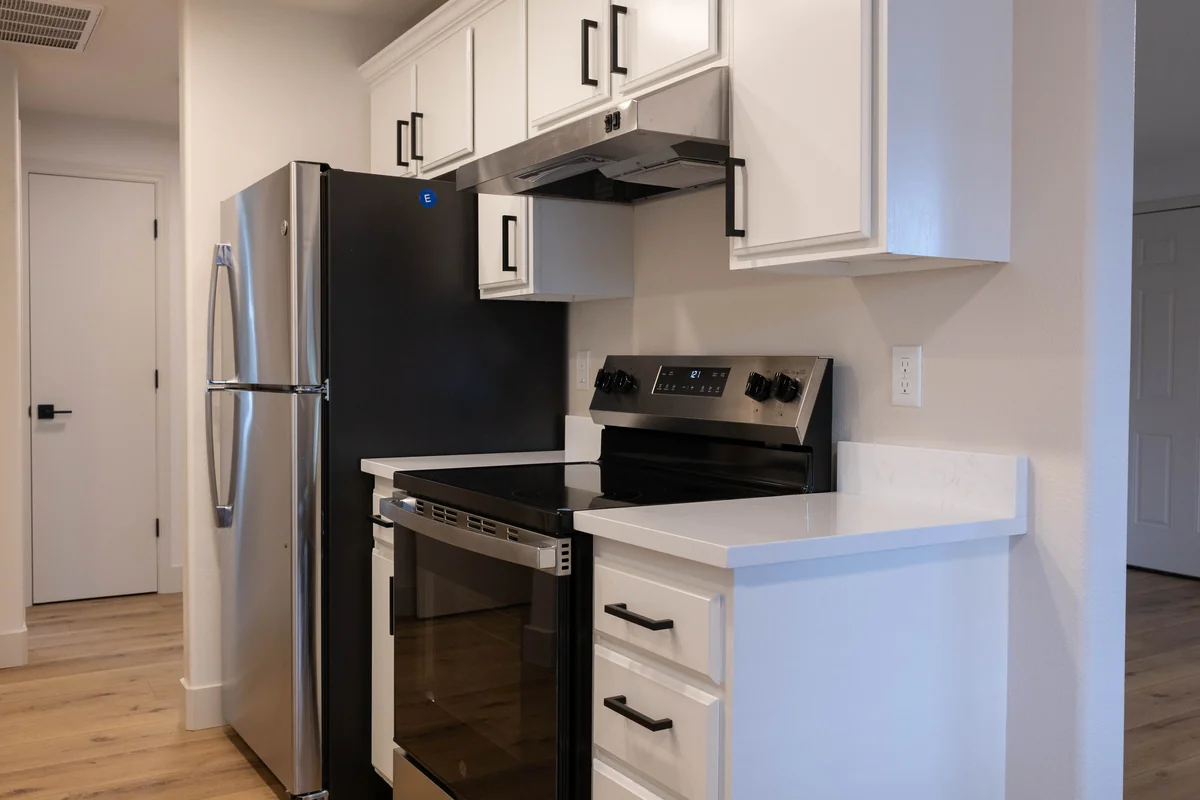
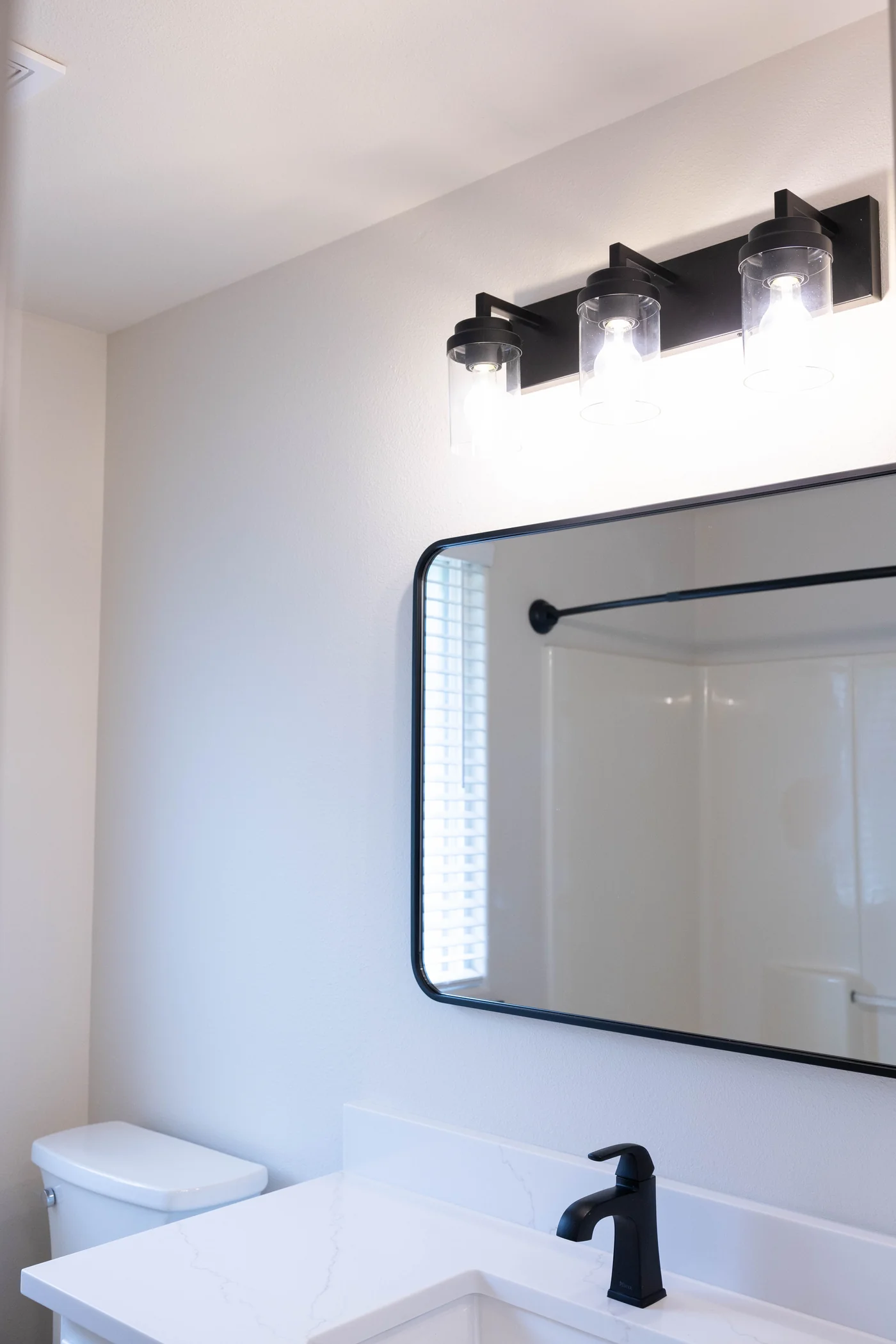
Once the readings hold dry, the rebuild starts. Robinson manages that phase through vetted licensed contractors and sister companies, working off the same file, so tile, vanity, and trim go back to pre-loss condition.
Water damage calls get made in a hurry, and that's exactly when a bad hire happens. A few minutes of vetting protects the claim and the house. Here's what we'd tell anyone in Thurston County to check before signing an authorization.
Washington requires an active contractor registration through Labor and Industries, and the number is public. Look it up, confirm the bond and liability coverage are current, and check that the legal name on the registration matches the name on your paperwork. A company working outside that registration puts your claim at risk.
Plenty of restoration numbers ring into a national call center that brokers the job out to whoever bites first. Ask where the crew and the drying equipment are staged, and ask who your point of contact will be at hour two and on day five. Olympia losses deserve people who actually work this region.
IICRC certification means a technician trained to the published S500 water restoration standard, which is also what your carrier's file gets measured against. Request daily moisture logs, a written scope, and first-visit photographs. Olympia's winter humidity keeps structures from drying on their own, so readings taken every day are the only real proof anything worked.
Mitigation and reconstruction are two different scopes, and the handoff between them is where Olympia projects stall. Ask whether one company carries your file through both phases, how licensed rebuild partners get selected, and what workmanship warranty covers the finished work. Get the answer in writing before demolition starts, since that's the leverage you lose once walls are open.
Ask us the same questions. We'll give you the registration number, the certifications, and the names of the people who'd run your job. Olympia homeowners deserve a straight answer before the trucks roll.
Water is how most losses start. It’s rarely where they end. The same local crew handles all of it.
Three real projects, photo-documented for the insurance carrier and backed by our 5-year workmanship warranty. Drag each handle to compare.
“One of the pipes in the shower burst and water damage got all over the roof in the kitchen. As new home owners we were very scared and panicked. We contacted Kelly Farmer from Robinson Restoration and believe me when I say I felt like more than half of my problem was solved.”
Nav Basra · Google Review
“Just started a project with Cole and Chuck at Robinson Restoration and had to write a review straight away. These guys have been fantastic. We were away on a week long trip when we had a kitchen leak that destroyed our flooring and subfloor.”
Justin O'Neill · Google Review
“I want to express our sincere gratitude to the Robinson team that quickly moved to identify, rectify, repair, and then clean up the mess left by an itty-bitty hot water leak that went unnoticed because of its location.”
Michael Quinn · Google Review
In Washington, you choose your restoration contractor, and your carrier can’t penalize you for it. We document every Olympia loss with moisture maps, photos, and daily readings, then bill your insurer directly. You pay your deductible. That’s it.
Subject to policy coverage and deductible. We handle the paperwork, photos, and adjuster calls.
Flooding doesn't keep business hours, which is why the dispatch desk is staffed 24/7. Olympia has a Robinson crew on call, and we can be on-site in 90 minutes or less with extraction equipment, air movers, and dehumidifiers. South Sound rain keeps humidity high well into spring, and that stretches drying times on saturated framing. We bill the carrier directly.
That is almost always groundwater. Thurston County's water table climbs through the winter, and by February it can sit above the bottom of a slab. Water works up through hairline cracks and the cold joint at the perimeter, so there is nothing to find upstream. We verify it with meters, dry the space, and tell you plainly whether your policy is likely to respond before you file.
That is the goal on every historic job here. Old-growth fir flooring, box beams, and original trim are irreplaceable, so we lead with drying rather than demolition wherever the readings allow it. Floor mat systems, cavity drying into wall assemblies, and controlled dehumidification save a great deal of material. When something has to come out, we cut to a seam and document why, so the rebuild matches.
We handle a lot of it. The owner or management company authorizes the work, we coordinate access with tenants, and containment goes up so the rest of the unit stays livable where possible. Documentation is built for a property file: photos, moisture logs, scope, and a clear line between the structure claim and any tenant contents. Emergency calls from Olympia property managers get the same 24/7 dispatch.
Yes. Anything that has been in contact with Budd Inlet or the storm system is category three, which means it carries contaminants. Porous materials at the wet line come out: carpet, pad, insulation, and drywall. We follow that with cleaning, antimicrobial application, and verified drying. Downtown Olympia losses of that type also usually involve a commercial policy and a flood policy, and we document for both.
Immediately. Mold begins colonizing wet material within roughly 24 to 48 hours, and Olympia's winter humidity gives it every advantage. Carriers also expect prompt mitigation, and a delay can reduce what they pay. Our line is answered live at any hour, and the dispatcher will tell you what to shut off while a crew is dispatched. Extraction starting sooner is the cheapest thing you can do.
Robinson manages reconstruction through vetted licensed contractors and sister companies, coordinated off the mitigation file we already built. On an Olympia historic home that can mean matching trim profiles and refinishing fir rather than dropping in modern stock. On a commercial floor it means scheduling around occupancy. Either way you get one contact and one scope your carrier can approve without a second inspection.
Olympia winters give water plenty of time to spread. Call and we start extraction today.
Licensed · Insured · IICRC Certified · Serving Washington & Oregon