

Robinson Restoration is an IICRC-certified fire and smoke damage restoration company serving Olympia, WA. We secure and board up the property the same day, clean soot and smoke residue by type, remove odor at its source, and manage the rebuild through vetted licensed contractors and sister companies.
A January chimney fire in a Craftsman bungalow, or a wood stove that cooked the wall behind it, leaves a smoke-filled house, a hole in the roof and the wet months ahead. Fire and smoke damage restoration in an Olympia winter races the rain as much as the soot.
The older neighborhoods around the Capitol campus, South Capitol, Bigelow Highlands and the Eastside, hold 1900s to 1930s Craftsman houses with old-growth fir floors and uninsulated walls. Smoke from a chimney fire goes where the heat pushes it: into the wall cavities on either side of the chase, up into the attic and out through gaps in old framing. Out toward Cooper Point, Boston Harbor and Steamboat Island, where a converted cabin heats with a wood stove, a stove fire starts the same way. Then the fire department puts it out with water, in a town that gets more rain than Seattle and sits near saturation from November through February. Nothing in that house dries until spring.
Robinson Restoration covers Thurston County from the Kent operations center, and a winter chimney fire gets tarped and boarded the day the house is released, because the next storm will not wait for the adjuster. Firefighting water comes out first, then drying equipment sized to the readings goes in, logged daily; a Craftsman wall with no insulation holds water as well as it holds smoke. Everything is photographed before cleaning, contents barcoded room by room, soot cleaned by residue type and the odor source removed. The rebuild runs through vetted licensed contractors and sister companies under one project manager; permits and current code decide what the chimney gets rebuilt to.
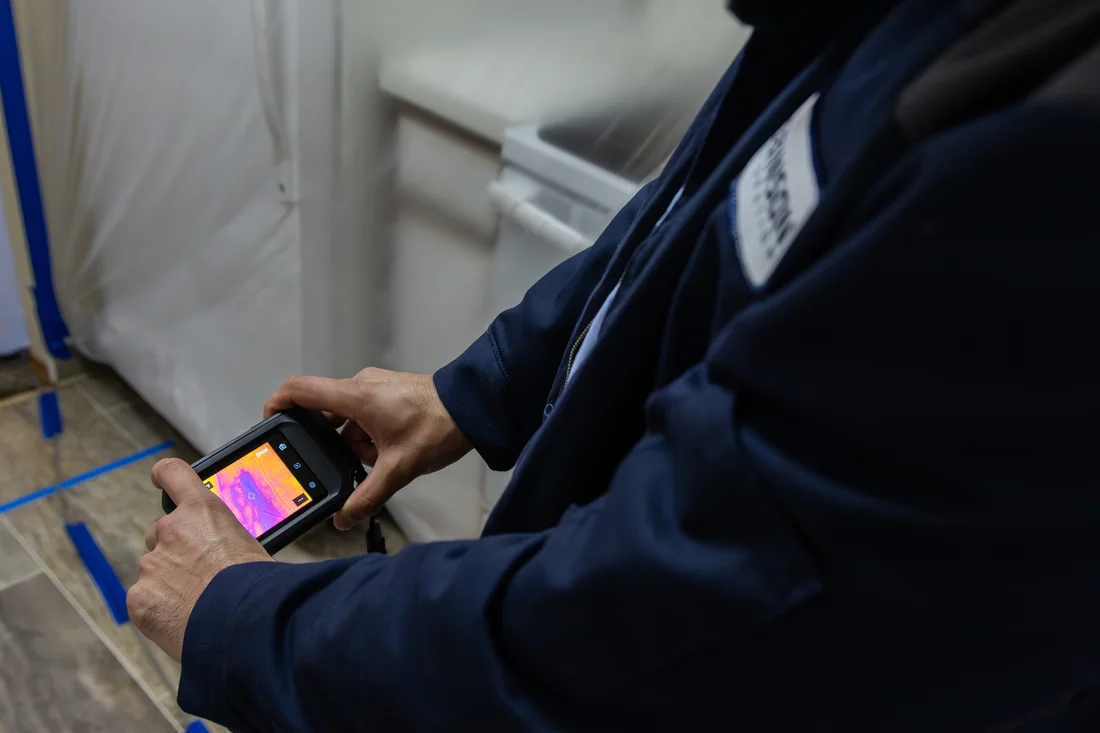
In an Olympia winter, Secure means the roof tarp and the drying equipment go in the same day, before the next front comes through.
Once the fire department releases the property, we board up openings, tarp the roof, check utilities and pull out the firefighting water. Everything gets photographed for your claim before anything is moved.
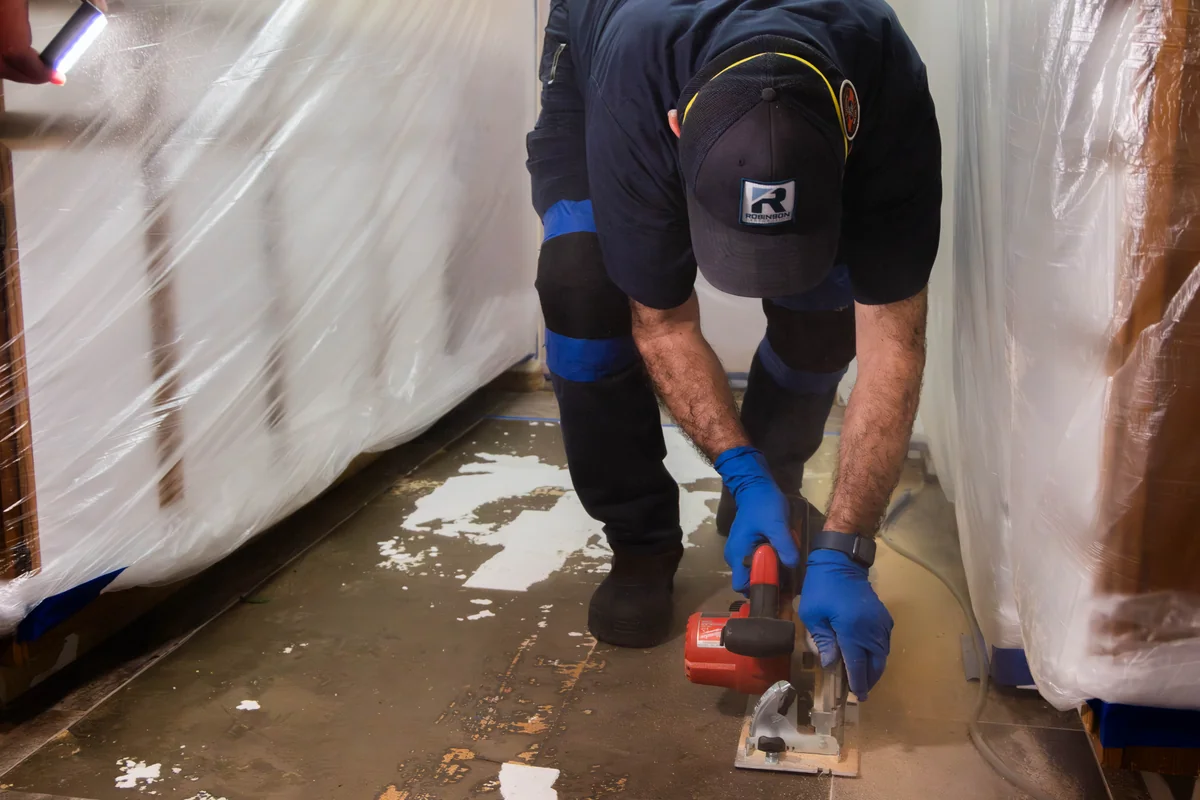
Soot is cleaned by residue type, because wet smoke, dry smoke and protein film each respond to different methods. HEPA air scrubbing, hydroxyl or ozone treatment and source removal end the odor instead of masking it.

Charred framing, drywall, flooring and finishes go back through vetted licensed contractors and sister companies, managed by the same Robinson project manager from the first day to the final inspection.
Hose water in a January fire goes into wall cavities, the attic and the subfloor, and outdoor air near saturation from November through February will not pull it out. Fire and smoke damage restoration in Olympia in winter carries a drying job inside it: equipment sized to the meter readings, dehumidification, and daily moisture logs for the claim file. Skip it and a smoke cleanup turns into a mold job by March.
A chimney fire heats the chase and the framing around it, and in a 1900s to 1930s house the cavities on either side are uninsulated with no access anywhere. Dry smoke from a fast, hot flue fire gets driven deep into those cavities by the heat, so the finish looks lightly dusted while the framing behind it is coated. The finish around the chase usually comes off, and the old-growth fir floors get protected first.
A stove fire in a converted cabin at Boston Harbor or a place out on Steamboat Island usually starts in the wall behind the stove, and the residue depends on what burned and how fast, so the inspection picks the cleaning method. The Boston Harbor cabins often sit on unheated crawlspaces, and firefighting water down there in winter needs drying equipment fast. Tell dispatch if the place is on a well.
Most families leave a chimney-fire house: the odor treatment runs only while it is empty, and a winter rebuild waits on permits, inspections and dry framing. Additional living expenses are a standard part of a fire claim and usually cover the rental or hotel. Robinson Restoration writes the schedule so you know which weeks are out, and one project manager stays on from the tarp to the last inspection.
In Olympia, the fire is rarely the biggest part of the job. The residue we spend the most time on shows up in three places: chimneys and fireplaces, wall cavities and framing, and attics and insulation. Each one holds smoke for a different reason, which changes what gets cleaned and what has to come out.
The chase around a fireplace or stove flue is the hottest, tightest cavity in an old Olympia house, and a chimney fire cooks the framing on all four sides. Soot packs in between the flue and the studs where no cleaning reaches, so the finish comes off around the chase and the charred framing is removed. The permit and the inspector decide what goes back.
Uninsulated walls in a Craftsman bungalow are open highways for smoke; heat pressure drives fine dry soot through outlet boxes and it settles on every stud. Hose water goes into the same cavities and, in a wet Olympia winter, stays there. Those walls get opened, cleaned, dried to logged targets and sealed before the new finish goes on.
Old attics near the Capitol campus and in Bigelow Highlands hold insulation, and insulation soaks up smoke odor. It comes out; there is no cleaning it. Roof sheathing and rafters get cleaned and sealed, and in a winter fire the tarp over the burned-through section gets checked through every storm until the roofer is on it.
Water is how most losses start. It’s rarely where they end. The same local crew handles all of it.
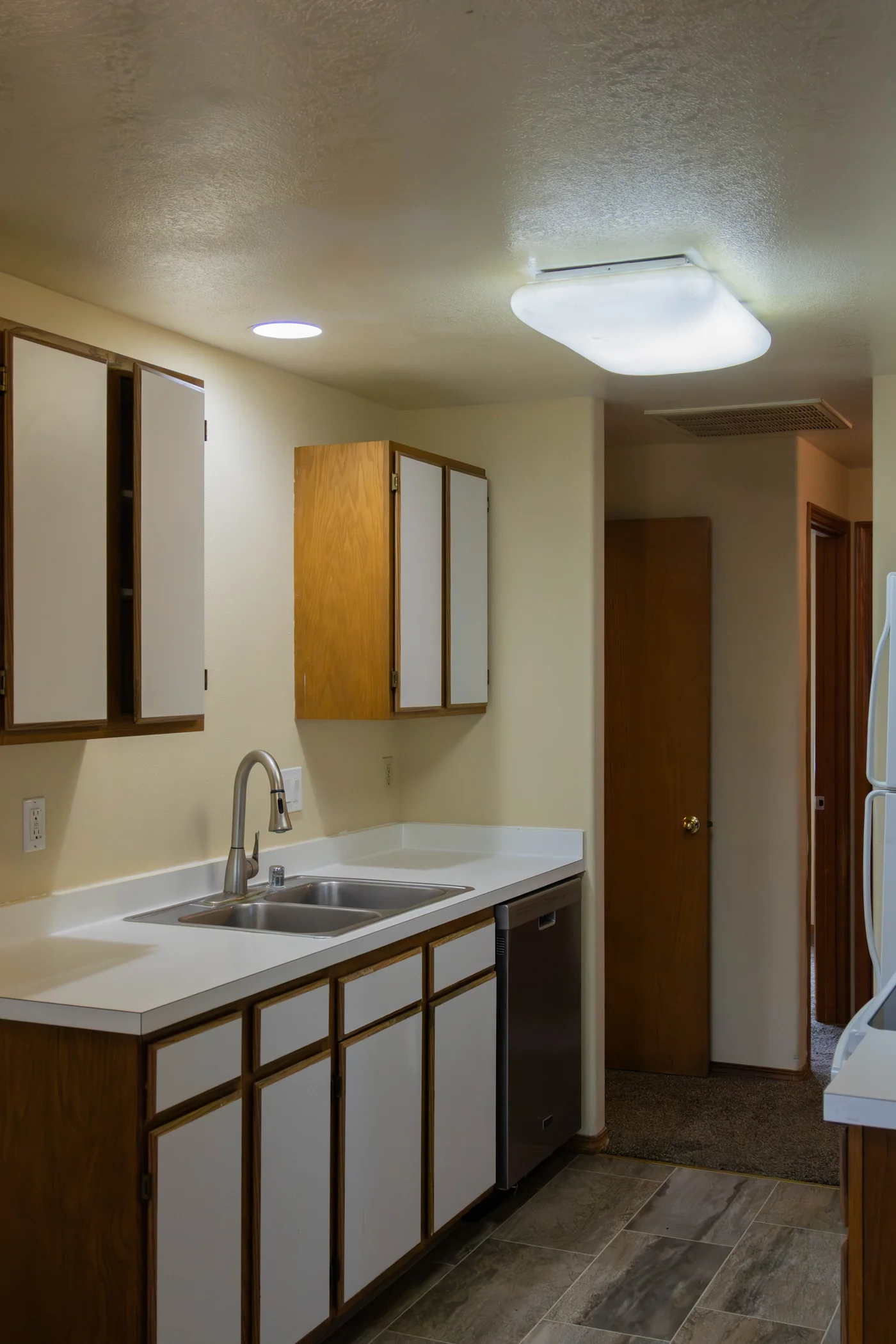
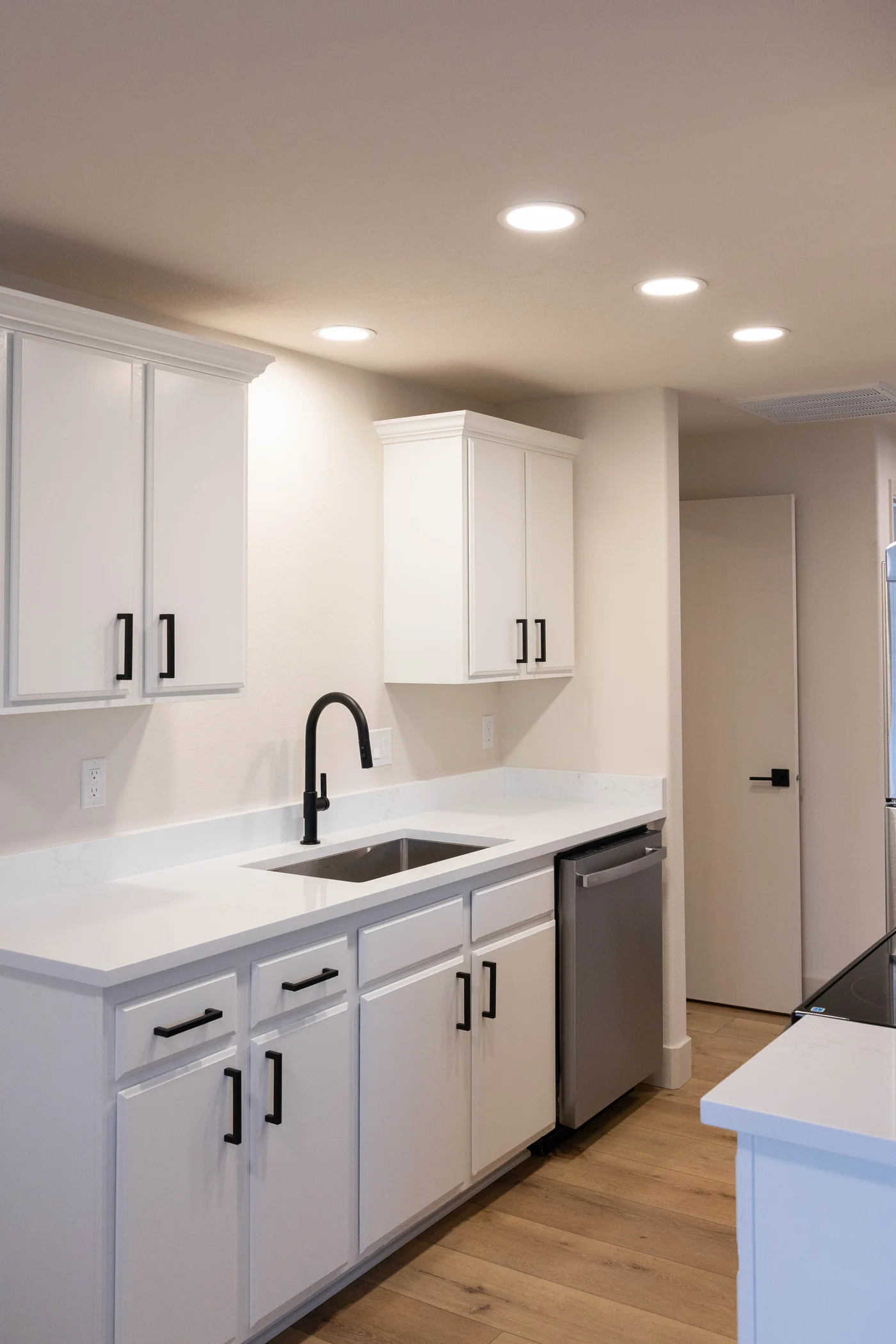
Once the soot is gone and the odor is verified out, we manage the rebuild through licensed contractors. Drag the handle to compare a documented Robinson project.
“We hired Robinson Restoration after a boiler joint failed and leaked what we thought was a small amount of water in our laundry room, but turned out to be more serious than it appeared. They did a fantastic job from first contact to insurance claim approval.”
Randi Covin · Google Review
“We had a major sewer back up a couple of weeks ago, into the laundry room and downstairs bathroom. Panic! We were referred to Robinson Restoration and what a blessing. The whole crew has been wonderful.”
Lynn Dee King · Google Review
“One of the pipes in the shower burst and water damage got all over the roof in the kitchen. As new home owners we were very scared and panicked. We contacted Kelly Farmer from Robinson Restoration and believe me when I say I felt like more than half of my problem was solved.”
Nav Basra · Google Review
Fire is one of the most reliably covered perils in a homeowners policy, and a Olympia fire claim usually touches the dwelling, contents and additional living expenses at once. In Washington, you choose your restoration contractor. We photograph everything before cleanup starts, inventory contents room by room, write a line-item scope, and bill your carrier directly. You pay your deductible.
Subject to policy coverage and deductible. We handle the paperwork, photos, and adjuster calls.
Fire damage restoration near me in Olympia reaches Robinson Restoration through the Kent operations center, which covers Thurston County with the same crews and equipment it sends into King and Pierce. A person answers dispatch any hour, the crew is on-site in 90 minutes or less with tarps, board-up material and extraction gear, and the free inspection tells you what dries, what comes out and what the adjuster needs.
Not for all of it. The odor treatment runs only while the house is empty, the demo around the chimney is loud and dirty, and a house with a tarped roof in a wet Olympia winter is a cold place to sleep. Most families move out for the cleaning weeks, and some come back during the rebuild. Additional living expenses on a fire claim usually cover the rental or hotel for that time, so keep every receipt. Robinson Restoration runs the unoccupied stages back to back so the time out is as short as the work allows.
Usually, under the additional living expenses part of the policy. A fire claim typically touches the dwelling, contents and living expenses at once, and fire is among the most reliably covered perils. What limits it is your policy language, plus the usual exclusions for intentional acts, a house left vacant past the policy limit or neglected maintenance, which is where a chimney that was never cleaned can become a conversation with the adjuster. Read that section tonight and keep receipts from the first night.
Because the air here stays near saturation from November into February and the town gets more rain than Seattle; hose water in a wall will not leave until spring. Firefighting water comes out the day the house is released, then drying equipment sized to the meter readings goes in, logged daily. In a Craftsman house the water sits in uninsulated cavities and under old-growth fir floors, which are worth drying rather than replacing. The logs go to the adjuster, and they keep a smoke job from becoming a mold job.
They are rebuilt to current code, under a permit, with an inspection before the finish goes on. Robinson Restoration manages that through vetted licensed contractors and sister companies with the same project manager who ran the cleanup, and code upgrades get their own line because they move the cost. On a house from the 1900s to the 1930s, expect an asbestos survey before any demolition; Washington requires one on older homes, and old joint compound, sheet flooring and popcorn ceilings are the usual finds.
Not if the source is gone. Odor comes back when charred material, insulation or carpet pad is left in place, or when the ductwork still holds residue. The work removes those, cleans and seals the framing, runs HEPA air scrubbing and the hydroxyl or ozone cycles while the house is empty, and tests before the rebuild covers anything up. No spray or deodorizer does that; if someone offers to fog the house and call it done, ask what they removed first.
More than you think, if it is handled before the soot etches. Contents are photographed and barcoded room by room, then hard goods go to ultrasonic cleaning and clothing, bedding and other textiles go to specialty washing. Charred material, the attic insulation, carpet pad and porous items closest to the fire are usually written off and listed with an age and a value for the contents claim. Soot is acidic and starts staining within days, so the pack-out happens in week one.
Chimney or wood-stove fire with the rain still coming? Get a free Olympia fire damage inspection today.
Licensed · Insured · IICRC Certified · Serving Washington & Oregon