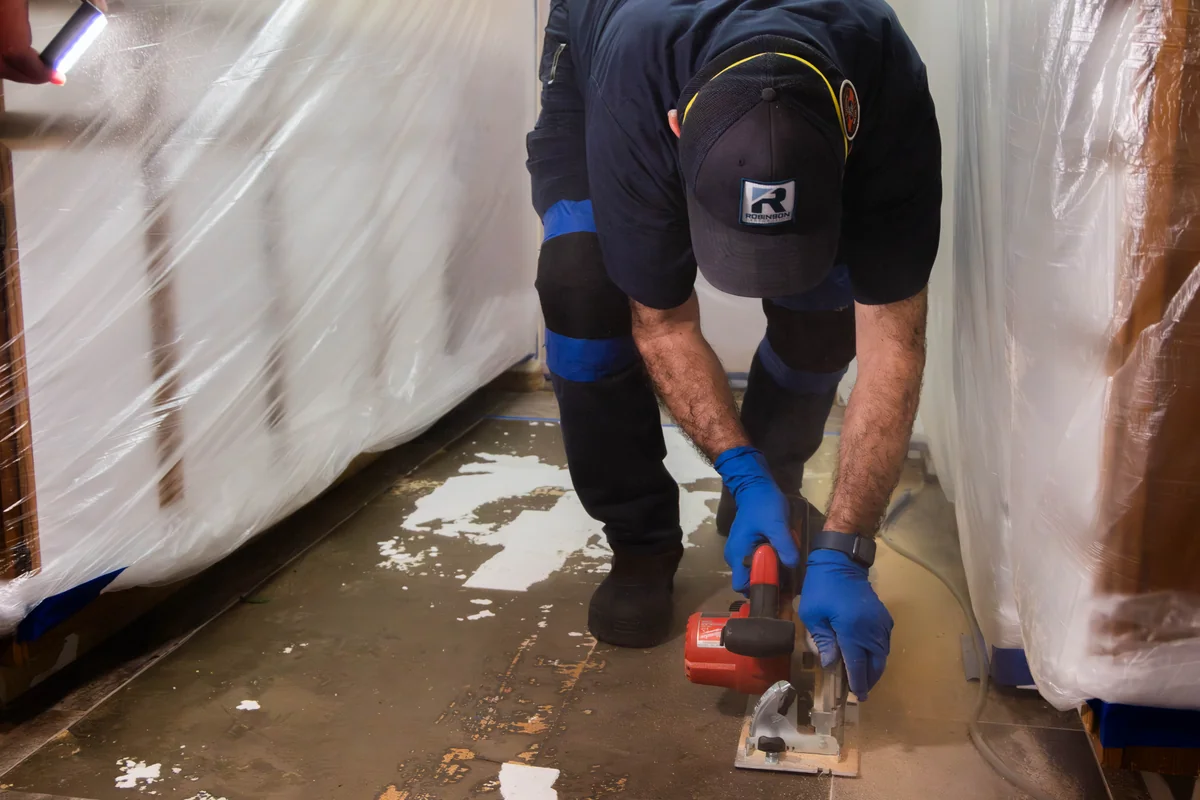
Robinson Restoration is an IICRC-certified water damage restoration company serving Federal Way, WA. Crews dispatch 24 hours a day, arrive on-site in 90 minutes or less, document the readings and photos your carrier needs, and bill your insurance directly on covered claims.
Most of Federal Way went up between the sixties and the nineties, and a whole generation of that plumbing, roofing, and appliances is now hitting the end of its service life all at once. We answer emergency calls 24/7, arrive with extraction and drying equipment, and document everything for your claim.
The city spreads across a plateau between Puget Sound and the Green River valley, dotted with small lakes and wetlands and cut by creeks running toward the Sound. Split-levels, tri-levels, and ranchers dominate the older subdivisions, with condos and apartments filling in along the Pacific Highway corridor. Glacial till under most of it means poor drainage, so heavy November rain sits in yards and finds its way toward garages and daylight basements.
Federal Way is covered by our Kent operations center, and dispatch runs 24/7 with crews on call. Technicians are IICRC certified, which means the job gets moisture mapped before demolition, dried on a calculated plan, and documented with daily readings and photos. We bill your carrier directly, so most homeowners handle their deductible and nothing else on covered work. Rebuild work is managed through vetted licensed contractors and sister companies.

Federal Way sits inside our core Kent coverage area, so a call at any hour puts a certified crew and drying equipment in motion.
24 hours a day, 7 days a week, our crews dispatch the moment you call and start mitigation the same visit. Call dispatch or message us for immediate help.
We stop further damage with commercial extraction, structural drying, and antimicrobial treatment, and we walk you through the entire insurance claim as we work.
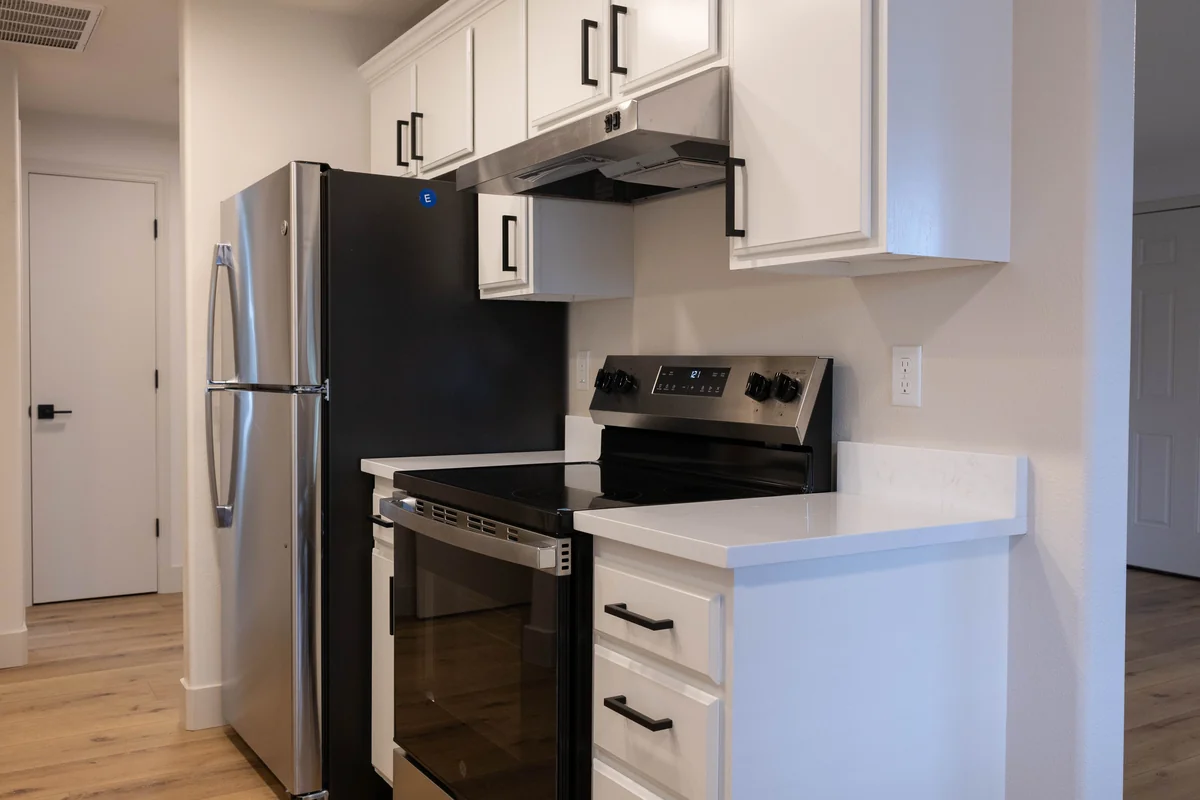
We manage your rebuild to pre-damaged condition through our trusted network of licensed contractors and sister companies. One manager, one timeline.
The subdivisions built here in the seventies and eighties share a set of aging parts: original water heaters replaced once, angle stops that have never been turned, copper with pinholes forming at elbows, and dishwashers older than the people using them. Split-level layouts also put finished space on a lower slab, which is where the water goes.
Glacial till under the plateau doesn't drain. Weeks of steady rain saturate the top layer, then water moves along the hardpan toward whatever is downhill: a garage slab, a window well, a sunken entry, a daylight basement. Gutters overwhelmed by fir needles make it worse. Most of these losses come in without a single plumbing failure involved.
A large share of housing here is attached or rented, and that changes how a loss gets handled. Water from an upstairs unit becomes three parties' problem: the owner, the association, and the tenant. We document each affected unit and assembly separately, coordinate with property management on access, and keep containment up so people can stay in units that aren't affected.
Federal Way is built around small lakes and protected wetlands, and the ground near them holds water most of the winter. Homes on those low edges see hydrostatic pressure against foundation walls, seepage at cold joints, and sump pumps that run constantly from November on. A pump that fails during an outage floods a finished lower level in a few hours.
Most of the losses we run in Federal Way start one of three ways: appliance failures, water heater failures, and roof and storm leaks. Here is why each one happens here, and what it takes to dry it properly.
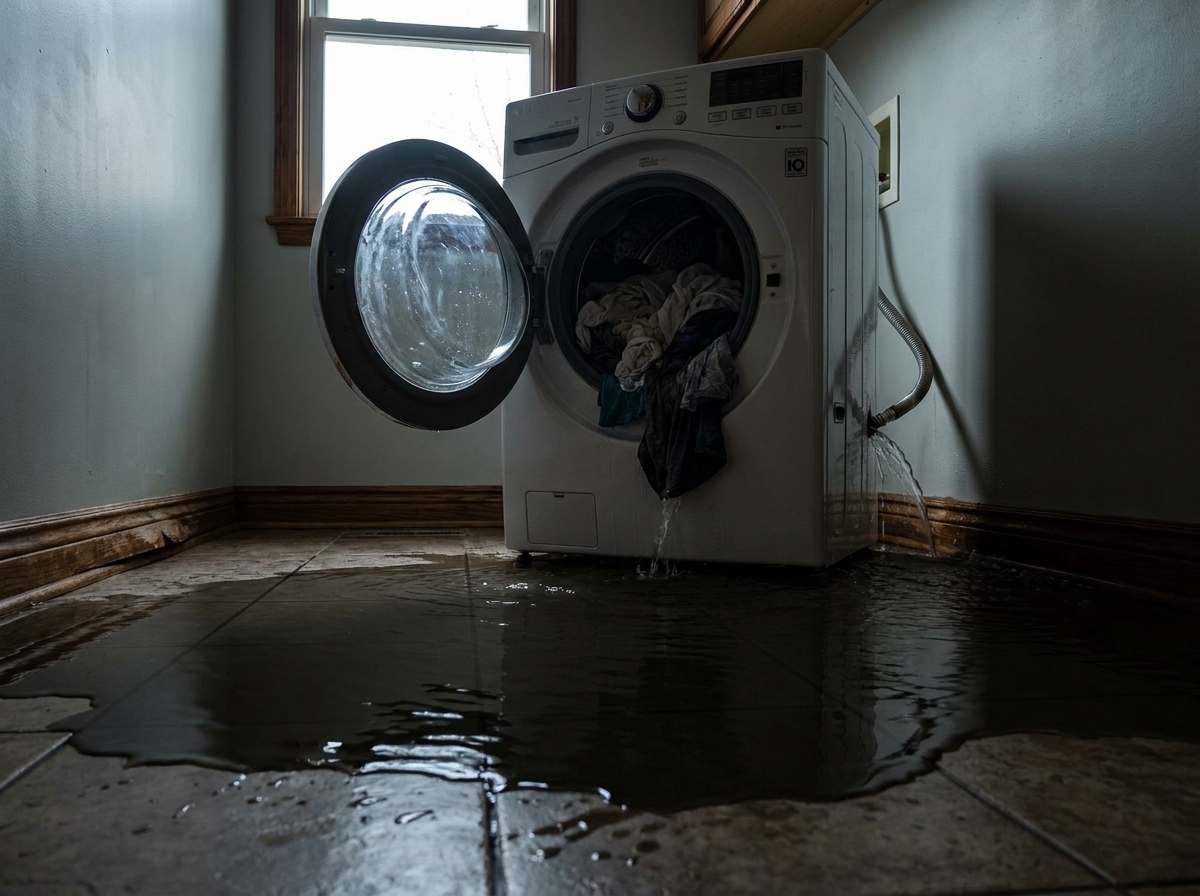
Dishwashers, washing machines, and refrigerator ice lines installed with the original kitchens in seventies and eighties Federal Way homes are well past their expected life, and braided hoses fail without warning.
Tanks in garages and utility closets across these subdivisions are often on their second or third decade. When the bottom corrodes through, the full tank empties onto a slab and wicks into adjacent finished rooms.
Low-slope roof sections on split-levels and tall firs shedding needles into gutters are a bad match for the long soaking rains that run from November through February here.
Water is how most losses start. It’s rarely where they end. The same local crew handles all of it.
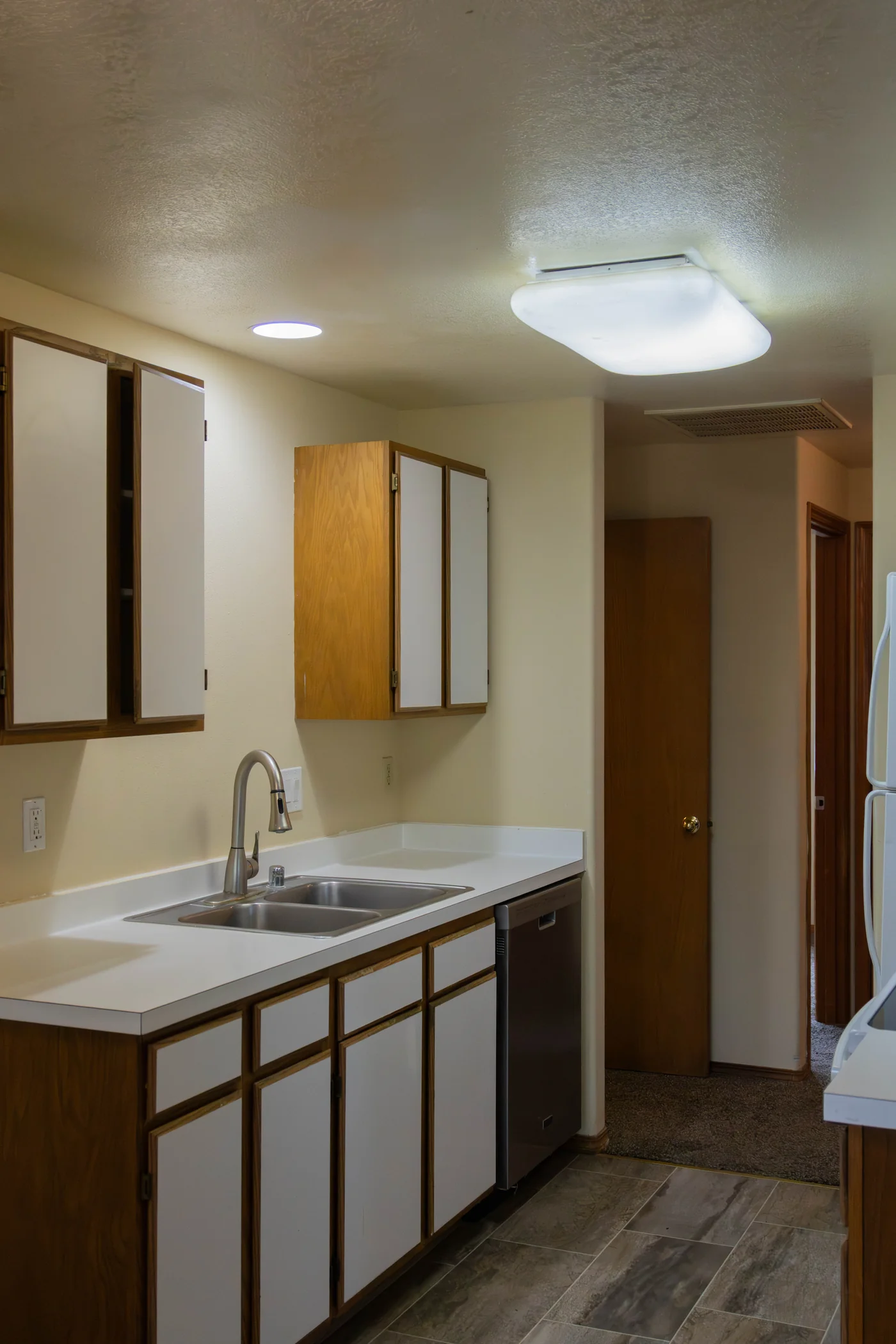
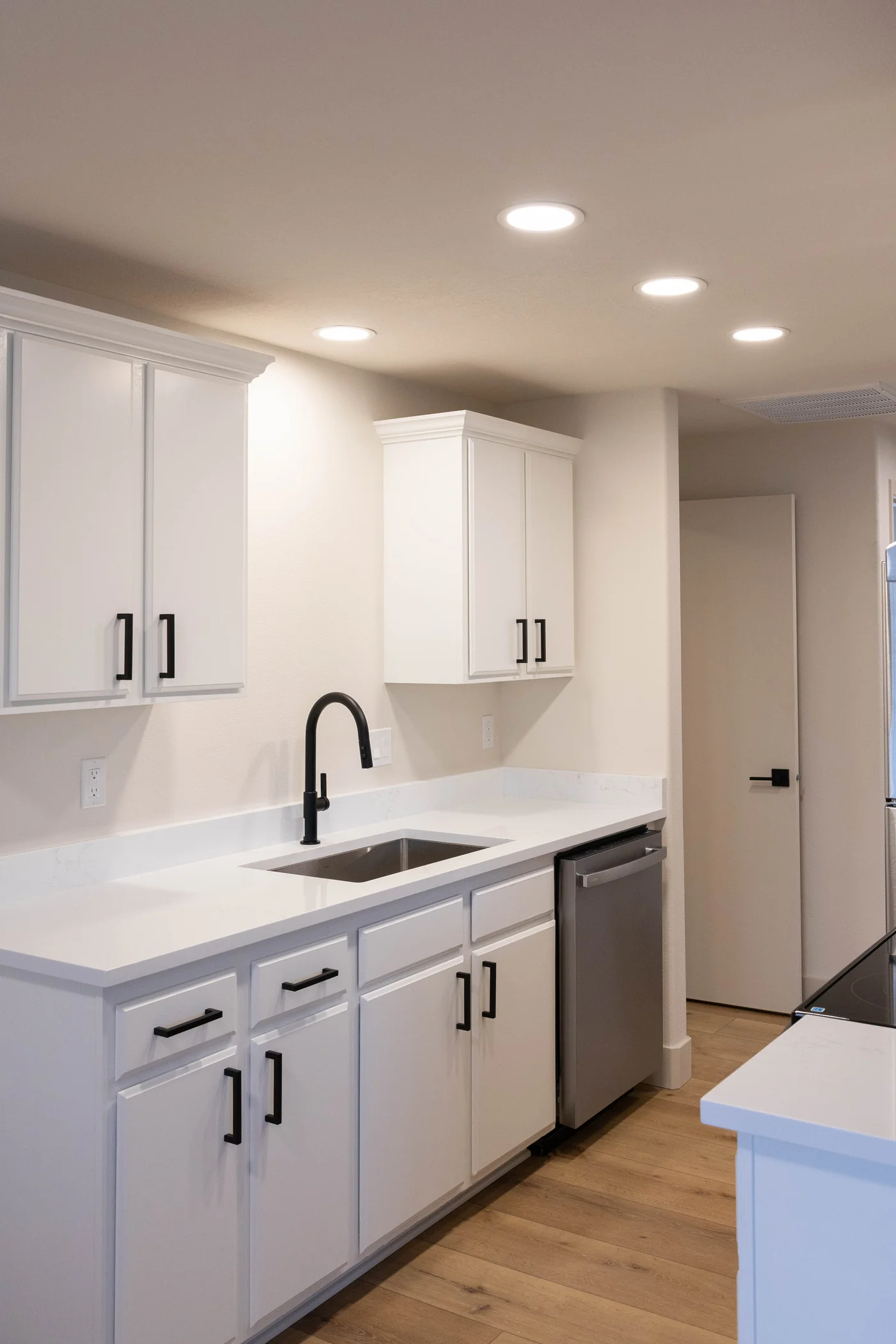
Three real projects, photo-documented for the insurance carrier. Drag each handle to compare.
“Chuck and Cole were very professional, courteous and knowledgeable about their restoration skills including close out processes. I'm really happy they were the two employees assigned to our home.”
Joanna Gamble · Google Review
“We hired Robinson Restoration after a boiler joint failed and leaked what we thought was a small amount of water in our laundry room, but turned out to be more serious than it appeared. They did a fantastic job from first contact to insurance claim approval.”
Randi Covin · Google Review
“We had a major sewer back up a couple of weeks ago, into the laundry room and downstairs bathroom. Panic! We were referred to Robinson Restoration and what a blessing. The whole crew has been wonderful.”
Lynn Dee King · Google Review
In Washington, you choose your restoration contractor, and your carrier can’t penalize you for it. We document every Federal Way loss with moisture maps, photos, and daily readings, then bill your insurer directly. You pay your deductible. That’s it.
Subject to policy coverage and deductible. We handle the paperwork, photos, and adjuster calls.
You reach a live person on the first call, at any time of night. Robinson staffs a south King County crew, so Federal Way calls route to techs who already run this territory. They arrive with extraction units, air movers, and dehumidifiers, then set drying equipment the same visit. Insurance is billed directly, and we manage repairs through licensed contractors afterward.
We dispatch 24/7 and target on-site in 90 minutes across Federal Way. Give dispatch the basics on the call: where the water is coming from, whether it's still running, and how many rooms are affected. If it's safe, shut off the main and cut power to wet circuits before we get there. That head start usually decides whether flooring can be saved.
Probably not by a standard homeowners policy. Surface water and groundwater intrusion are usually excluded, since carriers treat them as maintenance and drainage issues. That doesn't make it harmless. On the till soil under Federal Way, repeated wetting rots bottom plates and grows mold behind finished walls. We can dry it, tell you where it's entering, and document the condition for whatever you decide to do next.
Depends on how far it traveled and what it hit. Carpet pad almost always goes, carpet often can be saved if we get there fast, and drywall gets cut back only as far as the moisture actually went. Slab-on-grade construction, which is common in Federal Way garages and lower levels, means we also dry the slab itself and any framing that sat in the water.
Both, and often on the same loss. In a Federal Way rental the building and its structure sit with the owner's policy, while a tenant's belongings fall under renters coverage. We document the structure and contents separately so each adjuster has a clean scope. Access and scheduling get coordinated with whoever manages the property, and we keep the affected area contained while equipment runs.
Three to five days covers most clean-water losses in Federal Way homes, assuming we started early. Jobs that sat over a weekend, or that involve hardwood, slab, or thick insulation, take longer. We take readings every day and pull equipment when the materials reach their target moisture content, then give you the completed log showing how the numbers moved.
That's how we run it. Robinson does the mitigation and manages the reconstruction through vetted licensed contractors and sister companies, coordinated by our team from the first call to the last punch item. For Federal Way homes that usually covers flooring, drywall and texture, trim, paint, and cabinetry. Everything is scoped against your carrier's approved estimate before the trades start.
A wet floor in a Federal Way home only spreads. Call us and a crew heads your way.
Licensed · Insured · IICRC Certified · Serving Washington & Oregon